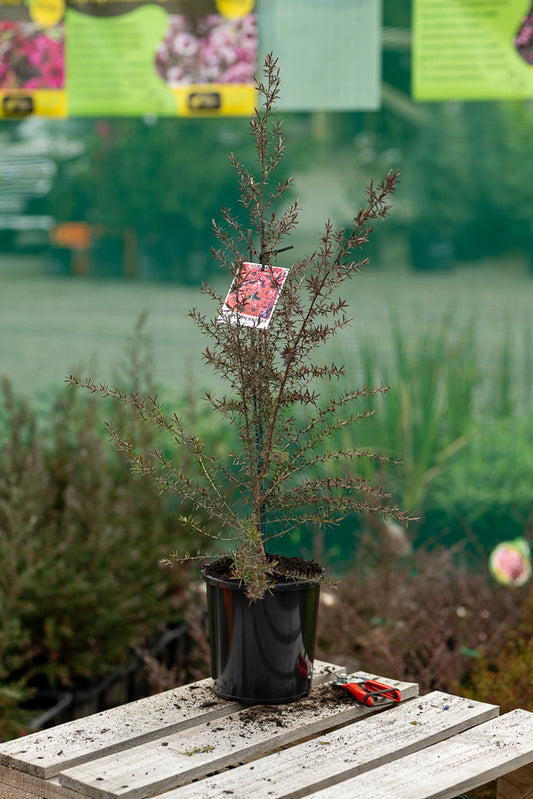
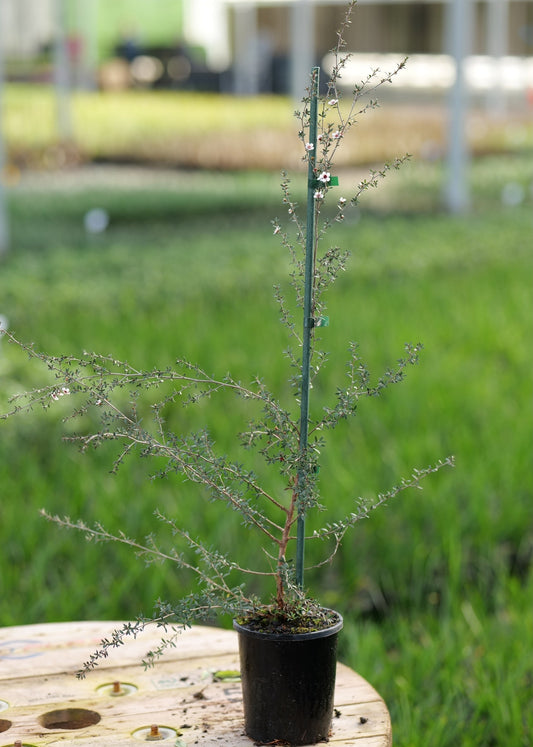
Manuka Plants NZ (Leptospermum)
Manuka is one of New Zealand's most iconic native plants. Known botanically as Leptospermum scoparium, Manuka is celebrated for its masses of spring flowers, ability to thrive in challenging conditions, and its important role in producing world-famous Manuka honey.
Whether you're looking for a hardy native shrub, a flowering feature plant, a shelter hedge, or a valuable addition to a pollinator-friendly garden, Manuka is one of the most versatile plants you can grow.
At CJ's Plant Farm, we offer a range of Manuka varieties selected for their beautiful flowers, compact growth habits, and suitability for New Zealand gardens. From traditional white flowering forms through to stunning pink and red-flowering cultivars, there's a Manuka to suit almost every landscape.
What is Manuka?
Manuka (Leptospermum scoparium) is a native New Zealand shrub or small tree naturally found throughout the country, from coastal environments to exposed hillsides and inland regions. It is one of New Zealand's toughest native plants, capable of growing in poor soils, coastal conditions, exposed sites, and areas where many other plants struggle.
While many people know Manuka because of Manuka honey, gardeners appreciate it for its ornamental value, resilience, and ability to attract bees and beneficial insects into the garden.
Why Plant Manuka?
Manuka offers a unique combination of beauty, toughness, and ecological value. Benefits of growing Manuka include:
- Spectacular spring flowering displays
- Attracts bees and pollinators
- Supports native biodiversity
- Excellent for native gardens
- Tolerates coastal conditions
- Handles wind and exposed sites
- Suitable for shelter planting
- Drought tolerant once established
- Low maintenance
- Provides year-round evergreen structure
It's one of those plants that looks after itself while delivering a huge amount of seasonal interest.
Stunning Spring Flowers
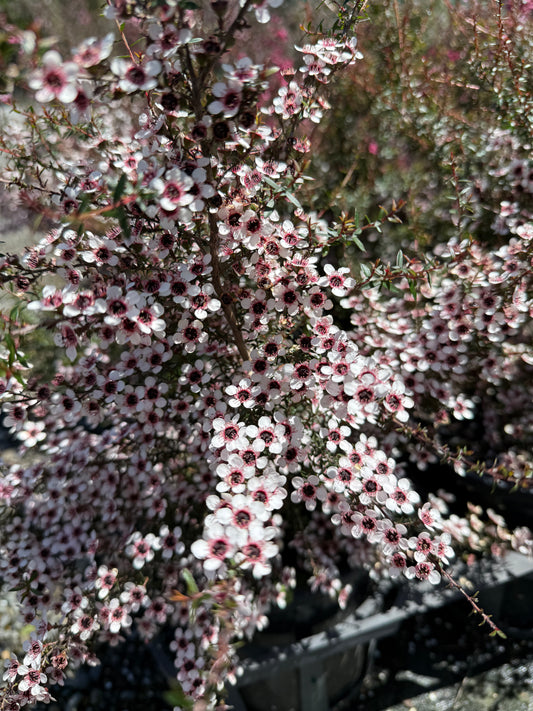
One of the biggest reasons gardeners love Manuka is its incredible flowering display. During spring and early summer, branches become smothered in masses of flowers that can range from pure white through to shades of soft pink, deep pink, crimson, and red depending on the variety.
Many modern Leptospermum cultivars have been bred specifically for larger flowers, richer colours, and longer flowering periods, making them outstanding ornamental shrubs. When in full bloom, a flowering Manuka can become one of the highlights of the garden.
A Pollinator Magnet
If you want to attract bees to your garden, Manuka is one of the best plants you can grow.
The flowers are highly attractive to honey bees, native bees, and a wide range of beneficial pollinating insects.
Not only does this help support local ecosystems, but it can also improve pollination throughout the rest of your garden.
A flowering Manuka buzzing with bees is one of the true signs of spring in New Zealand.
Tough Native Performance
One of the reasons Manuka is so widely distributed throughout New Zealand is its ability to thrive in difficult conditions. Manuka can tolerate:
- Windy sites
- Coastal exposure
- Poor soils
- Dry conditions
- Frost
- Heavy clay soils
- Challenging landscapes
Once established, Manuka is remarkably resilient and often performs where more delicate ornamental plants struggle. This toughness makes it a valuable option for both urban gardens and lifestyle properties.
Great for Hedging and Shelter
While many people think of Manuka as a feature shrub, it can also be used as an informal hedge or shelter planting. Its naturally dense branching habit creates excellent habitat for birds while providing shelter and screening.
Manuka is particularly useful in native shelter belts and mixed native hedges where a softer, more natural appearance is desired. The added bonus is the spectacular flowering display each spring.
Perfect for Native Gardens
Manuka is a cornerstone species in many native garden designs. It combines beautifully with other New Zealand natives such as:
Together these plants create resilient, low-maintenance landscapes that celebrate New Zealand's unique flora.
Growing Manuka Successfully
Manuka is easy to grow when planted in the right conditions.
For best results:
- Plant in full sun
- Choose a well-drained site
- Water regularly during establishment
- Apply mulch to conserve moisture
- Avoid prolonged waterlogging
Once established, most varieties require very little attention and are capable of thriving with minimal intervention.
Pruning and Maintenance
Manuka is naturally tidy and generally requires little pruning. If shaping is required, lightly trim after flowering to encourage dense growth and maintain the desired size.
Avoid heavy pruning into old wood, as recovery can be slower than with some hedge species. Most gardeners find that occasional shaping is all that's needed to keep Manuka looking its best.
Why Choose Manuka?
Few New Zealand native plants offer the same combination of beauty, toughness, wildlife value, and year-round appeal. Whether you're planting a native garden, creating shelter, attracting pollinators, or simply looking for a hardy flowering shrub, Manuka is one of the most rewarding plants available.
Browse our collection of Manuka plants and discover why Leptospermum has become one of New Zealand's most popular native shrubs for modern gardens.
 Sold out
 Sold out
 Sold out