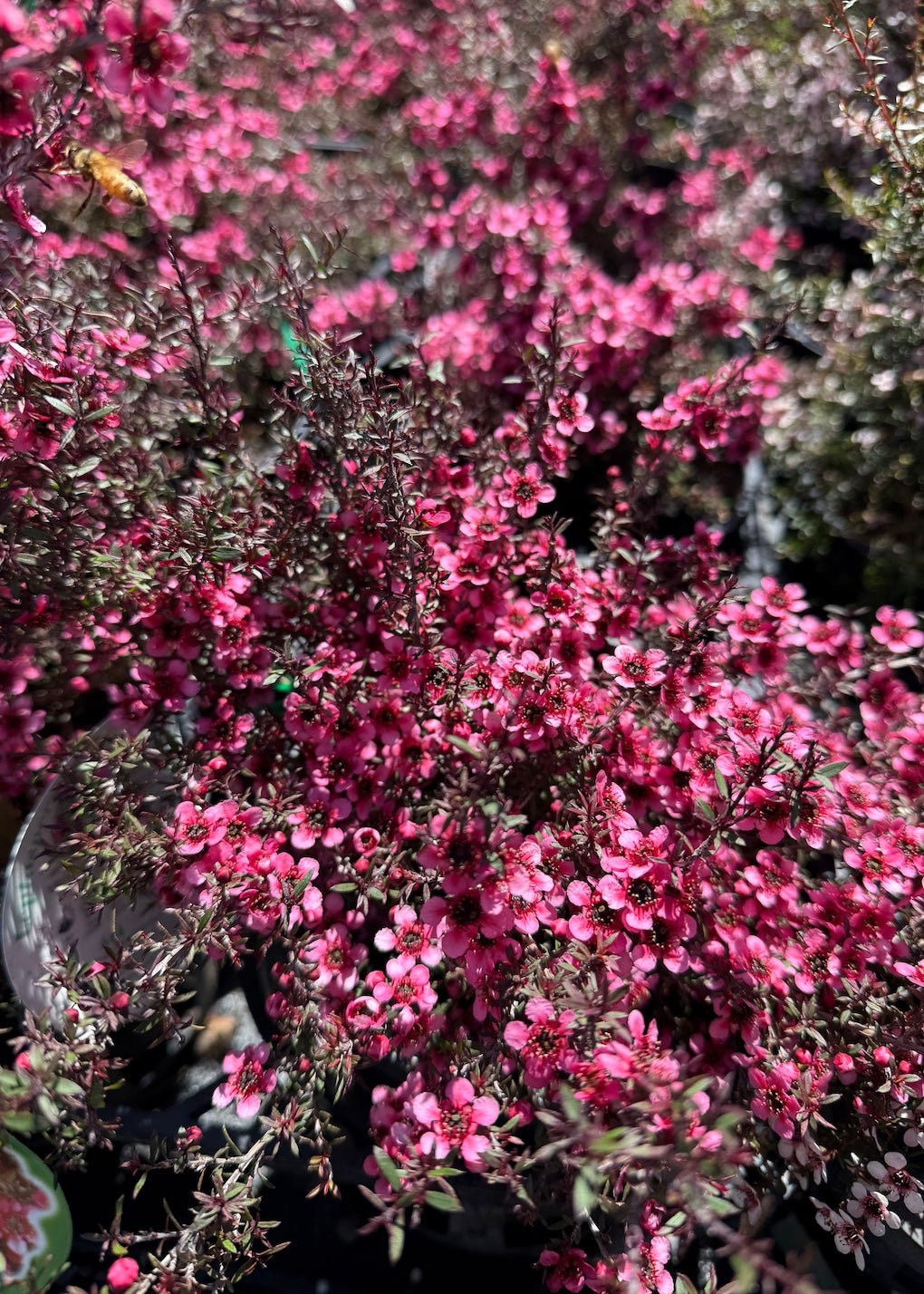
Leptospermum Kiwi
Leptospermum Kiwi
Hybrid Manuka
Leptospermum 'Kiwi' (Leptospermum scoparium 'Kiwi'), also known as Dwarf Mānuka, is a delightful compact evergreen shrub producing masses of single pinkish-red flowers against fine bronze-green foliage.
Unlike some of its larger mānuka relatives, Kiwi has a naturally low, bushy growth habit, making it perfect for smaller gardens, rockeries, mixed borders, low informal hedging and containers.
The tiny pointed leaves provide year-round texture and colour, while the vibrant flowers create an impressive display from late spring into summer.
Growing to approximately 50cm–1m high and 60cm wide, Kiwi is a great choice for gardeners wanting the beauty of native mānuka without dedicating half the garden to it.
It's also attractive to bees and other pollinating insects.
A little native shrub with plenty going for it.
Why You'll Love Leptospermum 'Kiwi'
-
Masses of single pinkish-red flowers
-
Attractive bronze-green evergreen foliage
-
Compact, bushy growth habit
-
New Zealand native cultivar
-
Excellent for smaller gardens
-
Perfect for rockeries and low borders
-
Attractive to bees and pollinators
-
Good drought tolerance once established
-
Suitable for sunny coastal gardens
-
Can be lightly trimmed to maintain shape
-
Great for containers
-
Relatively low maintenance
- Wind Tolerant, Frost Tolerant , Flowering, Attracts pollinators, Cold hardy, Evergreen, and NZ Native
- Expected 5 Year Height 0.8M
- Flowers in
Planting & Care Tips
Planting & Care Tips
How to care for your Leptospermum Kiwi:Newly planted Leptospermum: Water deeply and regularly during the first growing season.
Consistent moisture helps establish a healthy root system and reduces stress during hot weather.
Established plants: Once established, Kiwi develops good tolerance of dry conditions.
However, additional watering during prolonged summer drought will help maintain healthier foliage and flowering.
Container-grown plants require more regular watering than those planted in the ground.
Mulching
Apply organic mulch around the root zone to:
Retain soil moisture
Suppress weeds
Moderate soil temperatures
Reduce competition
Help young plants establish
Keep mulch slightly away from the main stems.
Avoid piling heavy, moisture-retentive mulch around the crown in poorly drained soil.
Leptospermum generally doesn't require heavy feeding.
If additional nutrition is needed, apply a controlled-release fertiliser suitable for native plants in spring, following the manufacturer's instructions.
Avoid excessive fertiliser, particularly high-nitrogen products that encourage soft, leggy growth.
The aim is a compact, healthy shrub with plenty of flowers.
Not something that suddenly decides it wants to become a tree.
Kiwi responds well to light trimming after flowering.
Pruning helps:
Maintain a compact shape
Encourage bushier growth
Remove damaged branches
Control size
Keep low hedging tidy
Regular light trimming is preferable to allowing the plant to become woody before attempting severe pruning.
Avoid Cutting Hard Into Old Wood
Like many Leptospermum varieties, Kiwi may not reliably regenerate from bare, old woody stems.
When trimming, retain healthy leafy growth on the branches.
Avoid cutting established plants severely back into old wood.
A little haircut after flowering is generally all that's required.
Leptospermum 'Kiwi' has moderate frost tolerance once established, but young plants can be vulnerable to severe frosts.
For colder Canterbury gardens:
Choose a reasonably sheltered position.
Avoid the harshest frost hollows.
Protect young plants during severe cold.
Maintain good drainage through winter.
Delay trimming frost-damaged shoots until the worst cold weather has passed.
Established plants are generally more resilient than newly planted specimens.
Kiwi can tolerate dry conditions once established, but hot, drying nor'west winds can quickly stress young plants.
During prolonged dry weather:
Water deeply when required.
Maintain mulch around the root zone.
Protect newly planted shrubs from severe wind exposure.
Check container-grown plants regularly.
Once properly established, Kiwi becomes considerably tougher.
Leptospermum 'Kiwi' is generally a relatively trouble-free shrub when grown in suitable conditions.
Occasional problems may include:
Scale insects
Aphids
Sooty mould associated with sap-sucking insects
Root rot in poorly drained soil
Dieback following severe environmental stress
Good drainage, appropriate watering and avoiding excessive fertiliser will help maintain healthy growth.
Check plants occasionally for pests, particularly if foliage becomes sticky or blackened.
Its compact growth habit makes Kiwi an excellent choice for pots and containers.
Use it for:
Sunny patios
Courtyards
Entrance planting
Contemporary gardens
Small outdoor spaces
Use a quality free-draining potting mix and ensure the container has adequate drainage holes.
Water regularly during warm weather, as container-grown plants dry out more quickly than those growing in the ground.
Leptospermum 'Kiwi' can be repeated to create an attractive low informal flowering border.
Its compact growth and fine foliage make it particularly useful for edging larger planting areas.
For a continuous low border, space plants approximately 40–60cm apart, adjusting for the desired density and local growing conditions.
For individual feature plants, allow around 60cm or more between plants to accommodate their natural spread.
Light trimming after flowering will help maintain a dense, tidy appearance.
Spacing Guide
Spacing Guide
Couldn't load pickup availability
Share