Leptospermum Kea
Leptospermum Kea
Hybrid Manuka
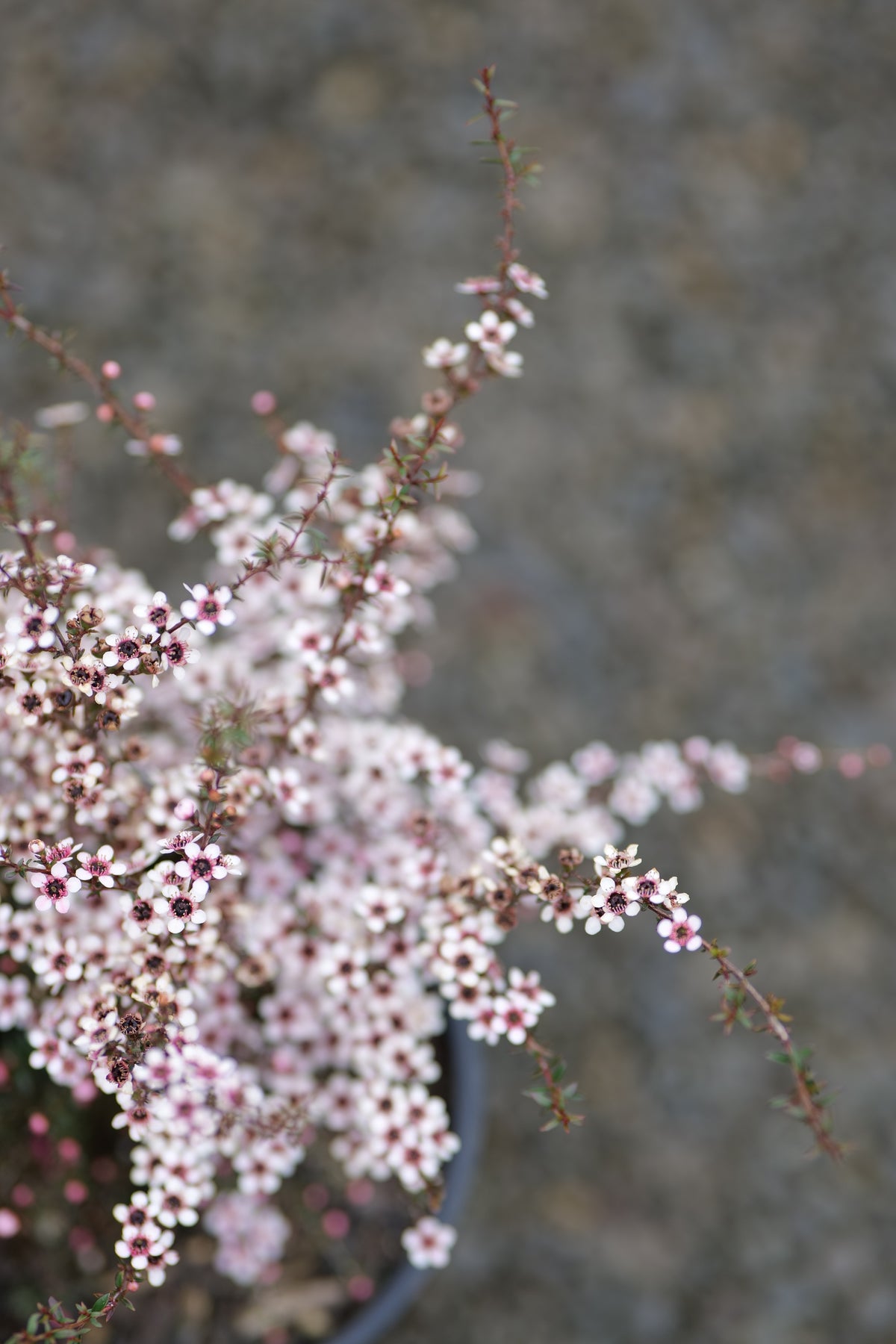
Leptospermum 'Kea' is a compact evergreen shrub combining fine, dark green to bronze-toned foliage with masses of white with deep pink centred flowers.
The small mānuka-style flowers appear across the branches, creating a brilliant display against the darker foliage. Its naturally compact, bushy growth makes Kea particularly useful for smaller gardens, mixed borders, low informal hedging, native-style planting and containers.
It's also a useful option when you want the fine texture and flowers of Leptospermum without planting something destined to become a substantial tree.
Hardy and relatively low maintenance once established, Kea enjoys plenty of sun, free-draining soil and a reasonably open position.
Why You'll Love Leptospermum 'Kea'
-
white with deep pink centred flowers.
-
Fine dark green to bronze foliage
-
Evergreen
-
Compact, bushy growth habit
-
Excellent flowering display
-
Great for smaller gardens
-
Useful as a low informal hedge
-
Attractive to bees and pollinating insects
-
Good drought tolerance once established
-
Handles sunny positions
-
Suitable for containers
-
Low maintenance
- Expected 5 Year Height 0.5 M Width 0.5 M
Is Leptospermum Kea suitable for my garden?
Is Leptospermum Kea suitable for my garden?
Leptospermum Kea is best suited in a position that gets
- Partial shade
- Full sun
Leptospermum Kea is
- Wind Tolerant
- Frost Tolerant
- Flowering
- Attracts pollinators
- Fast-growing
- Cold hardy
- Evergreen
- NZ Native
Leptospermum Kea will thrive in soil that is
How to establish your Leptospermum Kea?
How to establish your Leptospermum Kea?
Plant Leptospermum 'Kea' in full sun for the best flowering and densest growth.
A sunny position helps encourage:
More flowers
Stronger growth
Denser foliage
Better overall plant shape
Some light shade can be tolerated, but excessive shade may produce a more open shrub with fewer flowers.
How to maintain your Leptospermum Kea once established?
How to maintain your Leptospermum Kea once established?
Water regularly while the plant establishes its root system.
This is particularly important during the first summer.
Deep watering encourages roots to move into the surrounding soil rather than remaining concentrated around the original root ball.
Once properly established, Kea develops good drought tolerance.
Water during prolonged dry periods if plants begin showing signs of stress.
Plants grown in containers will require considerably more regular watering.
Apply mulch around newly planted shrubs to:
Retain soil moisture
Suppress weeds
Reduce competition
Moderate soil temperature
Keep heavy mulch away from direct contact with the base of the stems.
In very wet soil, don't overdo moisture-retentive mulch around the crown.
Leptospermum generally doesn't require heavy feeding.
If additional nutrition is required, use a controlled-release fertiliser suitable for native plants during spring.
Avoid excessive applications of high-phosphorus or high-nitrogen fertilisers.
The aim is steady, compact growth rather than producing lots of soft shoots.
Kea responds well to light regular pruning.
Trim after flowering to:
Maintain a compact shape
Encourage bushier growth
Remove untidy branches
Control size
Regular light trimming is preferable to allowing the plant to become large and woody before cutting it back severely.
Avoid Cutting Hard Into Old Wood
When shaping Leptospermum, try to retain some healthy leafy growth on the branches being shortened.
Avoid routinely cutting established plants severely back into bare old wood.
Light, regular maintenance from a younger age is the better approach.
In other words, a little haircut reasonably often beats waiting five years and then declaring war on it.
Leptospermum 'Kea' has good frost tolerance once established.
Young plants can be more vulnerable during their first winter, particularly in very exposed frost pockets.
A layer of mulch around the root zone can help protect developing roots.
If severe frost damages soft new growth, wait until the worst cold weather has passed before pruning affected tips.
Kea is well suited to many Canterbury gardens because it handles sun, frost and periods of dry weather once established.
The main priorities are:
Establishing it properly with regular watering
Providing good drainage
Avoiding permanently saturated soil
Giving it plenty of sunlight
Young plants will appreciate additional water during hot nor'west conditions.
Once established, they're considerably tougher.
Established Leptospermum generally copes with moderately exposed positions.
In very windy gardens, some shelter while young will help the plant establish a stronger root system and denser framework.
Hot, dry wind can rapidly dehydrate newly planted shrubs, so check soil moisture regularly during Canterbury nor'west conditions.
Leptospermum flowers are highly attractive to bees and other beneficial insects.
Planting flowering shrubs like Kea helps provide additional forage while also bringing more activity into the garden.
For the strongest pollinator effect, combine it with other flowering plants that bloom at different times of year.
Couldn't load pickup availability
Share