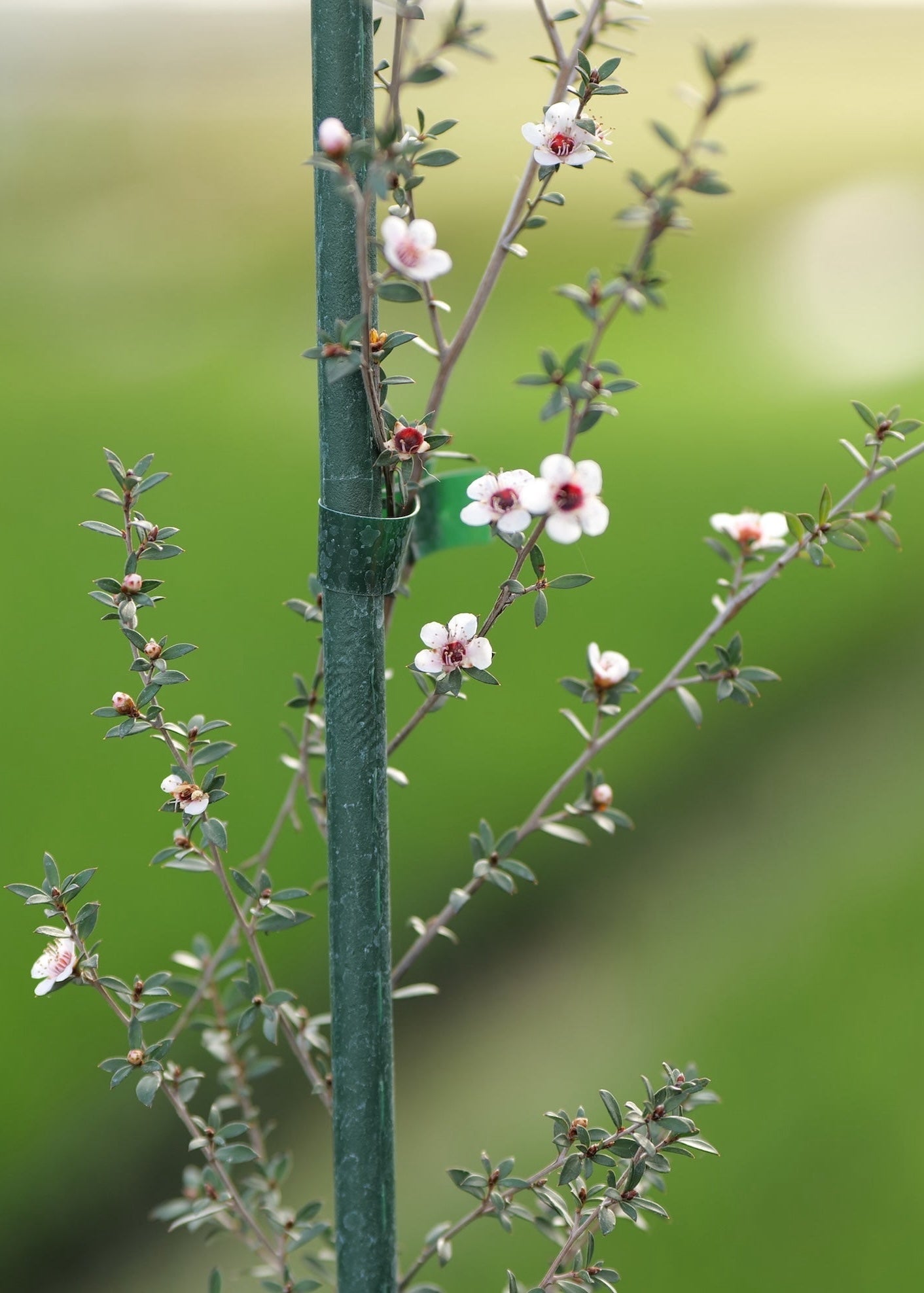
Leptospermum Scoparium - Manuka
Leptospermum Scoparium - Manuka
Mānuka, Tea Tree
Leptospermum scoparium, better known as Mānuka, is one of New Zealand’s most iconic native shrubs — tough, pretty, useful, and far more charming than it gets credit for. With fine foliage, a naturally twiggy habit, and masses of delicate flowers, Mānuka is brilliant for native gardens, shelter planting, wildlife-friendly spaces, and tricky spots where fussier plants would throw a tantrum.
Flowering from spring into early summer, Mānuka produces small white, pink, or red-toned flowers depending on the variety. These flowers are loved by bees and other pollinators, making it a great choice for anyone wanting to support biodiversity in the garden.
It is naturally hardy, drought-tolerant once established, and well suited to Canterbury conditions, including wind, coastal exposure, dry banks, and poorer soils. Mānuka is ideal for informal hedging, revegetation planting, native borders, wildlife gardens, and low-maintenance landscapes.
- Expected 5 Year Height 2.5 M Width 2.0 M
Is Leptospermum Scoparium - Manuka suitable for my garden?
Is Leptospermum Scoparium - Manuka suitable for my garden?
Leptospermum Scoparium - Manuka is best suited in a position that gets
- Full sun
- Partial shade
Leptospermum Scoparium - Manuka is
- Flowering
- Attracts pollinators
- Drought resistant
- Coastal Friendly
- Wind Tolerant
- Frost Tolerant
- Fast-growing
- Cold hardy
- Evergreen
Leptospermum Scoparium - Manuka will thrive in soil that is
- Normal
- Sandy
- Clay
- Free draining
How to establish your Leptospermum Scoparium - Manuka?
How to establish your Leptospermum Scoparium - Manuka?
Position
Plant in full sun to partial shade. Best flowering and strongest growth occur in sunny positions.
Soil
Adaptable to a wide range of soils provided drainage is reasonable. Performs especially well in poorer soils where other shrubs may struggle.
Watering
Water regularly during establishment. Once established, Mānuka is very drought tolerant and requires minimal supplementary watering.
Feeding
Generally does not require heavy feeding. A light application of slow-release native plant fertiliser in spring can encourage healthy growth.
Spacing
Allow approximately 1.5–2m between plants depending on desired density and whether used for screening or revegetation.
How to maintain your Leptospermum Scoparium - Manuka once established?
How to maintain your Leptospermum Scoparium - Manuka once established?
Very low maintenance once established. Light trimming after flowering will help maintain a dense tidy shape and encourage fresh branching. Can be pruned more heavily if required for hedging or shelter purposes.
Avoid overwatering or planting in permanently wet soils. Older plants may benefit from occasional thinning to improve airflow and maintain vigour.
Couldn't load pickup availability
Share