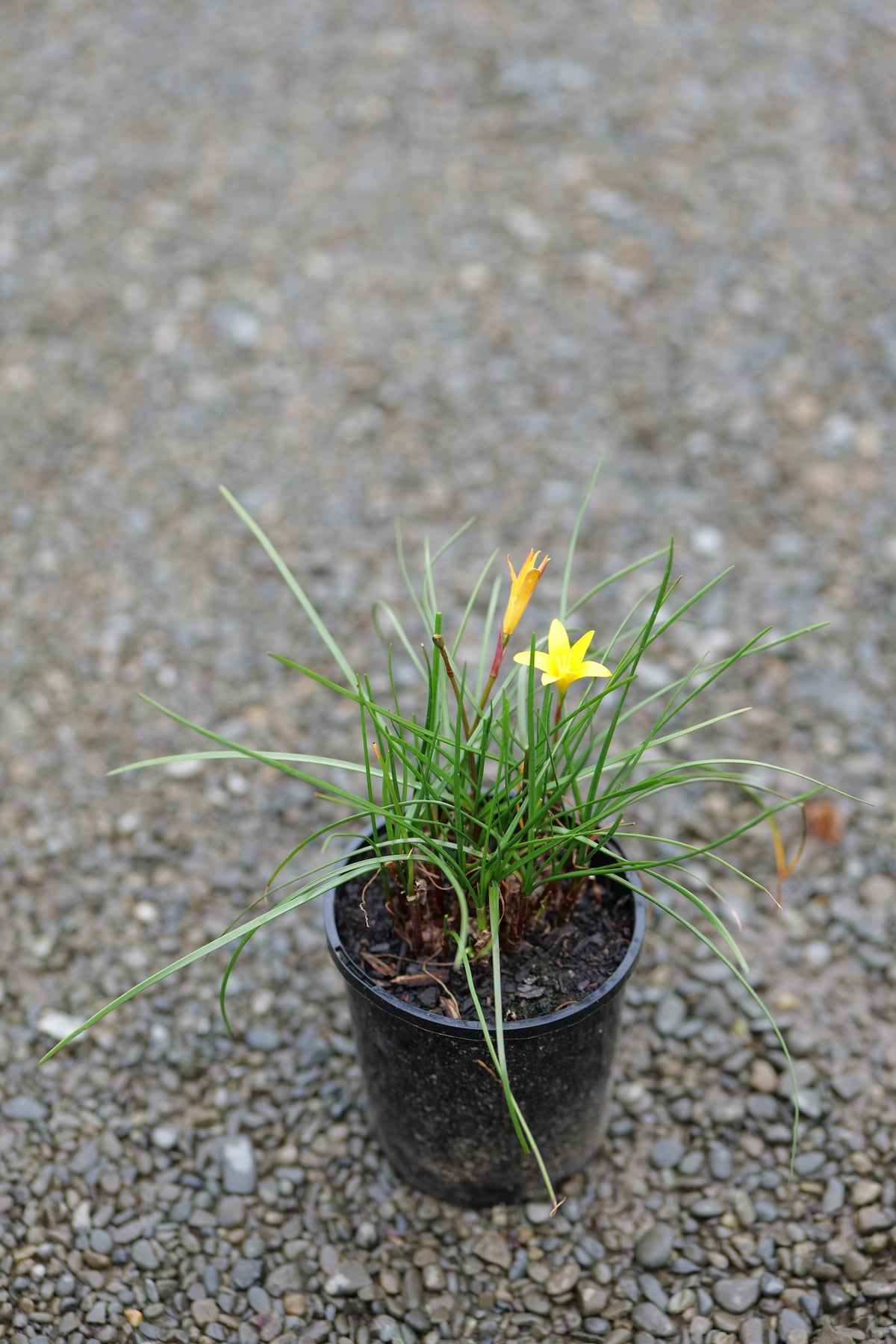
Zephyranthes Flavissima
Zephyranthes Flavissima
Yellow Rain Lily
Zephyranthes flavissima, commonly known as the Yellow Rain Lily, is a charming, low-growing bulbous perennial producing cheerful golden-yellow, crocus-like flowers above fine, grass-like foliage.
As its name suggests, Rain Lilies are known for producing sudden flushes of flowers following warm weather and rainfall, bringing unexpected colour to the garden.
Growing to approximately 15–25cm high, this compact little plant is ideal for garden borders, rockeries, containers, pathway edging and mass planting.
Its narrow green leaves form tidy clumps, while the bright yellow flowers appear on slender stems, creating a beautiful contrast against the foliage.
And unlike some plants that require endless encouragement to flower, Rain Lilies have their own approach.
A bit of warmth, a decent shower of rain, and suddenly they decide it's showtime.
Why You'll Love Zephyranthes flavissima
-
Beautiful golden-yellow flowers
-
Attractive crocus-like blooms
-
Flowers often appear after warm rainfall
-
Compact, low-growing habit
-
Fine, grass-like foliage
-
Excellent for borders and rockeries
-
Perfect for containers
-
Attractive planted in groups
-
Easy to naturalise in suitable conditions
-
Low maintenance once established
-
Great for adding colour to smaller spaces
- Expected 5 Year Height 0.25 M Width 0.2 M
Is Zephyranthes Flavissima suitable for my garden?
Is Zephyranthes Flavissima suitable for my garden?
Zephyranthes Flavissima is best suited in a position that gets
- Partial shade
- Full sun
Zephyranthes Flavissima is
- Flowering
- Evergreen
Zephyranthes Flavissima will thrive in soil that is
- Free draining
- Nutrient rich
How to establish your Zephyranthes Flavissima?
How to establish your Zephyranthes Flavissima?
Plant Zephyranthes flavissima in full sun to part shade.
For the best flowering, choose a position receiving plenty of sunlight during the growing season.
A warm, sheltered location is particularly beneficial in cooler New Zealand gardens.
For Canterbury conditions, consider:
Sunny garden borders
Warm courtyards
Sheltered rockeries
Raised garden beds
Containers that can be protected during winter
Avoid exposed frost hollows where the ground remains very cold and wet.
How to maintain your Zephyranthes Flavissima once established?
How to maintain your Zephyranthes Flavissima once established?
Newly planted bulbs: Water moderately during active growth to encourage root development.
Established plants: Water during prolonged dry periods, particularly when plants are actively growing and flowering.
Rain Lilies can tolerate periods of seasonal dryness, but moisture following warm weather often encourages flowering.
Avoid constantly saturated soil, especially during colder weather.
A light layer of organic mulch can help:
Retain moisture during summer
Reduce weed competition
Moderate soil temperature
Protect the soil surface
Avoid burying the crowns under a thick layer of wet mulch.
In colder gardens, a protective mulch may help moderate winter soil temperatures, but good drainage remains essential.
Zephyranthes flavissima generally requires little feeding.
Apply a light dressing of balanced bulb fertiliser in spring as active growth begins.
Avoid excessive nitrogen fertiliser, which can encourage leafy growth rather than flowering.
Container-grown plants may benefit from occasional light feeding during the growing season.
Yellow Rain Lilies require very little pruning.
Maintenance generally involves:
Removing spent flower stems if desired
Removing dead or yellowing leaves
Keeping weeds away from developing clumps
Dividing overcrowded bulbs when necessary
Allow healthy foliage to remain after flowering so the bulbs can store energy for the following season.
Avoid cutting all the leaves off while they're still green.
They might look like grass, but they aren't asking to be mowed.
Zephyranthes flavissima is best grown in a warm, sheltered position, particularly in regions that experience severe winter frosts.
Although established bulbs can tolerate some cool conditions, prolonged freezing temperatures and cold, wet soil may damage them.
For Canterbury gardens:
Choose a sunny, sheltered location.
Ensure excellent winter drainage.
Protect plants from severe frosts.
Consider container growing in colder areas.
Reduce watering while plants are dormant.
Container-grown plants can be moved into a frost-free greenhouse or sheltered area during winter.
Rain Lilies enjoy warmth, but newly planted bulbs and container-grown plants can dry out quickly during hot nor'west conditions.
During prolonged dry weather:
Check soil moisture regularly.
Water deeply when required.
Avoid allowing containers to become excessively dry during active growth.
Maintain light mulch around established clumps.
Warm weather followed by moisture may encourage another flush of flowers.
Zephyranthes flavissima gradually produces additional bulbs, allowing established clumps to increase in size.
When clumps become crowded, they can be divided.
The best time to divide is during dormancy or just before active growth begins.
Carefully lift the clump, separate the bulbs and replant them at a similar depth.
Avoid damaging the roots and growing points.
Allow newly divided bulbs time to establish before expecting a full flowering display.
For a natural-looking display, plant bulbs in small groups rather than individually.
Suggested spacing: Approximately 10–15cm apart for a relatively dense planting.
Plant with the bulb neck near soil level, adjusting the depth to suit the bulb size and the depth at which it was previously growing.
In colder regions, a slightly raised planting area can help improve drainage.
Mass planting creates the most impressive effect when several flowers appear together following rain.
Zephyranthes flavissima is particularly well suited to pots, bowls and troughs.
Its compact growth habit makes it ideal for smaller outdoor spaces.
For best results:
Use a quality free-draining potting mix.
Choose a container with adequate drainage holes.
Position in full sun or light shade.
Water during active growth.
Reduce watering during dormancy.
Protect from severe winter frosts.
Containers are particularly useful in Canterbury because they can be moved into a sheltered position during the coldest weather.
Yellow Rain Lilies are generally relatively trouble-free when grown in suitable conditions.
Occasional problems may include:
Slugs and snails damaging young growth
Bulb rot in poorly drained soil
Aphids on tender growth
Reduced flowering from excessive shade or overcrowding
Good drainage, adequate sunlight and avoiding excessive watering will help prevent many common problems.
Important: Rain Lilies belong to the Amaryllidaceae family and should be treated as toxic if eaten. Keep bulbs and plant material away from pets and children who may ingest them.
Couldn't load pickup availability
Share