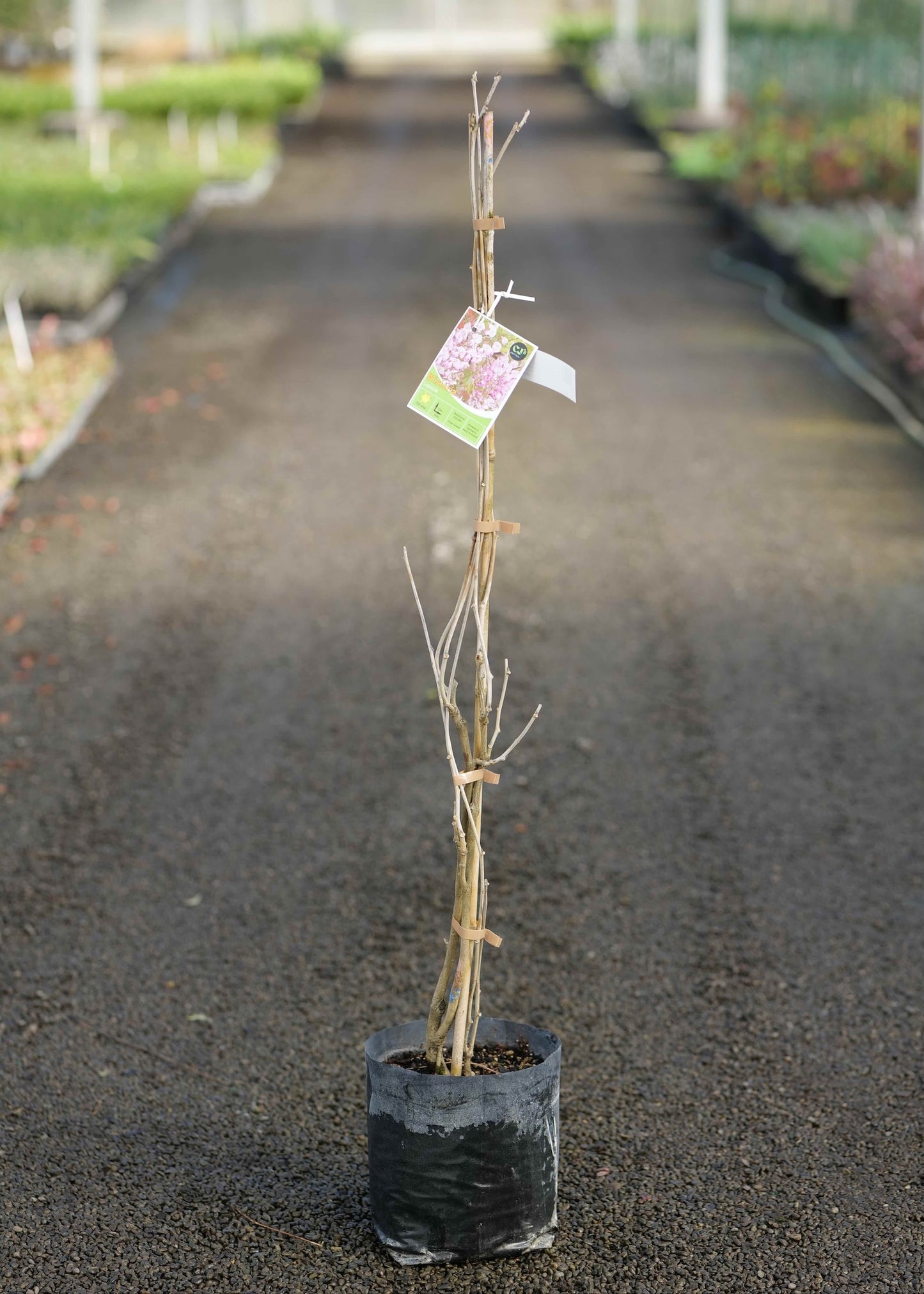
Wisteria Lipstick
Wisteria Lipstick
Wisteria 'Lipstick' is a stunning deciduous climber that produces cascading clusters of rich rosy-pink to deep pink flowers in spring. The fragrant blooms hang gracefully from the vine, creating a breathtaking display that transforms pergolas, archways, fences and walls into living works of art.
As the flowers fade, fresh green foliage provides attractive summer cover before turning soft golden-yellow in autumn. Vigorous, hardy and long-lived, 'Lipstick' is an excellent choice for gardeners wanting dramatic vertical colour and timeless cottage garden charm.
Why You'll Love Wisteria 'Lipstick'
- Stunning cascading clusters of deep pink flowers
- Delightfully fragrant blooms
- Beautiful spring feature plant
- Attractive deciduous foliage with autumn colour
- Excellent for pergolas, archways and fences
- Long-lived and hardy
- Attracts bees and beneficial pollinators
- Creates spectacular seasonal displays
- Expected 5 Year Height 5.0 M Width 5.0 M
Is Wisteria Lipstick suitable for my garden?
Is Wisteria Lipstick suitable for my garden?
Wisteria Lipstick is best suited in a position that gets
- Full sun
Wisteria Lipstick is
- Drought resistant once established
- Climber
- Wind Tolerant
- Frost Tolerant
- Deciduous
- Flowering
- Attracts pollinators
- Cold hardy
Wisteria Lipstick will thrive in soil that is
How to establish your Wisteria Lipstick?
How to establish your Wisteria Lipstick?
Plant Wisteria 'Lipstick' in full sun.
For the best flowering:
Choose a position receiving at least six hours of direct sunlight daily.
Provide a strong support such as a pergola, archway, fence or trellis.
Shelter from strong winds where possible.
More sunlight generally means more flowers.
How to maintain your Wisteria Lipstick once established?
How to maintain your Wisteria Lipstick once established?
Water deeply and regularly during the first two growing seasons while the vine establishes.
Once established, Wisteria is reasonably drought tolerant but benefits from occasional deep watering during prolonged dry periods, particularly while flower buds are developing.
Feed annually in early spring with:
Compost or well-rotted organic matter.
A balanced fertiliser that is not excessively high in nitrogen.
Too much nitrogen encourages leafy growth at the expense of flowers.
Regular pruning encourages abundant flowering and keeps the vine manageable.
Summer pruning (January–February in NZ):
Shorten long whippy shoots to around 5–6 leaves.
Winter pruning (July–August):
Cut those same shoots back to 2–3 buds.
This pruning routine helps promote flower bud development and keeps the plant tidy.
As a young plant:
Tie the main stems onto a strong support.
Select a permanent framework of branches.
Remove unwanted shoots until the desired structure is established.
Wisteria becomes heavy with age, so ensure supports are strong enough.
Wisteria 'Lipstick' is highly frost hardy and performs well throughout New Zealand.
During winter:
Apply mulch around the root zone.
Carry out winter pruning.
Young plants may take several years to begin flowering, but patience is rewarded with spectacular displays.
Wisteria is generally a healthy, low-maintenance climber.
Occasionally monitor for:
Aphids on new growth.
Scale insects.
Powdery mildew during humid conditions.
Good airflow and regular pruning help minimise disease issues.
Couldn't load pickup availability
Share