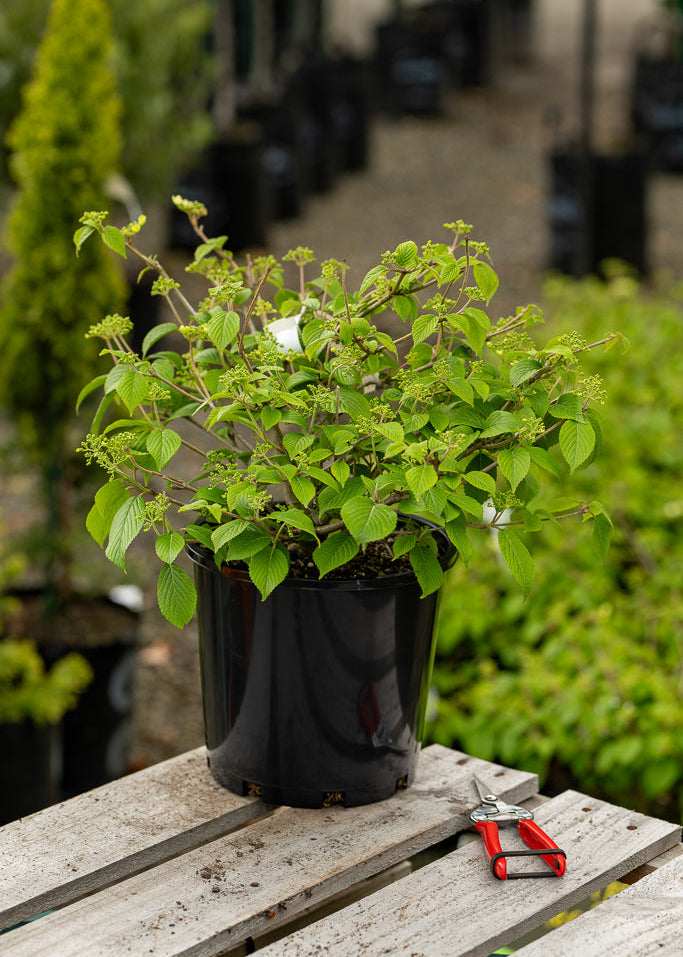
Viburnum Plicatum ‘Summer Snowflake’
Viburnum Plicatum ‘Summer Snowflake’
Viburnum plicatum 'Snowflake' is a beautiful deciduous flowering shrub known for its distinctive tiered branching habit and masses of white lacecap-style flowers. Rather than producing one short burst of flowers and calling it a year, 'Snowflake' can continue producing blooms over an extended period from late spring into summer.
The strongly veined green foliage sits neatly along the horizontal branches, creating an attractive layered effect even when the shrub isn't flowering. In autumn, the leaves develop attractive red, burgundy and purple tones before falling.
It's a fantastic feature shrub for mixed borders, cottage gardens and woodland-style planting, particularly where you have enough space to allow its naturally spreading, layered shape to develop.
Why You'll Love Viburnum 'Snowflake'
- Masses of beautiful white lacecap flowers
- Extended flowering period from late spring into summer
- Attractive layered, horizontal branching
- Fresh green, deeply veined foliage
- Beautiful red and burgundy autumn colour
- Hardy and frost tolerant
- Excellent feature shrub
- Provides interest across several seasons
- Works beautifully in cottage and woodland-style gardens
- Attractive to pollinating insects
- Attracts pollinators, Flowering, Wind Tolerant, Frost Tolerant , Deciduous, and Cold hardy
- Expected 5 Year Height 2.5M
- Flowers in Summer
Planting & Care Tips
Planting & Care Tips
How to care for your Viburnum Plicatum ‘Summer Snowflake’:Water deeply and regularly during the first couple of growing seasons while the root system establishes.
Pay particular attention during hot, dry summer weather.
Deep watering encourages the roots to establish into the surrounding soil rather than remaining concentrated around the original root ball.
Once established, Snowflake has reasonable tolerance of short dry periods.
However, additional watering during prolonged drought will help maintain healthy foliage and support flowering.
Apply organic mulch around the root zone each year.
Mulching helps:
Retain soil moisture
Reduce weed competition
Keep roots cooler through summer
Improve soil structure over time
Keep mulch slightly away from the base of the stems.
Apply a balanced slow-release fertiliser in spring as new growth begins.
An annual application of compost around the root zone is also beneficial, particularly in lighter or poorer soils.
Avoid excessive high-nitrogen fertiliser, which can encourage lots of leafy growth without necessarily improving flowering.
When Should You Prune Viburnum 'Snowflake'?
Snowflake generally needs very little pruning.
Its naturally layered branching is one of its best features, so repeated clipping can quickly turn a graceful shrub into a green blob.
If pruning is required, do it after flowering.
Prune to:
Remove dead or damaged branches
Remove crossing or congested growth
Maintain a balanced framework
Remove occasional older stems if rejuvenation is required
Control size lightly where necessary
Avoid heavy annual pruning if you want to retain its natural tiered shape.
Viburnum plicatum 'Snowflake' is highly frost hardy and is an excellent choice for cooler New Zealand gardens.
The foliage develops attractive autumn tones before falling, leaving the layered branch structure visible through winter.
Established plants generally require no special frost protection.
A layer of mulch around newly planted shrubs will help protect the root zone and maintain consistent soil conditions.
The flattened white flower clusters are made up of smaller fertile flowers surrounded by larger, showier florets.
This lacecap arrangement isn't just pretty – the flowers can also attract bees and other beneficial pollinating insects into the garden.
It's a good shrub to include where you're trying to create a garden with both ornamental value and seasonal food sources for insects.
Spacing Guide
Spacing Guide
Couldn't load pickup availability
Share