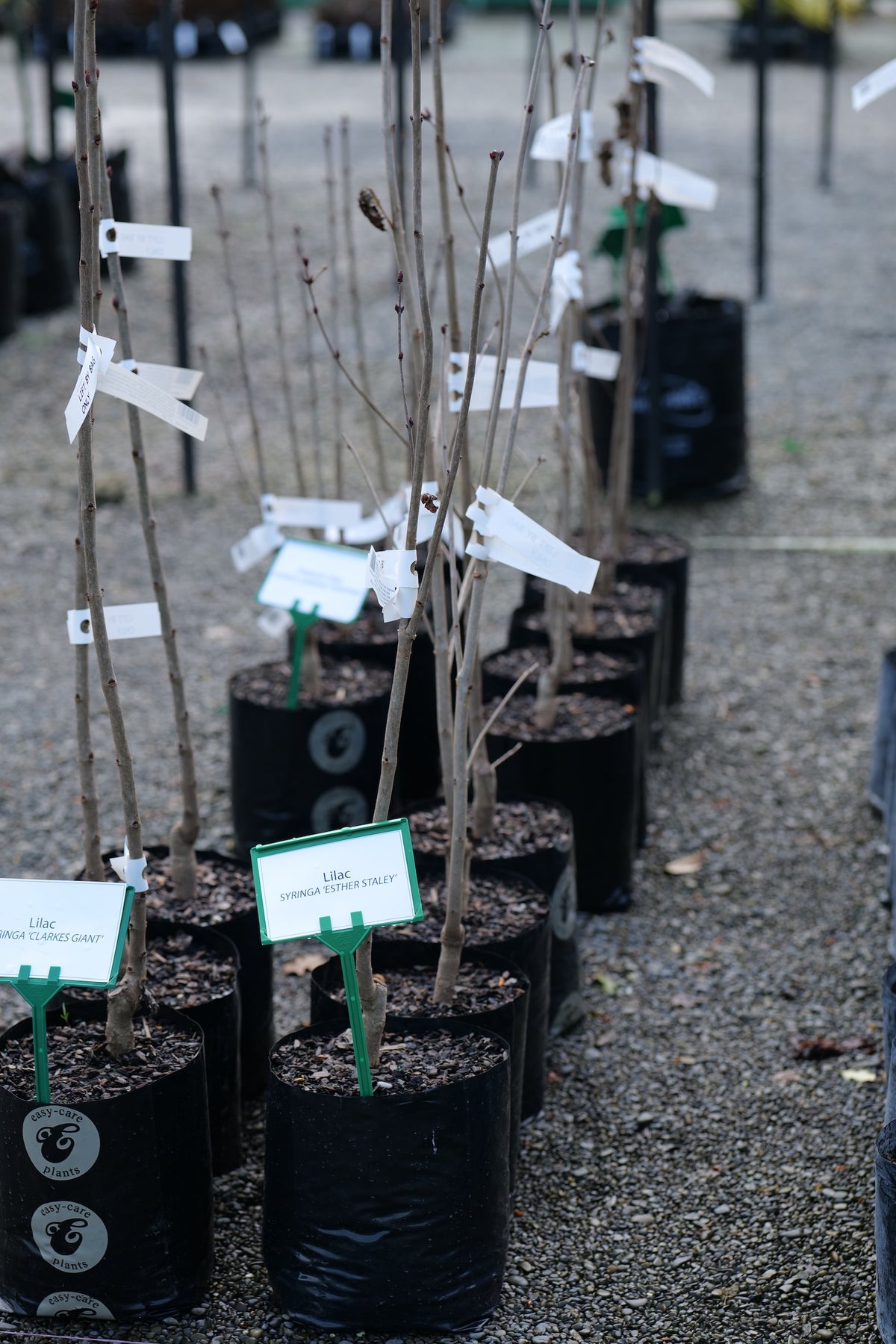
Syringa Esther Staley
Syringa Esther Staley
Tree lilac
Syringa 'Esther Staley' is a beautiful deciduous lilac grown for its abundant clusters of soft rosy-pink, highly fragrant flowers in spring. The flower buds emerge deeper pink before opening into lighter pink blooms, giving the flower heads lovely depth and variation.
With its upright, bushy habit and fresh green foliage, 'Esther Staley' makes a wonderful feature shrub for cottage gardens, mixed borders and fragrant gardens. Better still, the flowers can be cut and brought indoors – so you can enjoy that classic lilac fragrance without standing outside sniffing the shrub.
Hardy and frost tolerant, lilacs are particularly well suited to cooler New Zealand climates such as Canterbury, where the cold winter period helps support good flowering.
Why You'll Love Syringa 'Esther Staley'
- Beautiful rosy-pink spring flowers
- Deep pink buds opening to softer pink blooms
- Wonderfully fragrant
- Excellent cut flower
- Hardy and frost tolerant
- Attractive upright, bushy habit
- Excellent spring feature shrub
- Perfect for cottage and traditional gardens
- Loved by bees and other pollinating insects
- Expected 5 Year Height 3.0 M Width 3.0 M
Is Syringa Esther Staley suitable for my garden?
Is Syringa Esther Staley suitable for my garden?
Syringa Esther Staley is best suited in a position that gets
Syringa Esther Staley is
- Wind Tolerant
- Deciduous
- Flowering
- Cold hardy
Syringa Esther Staley will thrive in soil that is
- Free draining
- Nutrient rich
How to establish your Syringa Esther Staley?
How to establish your Syringa Esther Staley?
Plant Syringa 'Esther Staley' in full sun.
Good sunlight is important for strong flowering, so choose a position receiving at least several hours of direct sun each day.
For best results, choose a site with:
Plenty of sunlight
Good airflow
Free-draining soil
Room for the shrub to develop naturally
Protection from severe exposure while establishing
How to maintain your Syringa Esther Staley once established?
How to maintain your Syringa Esther Staley once established?
Water deeply and regularly during the first couple of growing seasons while the root system establishes.
Pay particular attention during hot, dry Canterbury summers.
Established Plants
Once established, lilacs have reasonable tolerance of short dry periods.
Water during prolonged drought, particularly as flower buds and new growth are developing.
Avoid constantly wet soil.
Feeding
Apply a balanced slow-release fertiliser in spring if required.
An annual application of compost or well-rotted organic matter around the root zone can also help maintain healthy soil.
Avoid excessive high-nitrogen fertilisers, which can encourage masses of leafy growth at the expense of flowers.
Pruning
When Should You Prune Lilacs?
Prune immediately after flowering.
Lilacs develop the following season's flowers on established growth, so pruning heavily during winter or early spring can remove the flower buds you were waiting for.
After flowering:
Remove spent flower heads if desired.
Remove dead or damaged branches.
Thin congested growth.
Remove crossing branches.
Remove some older stems at ground level if rejuvenation is required.
Avoid cutting the entire shrub back hard every year.
For older, congested plants, gradually removing some of the oldest stems over several seasons can encourage fresh growth while maintaining flowers.
Frost and Winter Care
Syringa 'Esther Staley' is highly frost hardy and well suited to colder New Zealand gardens.
Lilacs actually benefit from a proper cool winter, making them particularly at home in areas such as Canterbury.
The plant loses its foliage in autumn and remains dormant through winter before bursting back into growth and flower in spring.
Established plants require very little special winter protection.
Pest and Disease
Lilacs are generally hardy shrubs, although powdery mildew can sometimes appear on foliage, particularly where airflow is poor or plants are stressed.
Help reduce problems by:
Providing good airflow around the shrub
Planting in plenty of sunlight
Avoiding overcrowding
Watering the soil rather than constantly wetting foliage
Removing heavily affected fallen leaves where necessary
Healthy plants growing in a suitable position generally require very little intervention.
Couldn't load pickup availability
Share