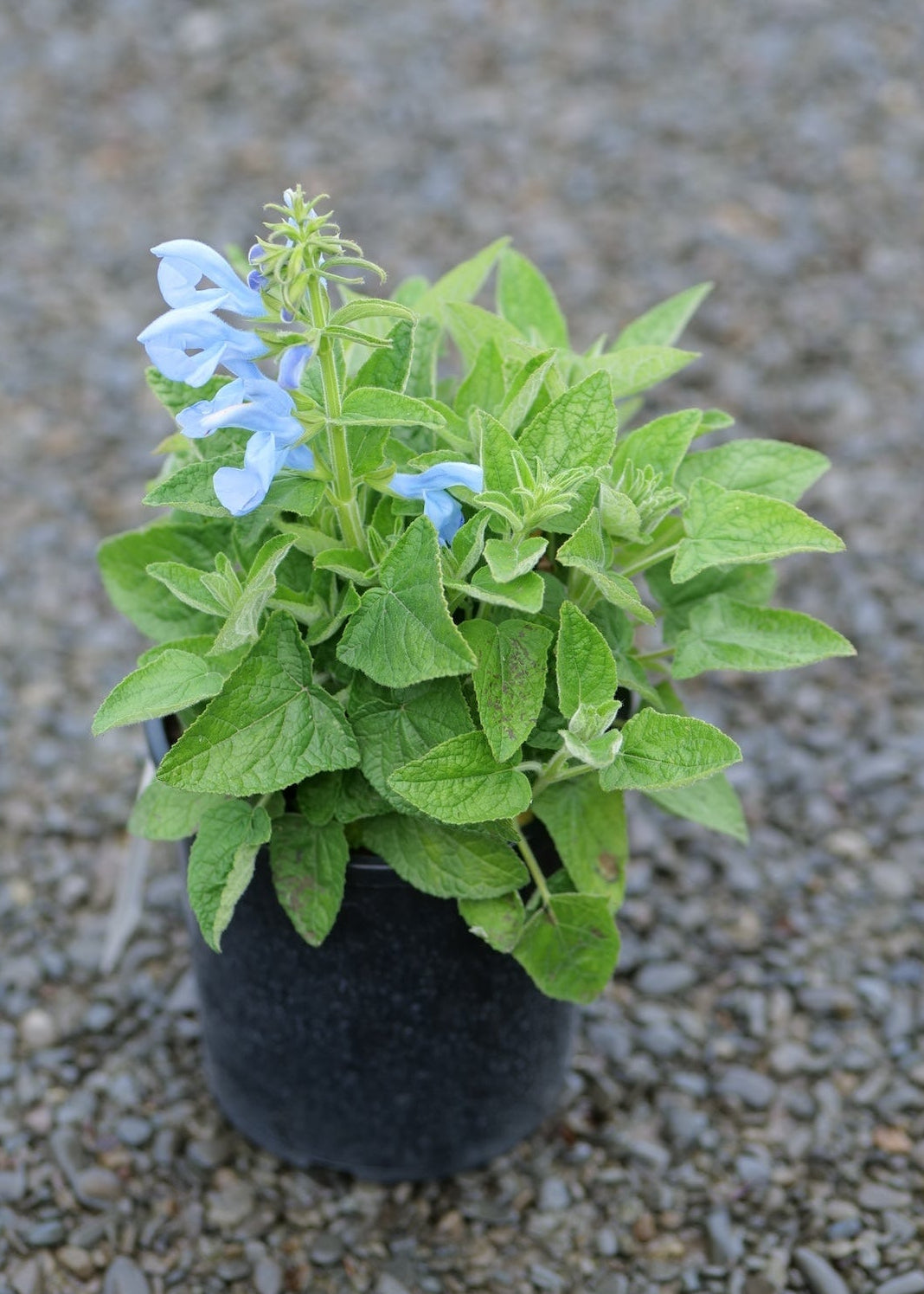
Salvia Patio Sky Blue
Salvia Patio Sky Blue
Salvia 'Patio Blue' is a beautiful compact flowering perennial producing attractive blue to violet-blue flowers on upright spikes above green foliage.
With its tidy growth habit and colourful flowers, Patio Blue is particularly useful for sunny garden borders, cottage gardens, courtyard planting and containers.
Growing to approximately 40–60cm high and 40–50cm wide, it provides an impressive display without taking up too much valuable garden space.
The flowers are attractive to bees and other pollinating insects, while the compact foliage provides a useful contrast against ornamental grasses and other flowering perennials.
And if you've got a small garden but still want plenty of colour, this little Salvia is more than happy to pull its weight.
Why You'll Love Salvia 'Patio Blue'
- Beautiful blue to violet-blue flowers
- Compact, bushy growth habit
- Long flowering period during warmer months
- Excellent for sunny borders and containers
- Attractive to bees and other pollinators
- Great for cottage-style gardens
- Suitable for mass planting
- Easy to maintain with seasonal trimming
- Combines beautifully with ornamental grasses
- Ideal for smaller garden spaces
- Expected 5 Year Height 0.6 M Width 0.5 M
Is Salvia Patio Sky Blue suitable for my garden?
Is Salvia Patio Sky Blue suitable for my garden?
Salvia Patio Sky Blue is best suited in a position that gets
- Full sun
- Partial shade
Salvia Patio Sky Blue is
- Winter Dormant
- Perennial
- Drought resistant once established
Salvia Patio Sky Blue will thrive in soil that is
How to establish your Salvia Patio Sky Blue?
How to establish your Salvia Patio Sky Blue?
Plant Salvia 'Patio Blue' in full sun to light part shade.
For the strongest growth and best flowering, choose a position receiving at least six hours of direct sunlight daily.
In Canterbury gardens, a sunny position with some protection from severe nor'west winds is ideal.
Avoid planting in heavily shaded areas, where flowering may be reduced and stems may become leggy.
How to maintain your Salvia Patio Sky Blue once established?
How to maintain your Salvia Patio Sky Blue once established?
Newly planted Salvias: Water regularly during the first growing season to encourage strong root establishment.
Allow the soil surface to dry slightly between waterings rather than keeping it constantly wet.
Established plants: Once established, Patio Blue can tolerate short dry periods.
However, additional watering during prolonged summer drought will help maintain healthy growth and consistent flowering.
During Canterbury's hot nor'west conditions, water deeply when required.
Mulching
Apply a light layer of organic mulch around the root zone to:
Retain soil moisture
Suppress weeds
Moderate soil temperature
Reduce competition
Keep mulch away from the crown and main stems.
Avoid thick, moisture-retentive mulch around the base during winter.
Feeding
Salvia 'Patio Blue' generally benefits from light feeding during the growing season.
Apply a balanced slow-release fertiliser in spring as new growth begins.
Container-grown plants may benefit from occasional liquid feeding during summer.
Avoid excessive nitrogen fertiliser, which can encourage leafy growth at the expense of flowers.
Deadheading
Removing spent flower spikes can encourage continued flowering.
During summer:
Wait until a flower spike begins to fade.
Cut the spent stem back to a healthy pair of leaves or developing side shoot.
Remove any damaged or untidy growth.
Repeat throughout the flowering season as required.
A light trim after a major flowering flush can encourage fresh growth and another display of flowers.
Pruning
The best time for the main annual prune is generally early spring, once the risk of severe frost has passed.
Remove dead or damaged growth and trim the plant to encourage a compact, bushy shape.
During summer, light trimming can help prevent plants becoming leggy.
Avoid severe pruning during late autumn or winter, particularly in colder Canterbury gardens.
Frost and Winter Care
Salvia 'Patio Blue' may lose some or all of its foliage during colder weather.
In Canterbury gardens:
Choose a sunny, sheltered position.
Ensure good winter drainage.
Avoid heavy pruning in autumn.
Protect young plants during severe frosts.
Wait until spring before removing frost-damaged growth.
If the plant dies back during winter, check for fresh growth from the crown as temperatures improve in spring.
Canterbury Nor'westers
Patio Blue enjoys sunshine and warmth, but hot, drying nor'west winds can cause moisture stress, particularly during establishment.
During prolonged dry periods:
Water deeply when required.
Maintain a light mulch layer.
Avoid extremely exposed planting positions.
Check container-grown plants regularly.
Consistent moisture during flowering will help maintain healthy growth and flower production.
Pests and Diseases
Salvia 'Patio Blue' is generally relatively trouble-free when grown in suitable conditions.
Occasional problems may include:
Aphids on tender growth
Whitefly
Spider mites during hot, dry weather
Powdery mildew where airflow is poor
Root rot in poorly drained soil
Good airflow, appropriate watering and free-draining soil will help maintain healthy plants.
Growing Patio Blue in Containers
Its compact habit makes Patio Blue particularly suitable for pots and containers.
It's ideal for:
Sunny patios
Courtyards
Entrance planting
Mixed perennial planters
Small outdoor spaces
Use a quality free-draining potting mix and ensure the container has adequate drainage holes.
Water regularly during warm weather and trim spent flowers to encourage continued blooming.
Container-grown plants may need additional winter protection in colder areas.
Planting Spacing
For a relatively dense flowering display, space Salvia 'Patio Blue' approximately 35–45cm apart.
For individual plants in mixed borders, allow around 40–50cm between plants.
Planting in groups of three, five or more creates a stronger visual effect than scattering individual plants throughout the garden.
Couldn't load pickup availability
Share