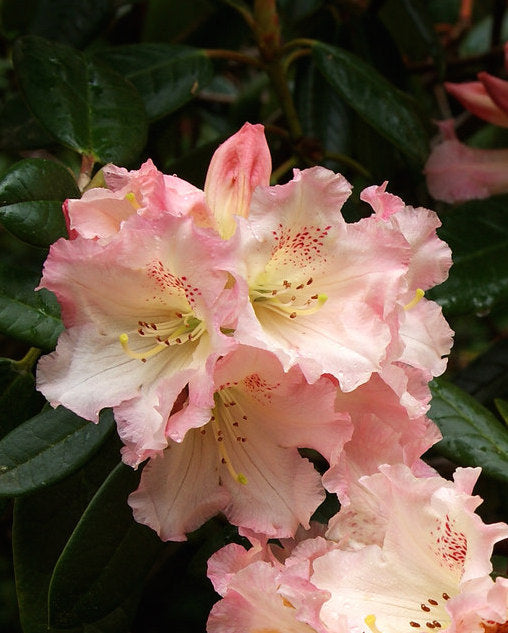
Rhododendron Petticoat Lane
Rhododendron Petticoat Lane
Rhododendron 'Petticoat Lane' is an elegant evergreen rhododendron renowned for its large, beautifully frilled flowers in soft white, delicately flushed with blush pink. Each flower truss creates a refined, romantic display in spring, standing out against the rich, glossy green foliage.
Compact, hardy and free-flowering, 'Petticoat Lane' is an excellent choice for woodland gardens, mixed borders, feature planting or large containers. Its neat habit and spectacular spring performance make it a favourite for gardeners wanting timeless beauty with minimal maintenance.
Why You'll Love Rhododendron 'Petticoat Lane'
- Masses of large, frilly white flowers with a soft pink blush
- Attractive evergreen foliage all year round
- Compact, rounded growth habit
- Spectacular spring flowering display
- Excellent feature shrub or woodland plant
- Frost hardy and easy to grow
- Perfect for borders, cottage gardens and shaded areas
- Low maintenance once established
- Expected 5 Year Height 1.8 M Width 1.8 M
Is Rhododendron Petticoat Lane suitable for my garden?
Is Rhododendron Petticoat Lane suitable for my garden?
Rhododendron Petticoat Lane is best suited in a position that gets
- Partial shade
Rhododendron Petticoat Lane is
- Flowering
- Attracts pollinators
- Cold hardy
- Evergreen
Rhododendron Petticoat Lane will thrive in soil that is
- Acidic
- Free draining
- Nutrient rich
How to establish your Rhododendron Petticoat Lane?
How to establish your Rhododendron Petticoat Lane?
Like most rhododendrons, Petticoat Lane thrives in rich, humus-filled soil that is slightly acidic and drains freely. A position with morning sun and protection from hot afternoon sun will encourage healthy growth and abundant flowering.
It performs particularly well in woodland-style plantings where the roots remain cool and sheltered.
How to maintain your Rhododendron Petticoat Lane once established?
How to maintain your Rhododendron Petticoat Lane once established?
Watering
Water regularly during establishment and through extended dry periods. Rhododendrons prefer consistent soil moisture but dislike waterlogged conditions.
Feeding
Apply a fertiliser designed for rhododendrons, camellias, or other acid-loving plants in early spring and again after flowering if required.
Pruning
Very little pruning is necessary. Remove spent flower trusses after flowering to help direct energy into next season's growth and blooms.
Mulching
Apply organic mulch annually to conserve moisture, improve soil structure, and suppress weeds.
Couldn't load pickup availability
Share