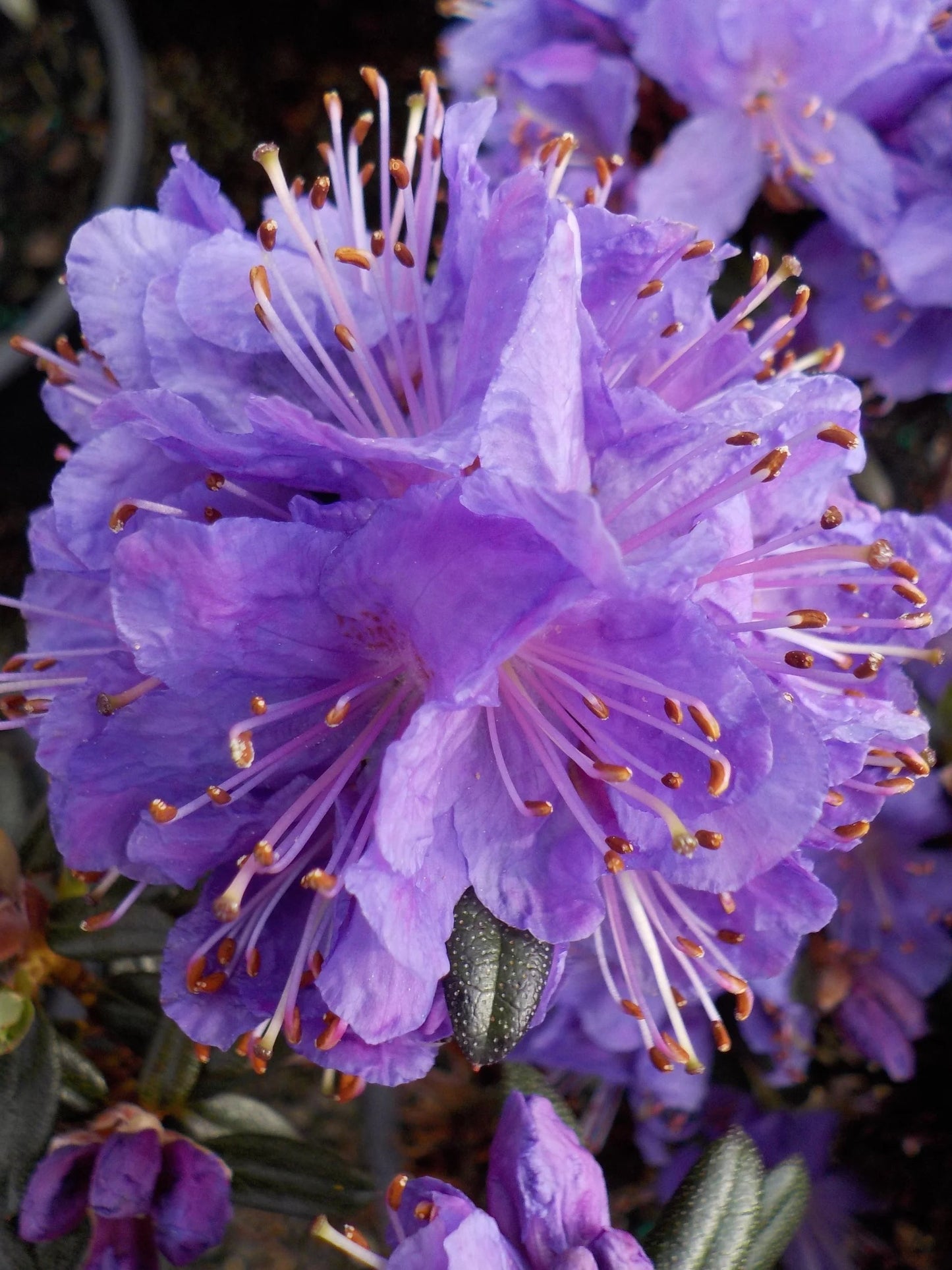
Rhododendron Glenfalloch Blue
Rhododendron Glenfalloch Blue
Rhododendron 'Glenfalloch Blue' is an attractive evergreen Rhododendron grown for its distinctive blue-purple to lavender-blue flowers. True blue is a notoriously difficult colour to find in the plant world, and this rhodo certainly brings cooler blue and violet tones into the spring garden.
The flowers are held in showy trusses above deep green evergreen foliage, creating a lovely contrast during flowering while maintaining useful structure throughout the rest of the year.
Hardy and particularly at home in cooler New Zealand climates, Glenfalloch Blue is ideal for woodland-style gardens, mixed shrub borders and Rhododendron collections. Give it acidic soil, consistent moisture and some protection from Canterbury's hot nor'west winds and it will reward you with a beautiful spring display.
Why You'll Love Rhododendron 'Glenfalloch Blue'
- Distinctive blue-purple to lavender-blue flowers
- Showy spring flower trusses
- Attractive deep green foliage
- Evergreen for year-round structure
- Excellent feature shrub
- Hardy and frost tolerant
- Beautiful in woodland-style gardens
- Works particularly well amongst pink, white and cream Rhododendrons
- Relatively low maintenance once established
- Wind Tolerant, Frost Tolerant , Flowering, Cold hardy, and Evergreen
- Expected 5 Year Height 0.5M
- Flowers in September
Planting & Care Tips
Planting & Care Tips
How to care for your Rhododendron Glenfalloch Blue:Water deeply and regularly during the first couple of growing seasons while the plant establishes.
Because Rhododendrons have shallow roots, the soil around them can dry out surprisingly quickly during warm weather.
Continue watering during prolonged dry periods.
Pay particular attention during Canterbury's hot summer nor'west conditions, when moisture can disappear quickly from both the soil and foliage.
A proper deep watering is considerably more useful than giving the soil surface a quick splash every evening.
Apply a generous layer of organic mulch around the root zone.
Mulching helps:
Retain soil moisture
Keep roots cool
Reduce weed competition
Protect shallow roots
Add organic matter
Moderate soil temperatures
Composted bark and similar organic materials are excellent options.
Keep heavy mulch slightly away from the main stems.
Feed in spring using a fertiliser formulated for Rhododendrons, Azaleas, Camellias or other acid-loving plants.
Follow the recommended application rate.
Avoid excessive fertiliser, particularly high-nitrogen products.
Too much nitrogen can encourage lots of leafy growth without necessarily producing more flowers.
Glenfalloch Blue should require very little regular pruning.
Its naturally bushy growth habit is generally best allowed to develop without too much interference.
Prune when necessary to:
Remove dead or damaged branches
Remove crossing growth
Thin congested areas
Lightly improve the shape
Remove awkward branches
If pruning is required, do it shortly after flowering.
This gives the plant time to develop new growth and flower buds for the following season.
Spent flower trusses can be removed after flowering if you want to keep the shrub looking tidy.
Carefully remove the old flower head without damaging the fresh growth buds directly underneath it.
Deadheading isn't essential, particularly once the plant becomes larger and established.
If you've got 25 mature Rhododendrons, we'll completely understand if you suddenly decide nature can handle this particular job.
Rhododendron 'Glenfalloch Blue' is frost hardy and well suited to cooler New Zealand gardens.
Established plants generally cope well with normal winter frost.
Its evergreen foliage remains on the plant throughout winter, providing valuable structure when many deciduous plants are completely bare.
Late spring frosts can occasionally damage:
Developing flowers
Open blooms
Tender new foliage
A sheltered position helps reduce the risk.
For Rhododendrons in Canterbury, summer heat and drying wind can be more troublesome than winter cold.
Hot nor'west conditions can cause:
Brown leaf margins
Leaf scorch
Drooping foliage
Rapid moisture loss
Flower damage
Plant Glenfalloch Blue somewhere protected from the worst of the wind and maintain a good layer of mulch around the roots.
If the proposed planting position regularly sends your outdoor furniture into the neighbour's garden, we'd find the Rhodo somewhere else to live.
Yellow foliage can sometimes indicate that your Rhododendron isn't particularly happy with its growing conditions.
Possible causes include:
Soil that's too alkaline
Poor drainage
Waterlogged roots
Nutrient deficiencies
Excessive fertiliser
Drought stress
Root disturbance
If the leaves begin yellowing, check the soil pH, drainage and watering before simply adding more fertiliser.
Growing Glenfalloch Blue in a Container
Glenfalloch Blue can also be grown in a large container, particularly while younger.
Use:
A generous container
Excellent drainage
Acidic potting mix suitable for Rhododendrons
A sheltered position
Consistent watering
Fertiliser for acid-loving plants
Container-grown Rhododendrons require more attention to watering because their shallow roots can't access moisture from the surrounding garden.
Spacing Guide
Spacing Guide
Couldn't load pickup availability
Share