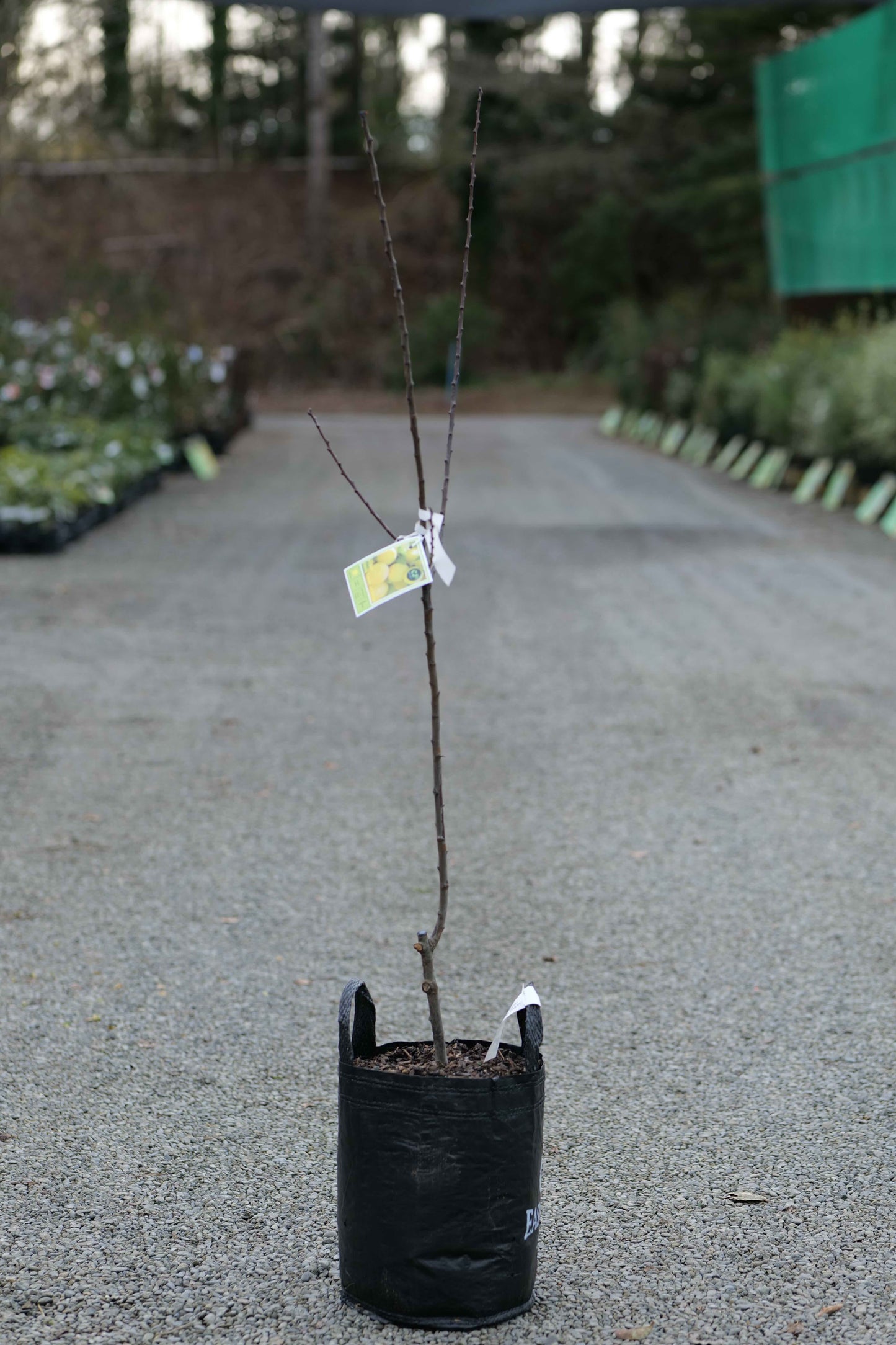
Plum Reine Claude De Bavay
Plum Reine Claude De Bavay
Plum 'Reine Claude de Bavay' is a heritage European gage plum treasured for its large greenish-yellow fruit and outstandingly sweet, rich flavour. Originally developed in Belgium during the 19th century, it remains one of the finest dessert plums available, producing juicy flesh that is perfect for eating fresh, bottling, preserving and baking.
Flowering in spring and ripening in late summer to early autumn, this vigorous tree also provides beautiful seasonal interest with masses of white blossoms followed by a reliable crop of premium-quality fruit. Hardy and easy to grow, it's an excellent addition to home orchards throughout New Zealand.
Why You'll Love Plum 'Reine Claude de Bavay'
- Large, exceptionally sweet gage plums
- Excellent dessert-quality fruit
- Heavy crops once established
- Beautiful white spring blossom
- Ideal for eating fresh, preserving and baking
- Hardy and reliable performer
- Attractive deciduous tree with seasonal interest
- Perfect for home orchards and lifestyle blocks
- Expected 5 Year Height 3.0 M Width 2.0 M
Is Plum Reine Claude De Bavay suitable for my garden?
Is Plum Reine Claude De Bavay suitable for my garden?
Plum Reine Claude De Bavay is best suited in a position that gets
- Full sun
Plum Reine Claude De Bavay is
- Edible
- Frost Tolerant
- Deciduous
- Flowering
- Cold hardy
Plum Reine Claude De Bavay will thrive in soil that is
How to establish your Plum Reine Claude De Bavay?
How to establish your Plum Reine Claude De Bavay?
Plant Plum 'Reine Claude de Bavay' in full sun.
For the best crops:
Choose a site with at least six hours of direct sunlight each day.
Shelter young trees from strong prevailing winds.
Allow adequate space for the canopy to develop and for good airflow.
How to maintain your Plum Reine Claude De Bavay once established?
How to maintain your Plum Reine Claude De Bavay once established?
Water deeply once or twice a week during the first summer, depending on rainfall.
Once established, water during:
Extended dry periods.
Fruit development.
Prolonged hot weather.
Consistent moisture helps produce larger, juicier fruit.
Feed annually in early spring with a balanced fruit tree fertiliser.
For healthy growth:
Apply compost around the drip line each winter.
Mulch to conserve moisture and suppress weeds.
Avoid excessive nitrogen, which encourages leafy growth at the expense of fruit.
'Reine Claude de Bavay' is partially self-fertile, but planting another compatible European plum nearby will improve pollination, increase fruit set and produce heavier crops.
Suitable pollination partners include:
Plum 'Coe's Golden Drop'
Plum 'Greengage'
Plum 'Omega'
Planting more than one variety also helps extend your harvest season.
Prune in late summer after harvesting to reduce the risk of silver leaf disease.
Remove:
Dead or damaged branches.
Crossing or congested growth.
Vigorous upright shoots.
Aim to maintain an open canopy that allows good airflow and sunlight penetration.
Fruit is usually ready from late February through March.
Harvest when the fruit:
Develops its characteristic golden-green colour.
Feels slightly soft when gently squeezed.
Comes away easily from the branch.
The fruit is excellent for:
Fresh eating
Preserves
Bottling
Baking
Desserts
Cheese platters
Frost and Winter Care
This variety is well suited to cooler New Zealand climates and benefits from winter chilling to produce reliable crops.
Young trees should be:
Mulched over winter.
Protected from severe late spring frosts while flowering if possible.
Watered during prolonged dry winters if required.
Established trees are highly frost hardy.
Regularly inspect for:
Aphids
Scale insects
Leaf curl
Brown rot
Silver leaf disease
Good pruning practices, orchard hygiene and adequate airflow will help reduce disease pressure.
Couldn't load pickup availability
Share