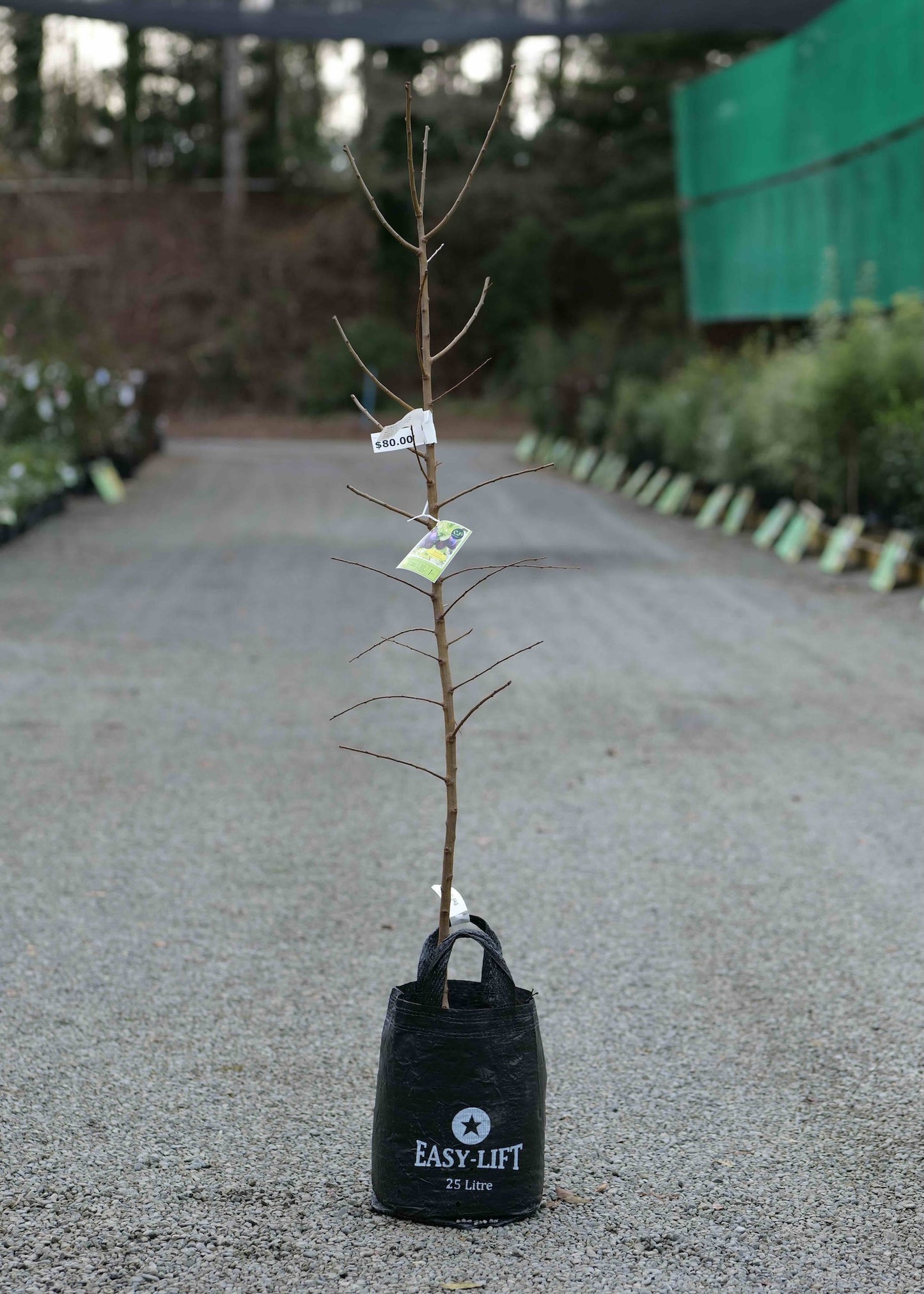
Plum Black Doris
Plum Black Doris
Plum 'Black Doris' is one of New Zealand's best-loved plum varieties, prized for its large, juicy fruit, deep red flesh and rich, sweet flavour. A favourite for both fresh eating and preserving, this vigorous deciduous fruit tree produces heavy crops of dark purple-black plums that ripen in late summer.
The fruit is renowned for its firm texture and outstanding flavour, making it equally suited to eating straight from the tree, bottling, jams, chutneys and baking. In spring, the tree is covered in masses of delicate white blossom, providing an attractive ornamental display while attracting bees and other pollinators.
Hardy, reliable and productive, Black Doris has earned its reputation as one of the finest plums for New Zealand home gardens.
Black Doris is partially self-fertile, meaning it can produce fruit on its own. However, planting a compatible plum nearby will significantly improve pollination, resulting in heavier crops and larger fruit.
Suitable pollination partners include:
- Omega
- Santa Rosa
- Duff's Early Jewel
- Elephant Heart
If space allows, planting two plum varieties together is recommended for the best yields.
Why You'll Love Plum Black Doris
- Large, sweet, juicy fruit with deep red flesh
- One of New Zealand's most popular plum varieties
- Excellent for fresh eating, bottling and preserving
- Heavy, reliable crops
- Beautiful spring blossom
- Highly frost hardy during winter dormancy
- Easy to grow and maintain
- Perfect for home orchards
- Expected 5 Year Height 3.5 M Width 3.5 M
Is Plum Black Doris suitable for my garden?
Is Plum Black Doris suitable for my garden?
Plum Black Doris is best suited in a position that gets
- Full sun
Plum Black Doris is
- Pollinator Needed
- Frost Tolerant
- Deciduous
- Edible
Plum Black Doris will thrive in soil that is
- Nutrient rich
- Free draining
- Acidic
How to establish your Plum Black Doris?
How to establish your Plum Black Doris?
Plant Plum Black Doris in a full sun position.
For the best crops:
Choose a site with at least six hours of direct sunlight daily.
Shelter young trees from strong prevailing winds.
Allow good airflow around the canopy to reduce disease pressure.
How to maintain your Plum Black Doris once established?
How to maintain your Plum Black Doris once established?
Water deeply once or twice each week during the first growing season.
Once established, water during prolonged dry periods, especially while fruit is developing.
Consistent moisture helps produce larger, juicier fruit.
Feed annually in early spring with:
Compost or well-rotted organic matter.
A balanced fruit tree fertiliser.
Avoid applying excessive nitrogen, as this encourages leafy growth rather than fruit production.
Plums are best pruned in summer after harvest to reduce the risk of silver leaf disease.
Remove:
Dead or damaged branches.
Crossing branches.
Crowded growth.
Vigorous upright water shoots.
Maintain an open canopy to improve airflow and sunlight penetration.
If the tree sets a particularly heavy crop:
Thin fruit shortly after natural fruit drop.
Leave plums approximately 5–10cm apart.
This encourages larger fruit and reduces the risk of branches breaking under heavy loads.
Black Doris fruit is ready to harvest when:
The skin has developed a rich dark purple-black colour.
The fruit gives slightly when gently squeezed.
The fruit separates easily from the branch.
Harvest regularly as fruit ripens for the best flavour.
Black Doris is well suited to New Zealand's temperate climate.
For best performance:
Apply mulch around the root zone, keeping it clear of the trunk.
Protect blossom from severe late spring frosts where practical.
Ensure the tree receives adequate winter chilling for reliable flowering.
Pest and Disease Management
Monitor for common stone fruit pests and diseases, including:
Aphids
Leaf curl
Brown rot
Scale insects
Good pruning, sanitation and adequate airflow help minimise disease issues.
Companion Plants
Plum Black Doris grows well alongside:
Plum Omega
Plum Coe's Golden Drop
Apple Royal Gala
Pear Winter Nelis
Lavender
Chives
Calendula
Pollinator-friendly flowering perennials
These companion plants help attract beneficial insects and support healthy pollination in the home orchard.
Couldn't load pickup availability
Share