Phlomis Russelliana
Phlomis Russelliana
Jerusalem Sage
Phlomis russeliana, commonly known as Turkish Sage, is a striking perennial grown for its bold textured foliage and unique tiers of soft yellow flowers. Flowering from late spring through summer, the blooms are arranged in distinctive whorls up tall stems, creating a dramatic architectural effect that stands out in both formal and naturalistic gardens.
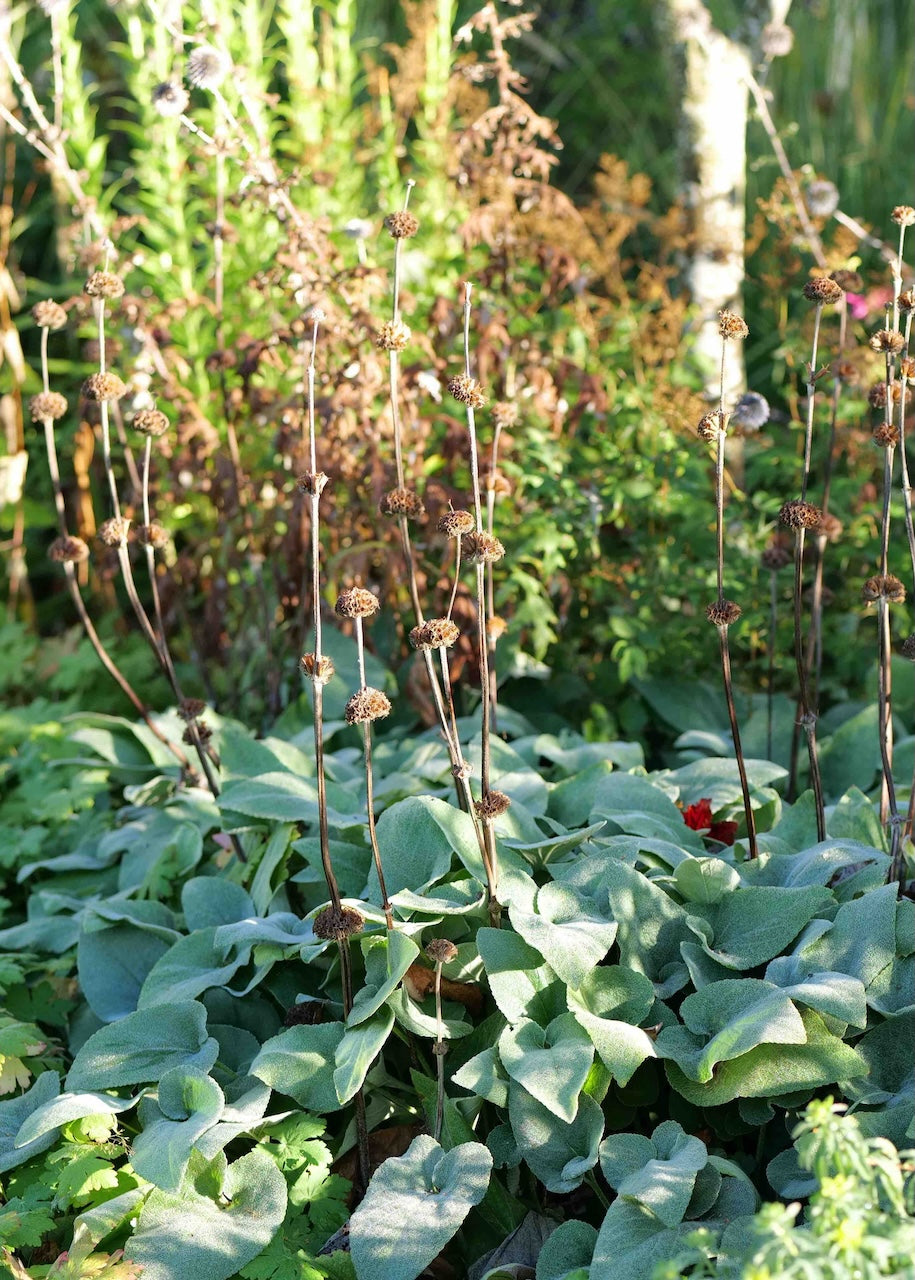
Tough, drought tolerant and long-lived, Phlomis russeliana is an excellent choice for cottage gardens, prairie-style plantings, Mediterranean gardens and low-maintenance landscapes. Even after flowering, the seed heads remain attractive through autumn and winter, adding structure and seasonal interest.
Why You'll Love Phlomis russeliana
- Unique whorls of soft yellow flowers
- Bold, textured foliage provides year-round interest
- Architectural form adds structure to the garden
- Long flowering season through late spring and summer
- Excellent drought tolerance once established
- Attractive seed heads for winter interest
- Pollinator-friendly flowers
- Low-maintenance and long-lived
- Expected 5 Year Height 1.0 M Width 0.6 M
Is Phlomis Russelliana suitable for my garden?
Is Phlomis Russelliana suitable for my garden?
Phlomis Russelliana is best suited in a position that gets
- Partial shade
- Full sun
Phlomis Russelliana is
- Perennial
- Disease resistant
- Attracts pollinators
- Drought resistant once established
- Drought resistant
- Flowering
- Fast-growing
- Cold hardy
Phlomis Russelliana will thrive in soil that is
- Free draining
- Normal
- Stoney
How to establish your Phlomis Russelliana?
How to establish your Phlomis Russelliana?
Plant Phlomis russeliana in full sun to part shade.
For best performance:
Full sun encourages compact growth and abundant flowering.
Part shade is tolerated, particularly in hotter regions.
Choose an open position with good airflow.
How to maintain your Phlomis Russelliana once established?
How to maintain your Phlomis Russelliana once established?
Water regularly until plants establish.
Once established, Phlomis russeliana is highly drought tolerant and generally only requires watering during prolonged dry periods.
Overwatering is rarely necessary.
Phlomis thrives without heavy feeding.
For best results:
Apply compost annually in spring.
Use a balanced slow-release fertiliser if required.
Avoid excessive fertiliser, which may encourage floppy growth.
You can choose between two approaches:
For a Tidy Appearance
Remove spent flower stems after flowering.
For Winter Interest
Leave seed heads standing through autumn and winter.
Cut back in late winter before new growth emerges.
Many gardeners prefer to leave the architectural seed heads intact.
Late Winter
Cut old flower stems back to the base.
Remove damaged foliage.
Tidy plants before spring growth begins.
Fresh new shoots will emerge strongly as temperatures warm.
Mature clumps can be divided every 4–5 years if desired.
Division helps:
Rejuvenate older plants
Increase plant numbers
Maintain vigour
Division is best carried out during spring.
Phlomis russeliana is extremely frost hardy and performs well throughout New Zealand.
Winter maintenance is minimal:
Ensure good drainage.
Leave seed heads standing if desired.
Remove old growth in late winter.
Growing in Naturalistic Gardens
Phlomis is particularly effective in:
Prairie gardens
Dry gardens
Wildlife gardens
Meadow-style plantings
Its strong structure and drought tolerance make it an ideal low-maintenance choice for modern landscape designs.
Phlomis russeliana combines beautifully with:
Verbena bonariensis
Salvia Amistad
Nepeta Blue Wonder
Liatris Floristan White
Echinacea
Ornamental grasses
Lavender
Gaura So White
The soft yellow flowers pair particularly well with purple, blue and white flowering perennials.
Couldn't load pickup availability
Share