Olearia Paniculata
Olearia Paniculata
Golden Ake ake
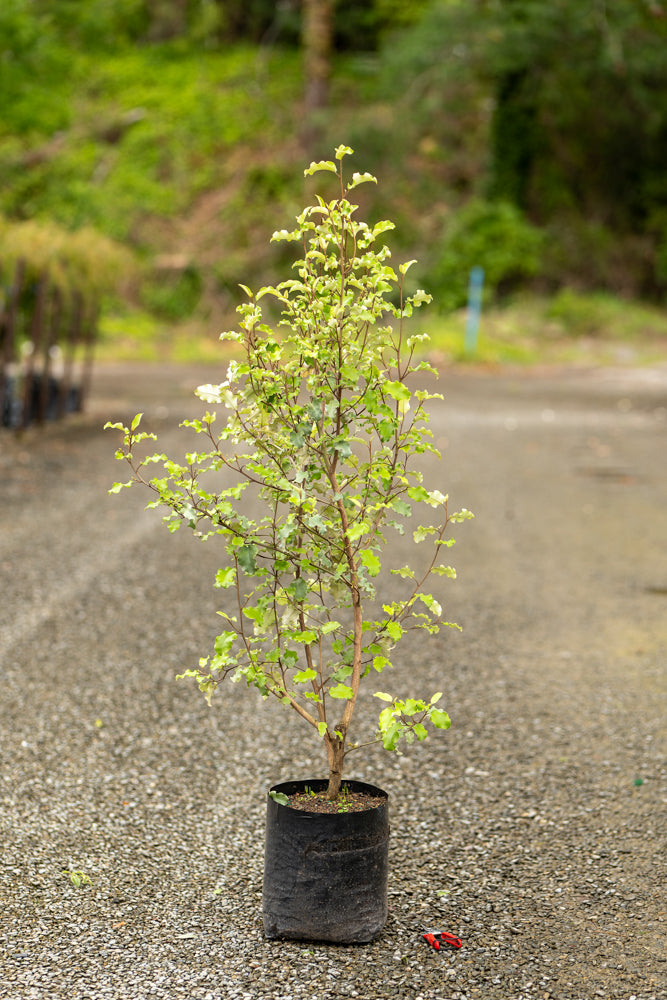
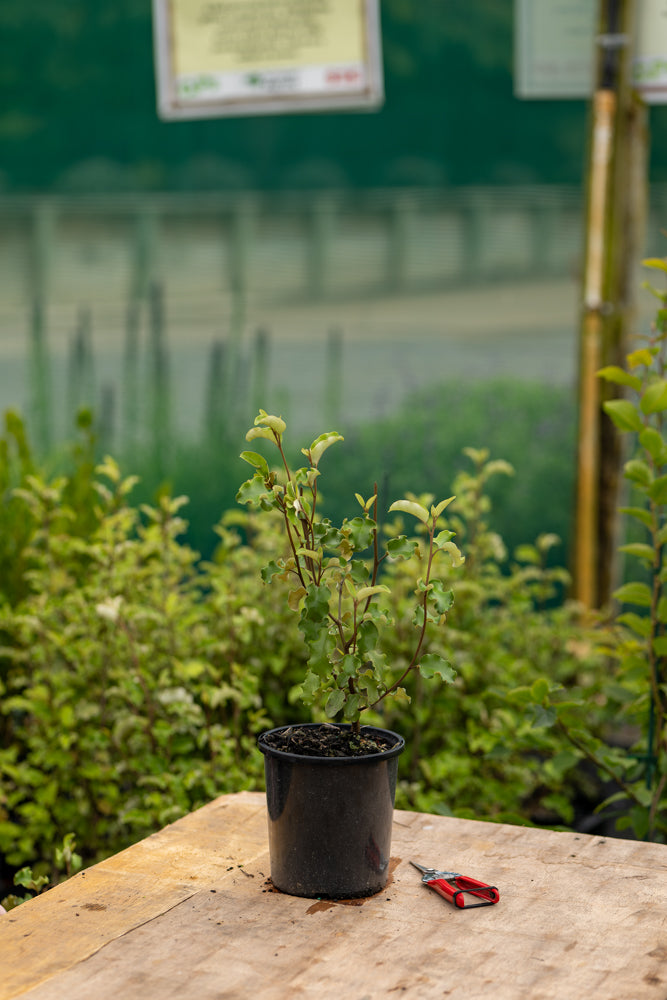
Olearia paniculata, also known as Akiraho or Golden Ake Ake, is a hardy New Zealand native shrub or small tree with fresh green, wavy-edged leaves and a naturally upright habit. It’s a brilliant option for screening, hedging, shelter planting, coastal gardens and exposed sites — basically, the sort of plant that doesn’t throw a tantrum every time the wind picks up.
This evergreen native has attractive leathery foliage with pale undersides, reddish stems, and small fragrant white flowers from autumn into early winter. It can be clipped into a tidy hedge or left to grow into a relaxed native screen. Mature size is generally around 3–5m high by 2–3m wide, depending on conditions and pruning. Sources note it prefers full sun to part shade, free-draining soil, and is particularly useful in dry, windy or coastal conditions.
- Expected 5 Year Height 3.0 M Width 2.0 M
Is Olearia Paniculata suitable for my garden?
Is Olearia Paniculata suitable for my garden?
Olearia Paniculata is best suited in a position that gets
- Partial shade
- Full sun
Olearia Paniculata is
- Wind Tolerant
- Frost Tolerant
- Coastal Friendly
- Drought resistant
- Cold hardy
- Evergreen
- NZ Native
Olearia Paniculata will thrive in soil that is
How to establish your Olearia Paniculata?
How to establish your Olearia Paniculata?
Water regularly while establishing, especially through the first summer. Once settled in, Olearia paniculata is fairly tough and low maintenance.
For best results:
Plant in free-draining soil.
Water deeply during dry spells while young.
Mulch around the base to retain moisture and suppress weeds.
Avoid constantly wet or boggy sites.
Feed in spring with a general garden fertiliser if growth looks slow.
How to maintain your Olearia Paniculata once established?
How to maintain your Olearia Paniculata once established?
Olearia paniculata responds well to pruning, which makes it a great choice for hedging and screening. Trim once or twice a year to keep it dense and tidy, or prune lightly after flowering if you prefer a more natural shape. A yearly prune is usually enough to maintain size and encourage fresh bushy growth.
Remove any dead, damaged or crossing branches as needed. For hedges, start trimming early rather than waiting until it gets too leggy. A little and often gives you a much better-looking plant than one brutal haircut later.
Couldn't load pickup availability
Share