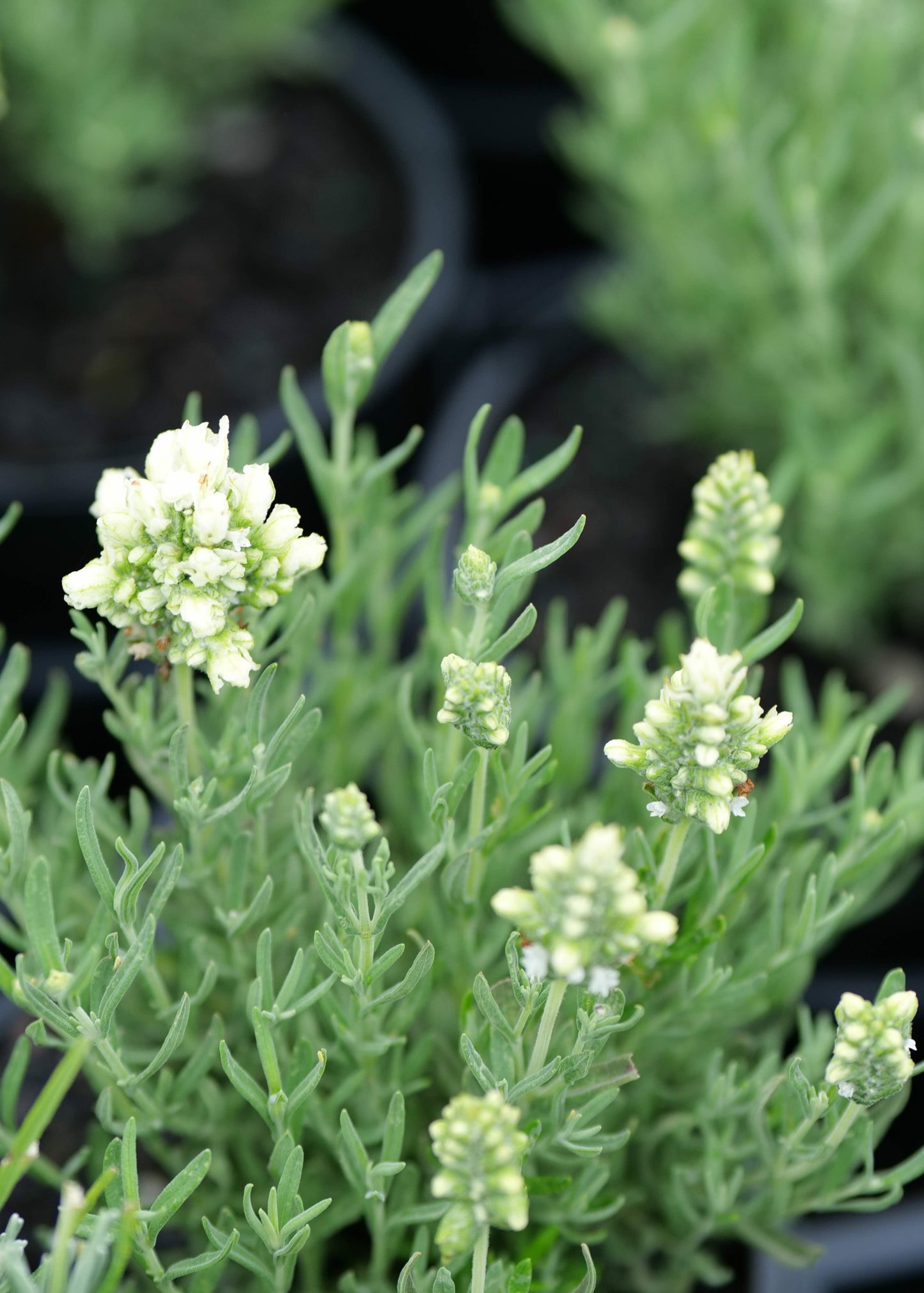
Lavandula Ice Berg
Lavandula Ice Berg
Lavender
Lavandula angustifolia 'Iceberg' is a beautiful white-flowering English Lavender that combines all the fragrance, hardiness and low-maintenance appeal of traditional lavender with elegant pure white flower spikes. Flowering throughout summer, Iceberg creates a stunning contrast against its silver-grey foliage and looks particularly striking when paired with purple lavenders or cottage garden perennials.
Compact, evergreen and drought tolerant once established, Lavandula Iceberg is perfect for borders, low hedging, cottage gardens, pollinator gardens and containers. Its fragrant flowers attract bees and beneficial insects while providing months of colour and interest.
Why You'll Love Lavandula Iceberg
- Pure white flower spikes throughout summer
- Highly fragrant flowers and foliage
- Compact and tidy growth habit
- Excellent for low hedging and borders
- Attracts bees and pollinators
- Drought tolerant once established
- Evergreen foliage provides year-round structure
- Perfect for cottage and Mediterranean-style gardens
- Expected 5 Year Height 0.5 M Width 0.5 M
Is Lavandula Ice Berg suitable for my garden?
Is Lavandula Ice Berg suitable for my garden?
Lavandula Ice Berg is best suited in a position that gets
- Full sun
Lavandula Ice Berg is
- Perennial
- Wind Tolerant
- Frost Tolerant
- Fragrant
- Flowering
- Attracts pollinators
- Fast-growing
- Cold hardy
- Evergreen
Lavandula Ice Berg will thrive in soil that is
- Stoney
- Free draining
How to establish your Lavandula Ice Berg?
How to establish your Lavandula Ice Berg?
Plant Lavandula Iceberg in a full sun position.
For the best flowering and strongest growth, choose a location that receives at least six hours of direct sunlight each day.
Lavender grown in shade will become open and produce fewer flowers.
How to maintain your Lavandula Ice Berg once established?
How to maintain your Lavandula Ice Berg once established?
Water regularly while plants establish.
Once established, Iceberg Lavender is highly drought tolerant and generally only requires watering during prolonged dry periods.
Overwatering is one of the most common causes of poor lavender performance.
Lavender prefers relatively lean soils and rarely requires heavy feeding.
For best results:
Apply a light dressing of compost in spring.
Use a low-nitrogen fertiliser if required.
Avoid excessive fertiliser, which can reduce flowering and produce soft growth.
Regular pruning is important to maintain a compact, long-lived plant.
After Flowering
Remove spent flower stems.
Trim back approximately one-third of the season's growth.
Maintain a rounded shape.
Important
Avoid cutting into old woody stems with no green growth, as lavender often struggles to regenerate from old wood.
Use gravel or decorative stone mulch around plants rather than moisture-retaining organic mulches.
This helps:
Improve drainage
Reflect heat onto the plant
Reduce crown rot risk
Frost and Winter Care
Lavandula Iceberg is highly frost tolerant and performs well throughout most of New Zealand.
To ensure winter success:
Maintain excellent drainage.
Avoid wet soils during winter.
Remove any damaged growth in spring.
Iceberg Lavender is ideal for pots and containers.
For best results:
Use a premium free-draining potting mix.
Ensure excellent drainage.
Position in full sun.
Water only when the potting mix becomes dry.
Couldn't load pickup availability
Share