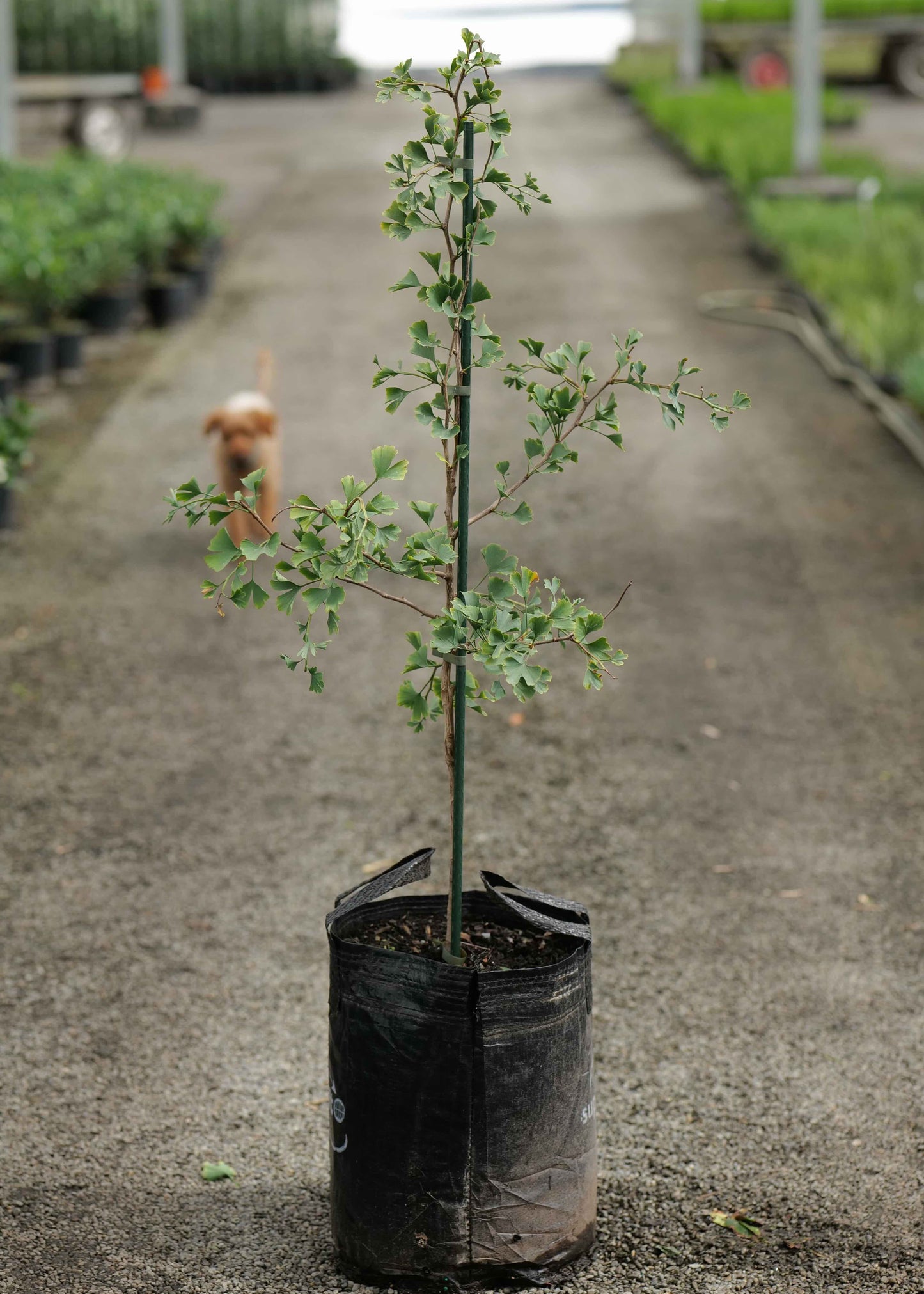
Ginkgo Little Weeper
Ginkgo Little Weeper
Maidenhair Tree
If you're looking for a truly distinctive feature tree, Ginkgo Little Weeper is a remarkable choice. This unusual form of the ancient Maidenhair Tree combines the toughness and longevity of a traditional Ginkgo with an elegant cascading habit. Its graceful branches create a weeping silhouette that adds year-round architectural interest to the garden.
In spring and summer, Ginkgo Little Weeper is covered in attractive fan-shaped green leaves. As autumn arrives, the foliage transforms into a brilliant display of glowing golden-yellow before falling to create a spectacular seasonal show.
Compact, slow-growing, and easy to maintain, this grafted weeping Ginkgo is ideal for smaller gardens, courtyard plantings, feature beds, and containers.
Why You'll Love Ginkgo Little Weeper
- Distinctive cascading and weeping growth habit
- Beautiful fan-shaped foliage
- Brilliant golden-yellow autumn colour
- Compact size suitable for smaller gardens
- Excellent feature tree for modern and traditional landscapes
- Extremely hardy and long-lived
- Low maintenance once established
- Suitable for containers and courtyard gardens
- Expected 5 Year Height 1.5 M Width 1.0 M
Is Ginkgo Little Weeper suitable for my garden?
Is Ginkgo Little Weeper suitable for my garden?
Ginkgo Little Weeper is best suited in a position that gets
- Full sun
Ginkgo Little Weeper is
- Wind Tolerant
- Frost Tolerant
- Deciduous
- Cold hardy
Ginkgo Little Weeper will thrive in soil that is
- Free draining
How to establish your Ginkgo Little Weeper?
How to establish your Ginkgo Little Weeper?
Plant Ginkgo 'Little Weeper' in full sun to part shade.
For the best autumn colour:
Choose a position receiving at least six hours of sunlight daily.
Allow room for the graceful branches to cascade naturally.
Protect young trees from physical damage while establishing.
How to maintain your Ginkgo Little Weeper once established?
How to maintain your Ginkgo Little Weeper once established?
Water deeply once or twice a week during the first growing season.
Once established, Ginkgo is drought tolerant but benefits from occasional deep watering during prolonged dry periods.
Avoid prolonged waterlogging.
Feed annually in early spring with:
Compost or well-rotted organic matter.
A balanced slow-release fertiliser for ornamental trees if required.
Mature trees generally require very little supplementary feeding.
Very little pruning is required.
For best results:
Remove dead or damaged branches during winter dormancy.
Lightly shape if required.
Preserve the naturally cascading form by avoiding unnecessary pruning.
Remove any shoots that develop below the graft union.
Ginkgo 'Little Weeper' is extremely frost hardy and thrives throughout New Zealand.
Young trees benefit from:
Mulching around the base to conserve moisture.
Protection from grazing animals if planted in rural areas.
No special winter protection is normally required.
Its compact size makes 'Little Weeper' an outstanding container specimen.
For best results:
Choose a large decorative pot with excellent drainage.
Use a premium free-draining potting mix.
Water more regularly than trees planted in the ground.
Repot every few years as the tree matures.
Pest and Disease Management
Ginkgo is one of the toughest ornamental trees available.
It is:
Highly resistant to pests.
Rarely affected by diseases.
Tolerant of pollution and urban conditions.
Very little intervention is normally required.
Couldn't load pickup availability
Share