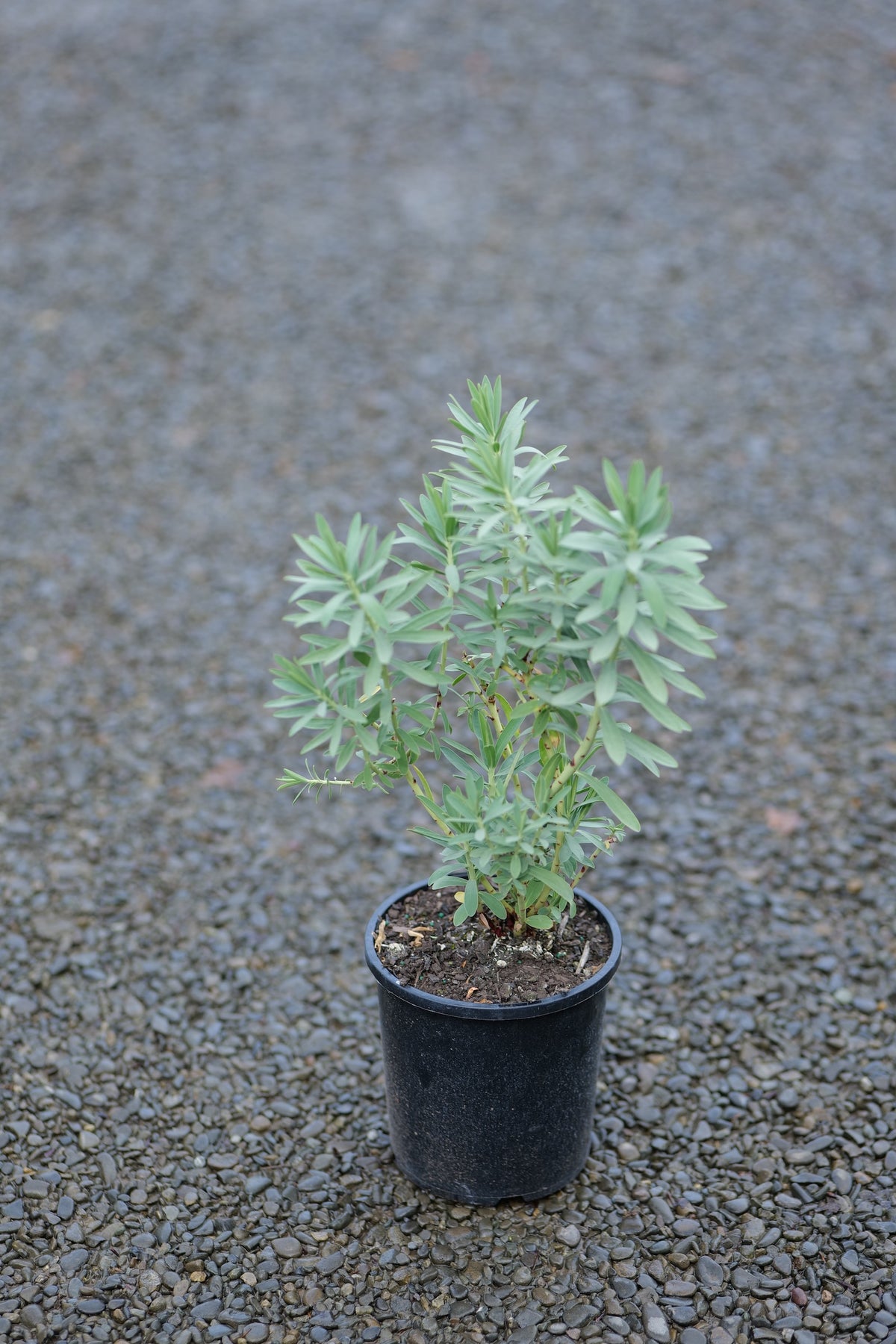
Euphorbia Glauca
Euphorbia Glauca
Coastal Spurge
Euphorbia glauca, commonly known as Shore Spurge or Waiūatua, is a distinctive New Zealand native perennial with beautiful blue-grey foliage, reddish stems and unusual red-toned flowers.
Naturally found in coastal environments throughout New Zealand, this attractive plant has a spreading, clump-forming habit and brings a wonderfully different texture to the garden.
Growing to approximately 50–100cm high and 60–100cm wide, Euphorbia glauca is particularly useful for coastal gardens, gravel gardens, native planting schemes, rockeries and sunny, free-draining borders.
Its soft, glaucous foliage provides a beautiful contrast against darker green plants, while the colourful stems and unusual flowers add interest during the warmer months.
And if you're looking for something a little different from the usual native shrubs and grasses, this one's certainly worth considering.
It's also a native species of conservation interest, making it a meaningful addition to suitable garden planting.
Why You'll Love Euphorbia glauca
-
Beautiful blue-grey foliage
-
Attractive reddish stems
-
Unusual red-toned flowers and bracts
-
New Zealand native
-
Naturally adapted to coastal environments
-
Excellent for sunny, free-draining gardens
-
Tolerates wind and salt exposure
-
Good drought tolerance once established
-
Useful for gravel and rock gardens
-
Distinctive architectural appearance
-
Provides contrast in native planting schemes
-
Relatively low maintenance
- Expected 5 Year Height 1.0 M Width 1.0 M
Is Euphorbia Glauca suitable for my garden?
Is Euphorbia Glauca suitable for my garden?
Euphorbia Glauca is best suited in a position that gets
Euphorbia Glauca is
- NZ Native
- Wind Tolerant
- Coastal Friendly
Euphorbia Glauca will thrive in soil that is
- Nutrient rich
- Free draining
- Sandy
How to establish your Euphorbia Glauca?
How to establish your Euphorbia Glauca?
Plant Euphorbia glauca in full sun.
A sunny, open position encourages healthy, compact growth and helps maintain its attractive foliage colouring.
It is particularly well suited to:
Coastal gardens
Gravel gardens
Rockeries
Raised garden beds
Sunny native borders
Free-draining slopes
For inland Canterbury gardens, choose a sunny position with some protection from severe winter frosts.
How to maintain your Euphorbia Glauca once established?
How to maintain your Euphorbia Glauca once established?
Newly planted Euphorbia: Water regularly during establishment to encourage healthy root development.
Allow the soil surface to dry slightly between waterings.
Established plants: Once established, Euphorbia glauca develops good tolerance of dry conditions.
However, additional watering during prolonged drought will help maintain healthy foliage and growth.
Avoid constantly saturated soil.
A light layer of gravel or coarse mulch can be particularly suitable around Euphorbia glauca.
This helps:
Reduce weed competition
Moderate soil temperatures
Retain some moisture
Keep the crown relatively dry
Avoid piling thick, wet organic mulch directly against the stems.
Euphorbia glauca generally doesn't require heavy feeding.
In reasonably fertile soil, little additional fertiliser may be necessary.
If growth appears weak, apply a light dressing of balanced slow-release fertiliser in spring.
Avoid excessive nitrogen fertiliser, which can encourage soft growth.
Euphorbia glauca requires relatively little pruning.
Maintenance generally involves:
Removing damaged or dead stems
Tidying old flowering growth
Removing unwanted seedlings if necessary
Keeping competing weeds under control
Lightly shaping plants if required
The best time for major tidying is generally late winter to early spring, once the worst frost risk has passed.
Avoid severe pruning into old woody growth unless healthy new shoots are present.
Important: Irritating Milky Sap
Like other Euphorbia species, Euphorbia glauca produces a milky latex sap that can irritate skin and eyes.
When pruning or handling damaged stems:
Wear gloves.
Avoid contact with your eyes.
Wash exposed skin after handling.
Keep plant material away from children and pets who may ingest it.
Take particular care not to touch your face while pruning.
Euphorbia glauca tolerates cool conditions but may be damaged by severe inland frosts.
For Canterbury gardens:
Choose a sunny, sheltered position.
Ensure excellent drainage.
Avoid cold, waterlogged soil.
Protect young plants during severe frosts.
Delay major pruning until spring.
Some foliage damage or seasonal dieback may occur during colder weather.
Healthy plants may produce fresh growth as temperatures improve.
Once established, Euphorbia glauca is reasonably tolerant of wind and dry conditions.
However, young plants can still suffer during prolonged hot, drying nor'west weather.
During establishment:
Water deeply when required.
Maintain a light mulch layer.
Avoid allowing roots to dry out completely.
Monitor plants during extended dry periods.
Euphorbia glauca is generally relatively trouble-free when grown in suitable conditions.
Occasional problems may include:
Aphids
Slugs and snails damaging young growth
Root rot in poorly drained soil
Stem dieback following severe frost or waterlogging
Good drainage, appropriate watering and adequate sunlight will help maintain healthy plants.
Euphorbia glauca can also be grown in large pots and containers, particularly in sunny courtyards or coastal gardens.
For best results:
Choose a container with adequate drainage holes.
Use a free-draining potting mix.
Position in full sun.
Water during active growth.
Avoid excessive winter moisture.
Protect containers from severe inland frosts.
Its blue-grey foliage looks particularly attractive in natural stone, terracotta or concrete containers.
For mass planting, space Euphorbia glauca approximately 60–80cm apart.
For individual feature plants, allow around 80cm–1m between plants.
This provides room for the plant's natural spreading habit and helps maintain good airflow.
Euphorbia glauca is ideal for:
Coastal gardens
Native planting schemes
Gravel gardens
Rockeries
Sunny slopes
Raised garden beds
Mixed perennial borders
Naturalistic planting
Architectural planting
Large containers
Couldn't load pickup availability
Share