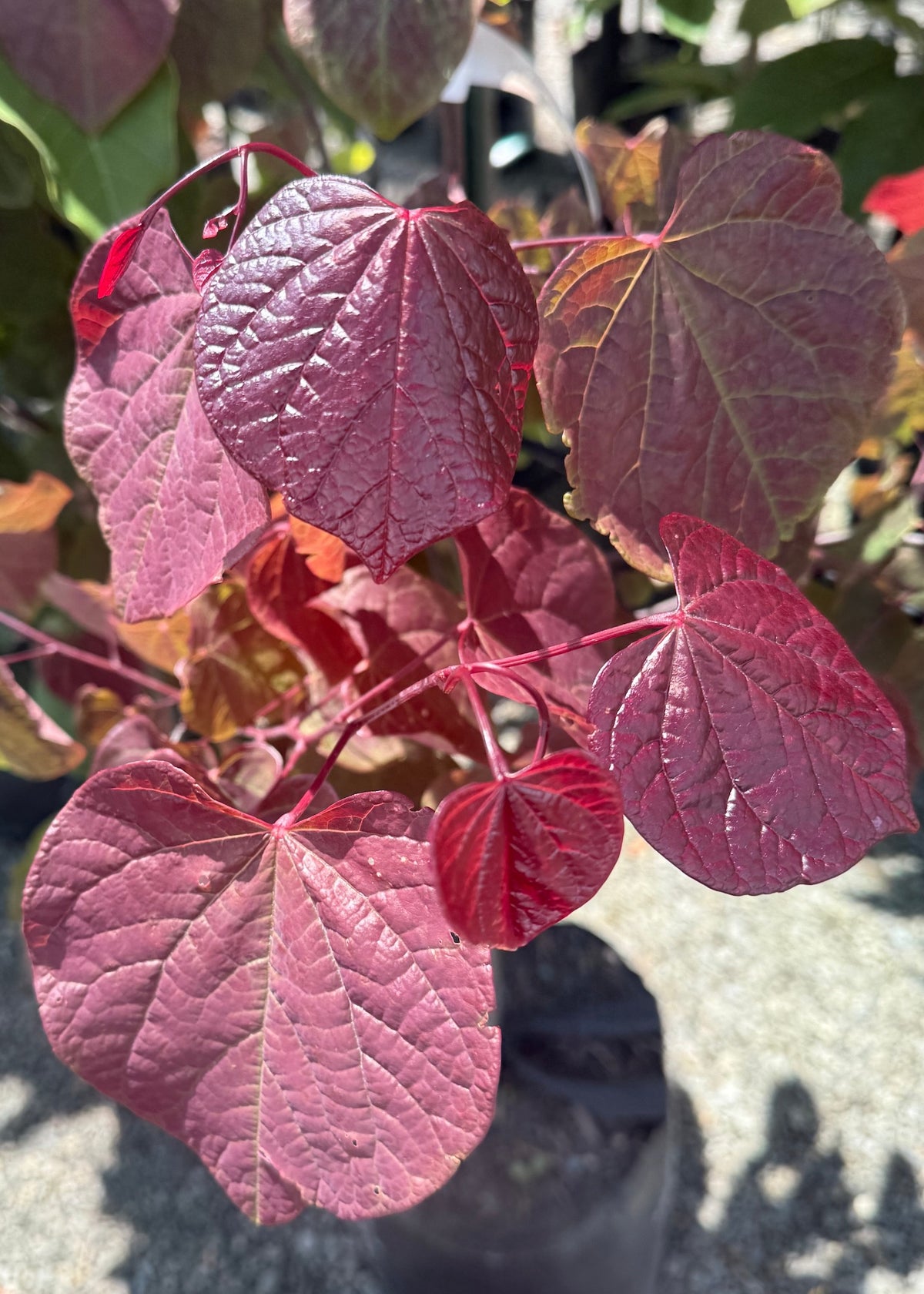
Cercis Forest Pansy
Cercis Forest Pansy
Judas Tree
Cercis canadensis 'Forest Pansy', commonly known as the Forest Pansy Redbud, is a spectacular small deciduous tree grown for its combination of bright pink spring flowers and rich purple, heart-shaped foliage.
Before the leaves emerge in spring, clusters of vibrant rosy-pink flowers appear directly along the bare branches, creating an impressive early-season display. These are followed by large, heart-shaped leaves that emerge deep burgundy-purple, providing fantastic contrast against green foliage throughout the garden.
With its manageable size, spreading form and multiple seasons of colour, Forest Pansy is an excellent feature tree for smaller gardens, courtyards and mixed landscapes. If you've got room for only a handful of ornamental trees, this one certainly works hard for its position.
Why You'll Love Cercis 'Forest Pansy'
- Masses of rosy-pink flowers on bare branches in spring
- Beautiful heart-shaped foliage
- Rich burgundy to purple leaves
- Attractive spreading growth habit
- Excellent foliage contrast
- Manageable size for residential gardens
- Deciduous, allowing winter sunlight through
- Excellent feature tree
- Multiple seasons of garden interest
- Frost Tolerant , Deciduous, Flowering, Fast-growing, Cold hardy, Drought resistant once established, Coastal Friendly, and Wind Tolerant
- Expected 5 Year Height 3.0M
- Flowers in Spring
Planting & Care Tips
Planting & Care Tips
How to care for your Cercis Forest Pansy:Water deeply and regularly during the first couple of growing seasons while the root system establishes.
Pay particular attention during hot, dry weather.
Deep watering encourages roots to move further into the surrounding soil rather than remaining close to the surface.
Once established, Forest Pansy has moderate tolerance of dry conditions, but additional watering during prolonged summer drought will keep the tree healthier and the foliage looking better.
Avoid constantly wet soil.
Apply organic mulch around the root zone to:
Retain soil moisture
Reduce weed competition
Moderate soil temperatures
Improve soil structure as it breaks down
Keep mulch slightly away from the trunk rather than piling it against the bark.
Apply a balanced slow-release fertiliser in spring if required.
Compost or well-rotted organic matter around the root zone can also help maintain healthy soil.
Avoid excessive nitrogen feeding. You want healthy growth, not a tree that's trying to become three metres taller by Tuesday.
Forest Pansy generally needs very little pruning.
Its naturally spreading, slightly informal branching structure is part of its appeal.
Prune to:
Remove dead or damaged branches
Remove crossing or rubbing growth
Establish a strong framework while young
Remove poorly positioned branches if necessary
Avoid unnecessary hard pruning.
If structural pruning is needed, doing the work while the tree is young is much easier than trying to correct major branches later.
Cercis 'Forest Pansy' is frost hardy once established and performs well in cooler New Zealand gardens.
Young trees benefit from a sheltered position during their first few years, particularly in areas experiencing severe frost.
Once the foliage falls in autumn, the branching structure remains visible through winter before those pink flowers announce spring's return.
The large leaves can be affected by extreme exposure.
Leaf edges may become scorched or damaged by:
Hot drying winds
Prolonged drought
Very intense afternoon sun
Excessive exposure
In Canterbury, shelter from persistent nor'west winds is particularly worthwhile.
A protected position with consistent summer moisture will help keep that fantastic foliage looking its best.
Spacing Guide
Spacing Guide
Best planting season (spring/autumn).
Couldn't load pickup availability
Share