Blueberry Legacy
Blueberry Legacy
Blueberry 'Legacy' is a productive southern highbush blueberry valued for its sweet, aromatic berries, reliable crops and attractive garden habit. The medium to large berries have excellent flavour, making them just as useful for eating straight from the bush as they are for baking, desserts, smoothies and freezing.
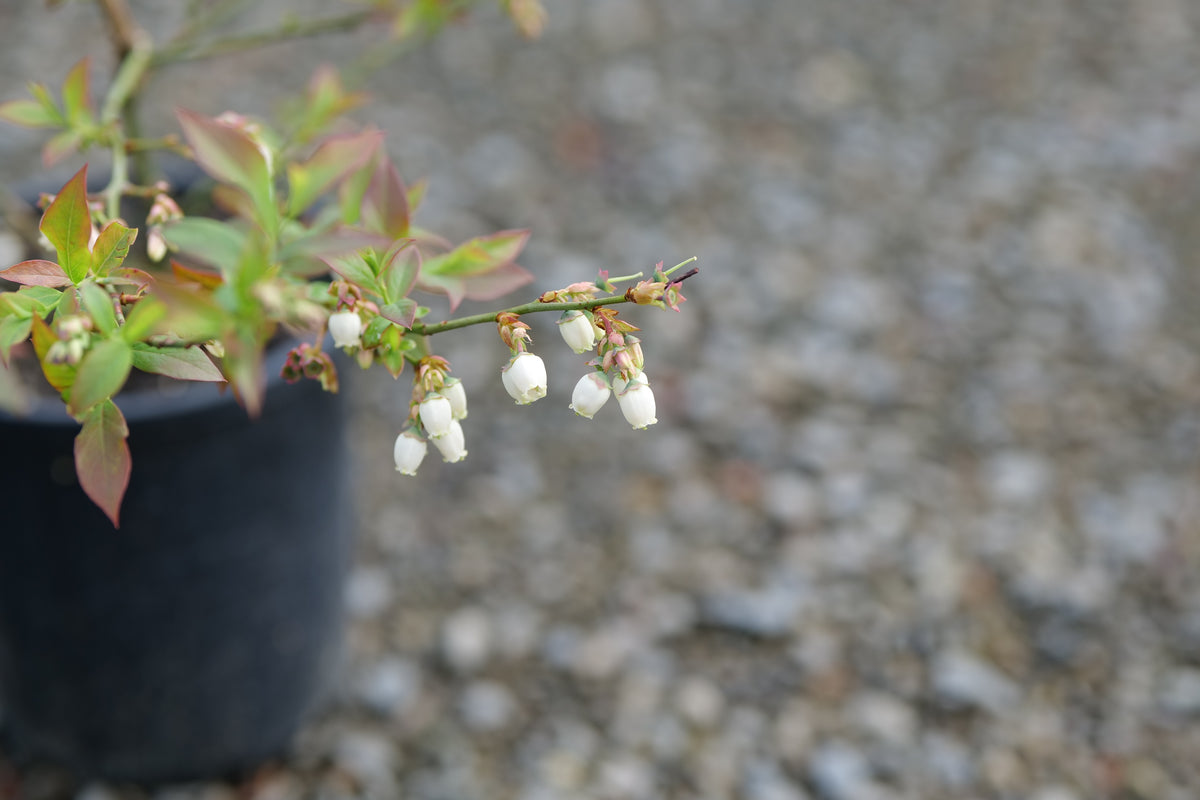
In spring, clusters of delicate white to pale pink bell-shaped flowers appear amongst fresh foliage, followed by berries that ripen through summer. The foliage also provides seasonal interest, developing attractive autumn tones as temperatures cool.
Like all blueberries, 'Legacy' performs best in acidic soil with plenty of organic matter and consistent summer moisture. Get those basics right and blueberries are surprisingly easy to grow – get the soil pH wrong and they'll make their displeasure fairly obvious.
Why You'll Love Blueberry 'Legacy'
- Sweet, flavoursome blueberries
- Medium to large fruit
- Productive cropping variety
- Excellent for eating fresh
- Great for baking, freezing and desserts
- Attractive spring flowers
- Bee and pollinator friendly
- Suitable for home gardens and edible landscapes
- Can be grown in large containers
- Frost hardy once established
- Attractive seasonal foliage
- Expected 5 Year Height 1.0 M Width 1.8 M
Is Blueberry Legacy suitable for my garden?
Is Blueberry Legacy suitable for my garden?
Blueberry Legacy is best suited in a position that gets
- Partial shade
- Full sun
Blueberry Legacy is
- Frost Tolerant
- Deciduous
- Flowering
- Attracts pollinators
- Fast-growing
- Cold hardy
- Edible
Blueberry Legacy will thrive in soil that is
- Acidic
- Free draining
- Nutrient rich
How to establish your Blueberry Legacy?
How to establish your Blueberry Legacy?
Plant Blueberry 'Legacy' in full sun for the best flowering, fruit development and flavour.
Choose a position with:
At least 6 hours of sunlight
Shelter from severe drying winds
Consistent soil moisture
Excellent drainage
Acidic soil
In Canterbury, protection from the worst of the hot nor'west winds can be particularly useful during summer.
How to maintain your Blueberry Legacy once established?
How to maintain your Blueberry Legacy once established?
Water regularly while the root system establishes.
Blueberries have relatively shallow, fine roots and don't appreciate being allowed to dry out completely.
Established Plants
Maintain consistent moisture, particularly during:
Flowering
Fruit development
Hot summer weather
Prolonged dry periods
Avoid alternating between extremely dry and saturated soil.
A good deep watering followed by mulch to retain moisture is much more useful than the occasional splash with the hose.
Mulching
Blueberries respond particularly well to organic mulch.
Apply a generous layer around the root zone using suitable acidic organic material.
Mulching helps:
Retain moisture
Keep roots cool
Suppress weeds
Protect shallow roots
Add organic matter to the soil
Keep mulch slightly away from the base of the stems.
Avoid cultivating deeply around blueberry plants, as their root systems are relatively shallow.
Feeding
Use a fertiliser specifically formulated for acid-loving plants or blueberries.
Feed in spring as growth begins, following the recommended application rate.
Avoid overfeeding, particularly with high-nitrogen fertilisers. Excessive nitrogen can encourage lots of soft leafy growth without necessarily giving you more fruit.
Pruning
Young blueberry plants require very little pruning while they're establishing.
Once mature, prune during winter to:
Remove dead or damaged wood
Remove weak growth
Remove crossing or congested branches
Improve airflow through the centre
Gradually remove some of the oldest, least productive stems
Blueberries fruit on established younger wood, so the aim is to encourage a steady supply of healthy new stems rather than repeatedly hacking the whole shrub back.
Frost and Winter Care
Blueberry 'Legacy' has good frost tolerance and is suitable for cooler New Zealand growing conditions.
Dormant plants cope well with winter cold, although flowers and fresh spring growth can be more vulnerable to particularly late frosts.
If your garden sits in a severe frost pocket, consider planting somewhere with some protection from late spring frosts.
Pick blueberries once they have developed their full blue colour and come away easily from the plant.
Don't assume a berry is ripe simply because it has turned blue. Allowing fruit a little additional time on the bush can significantly improve sweetness and flavour.
Harvest regularly as individual berries ripen.
And if the berries seem to be disappearing before you get there, the birds probably know exactly when they're ready too.
Protecting Fruit From Birds
Birds are remarkably enthusiastic blueberry harvesters.
If you want the berries for yourself, consider protecting plants with bird netting as the fruit begins to ripen.
Make sure netting is properly secured and kept taut so wildlife cannot become trapped.
For multiple bushes, creating a dedicated netted berry area can make harvesting considerably easier.
Couldn't load pickup availability
Share