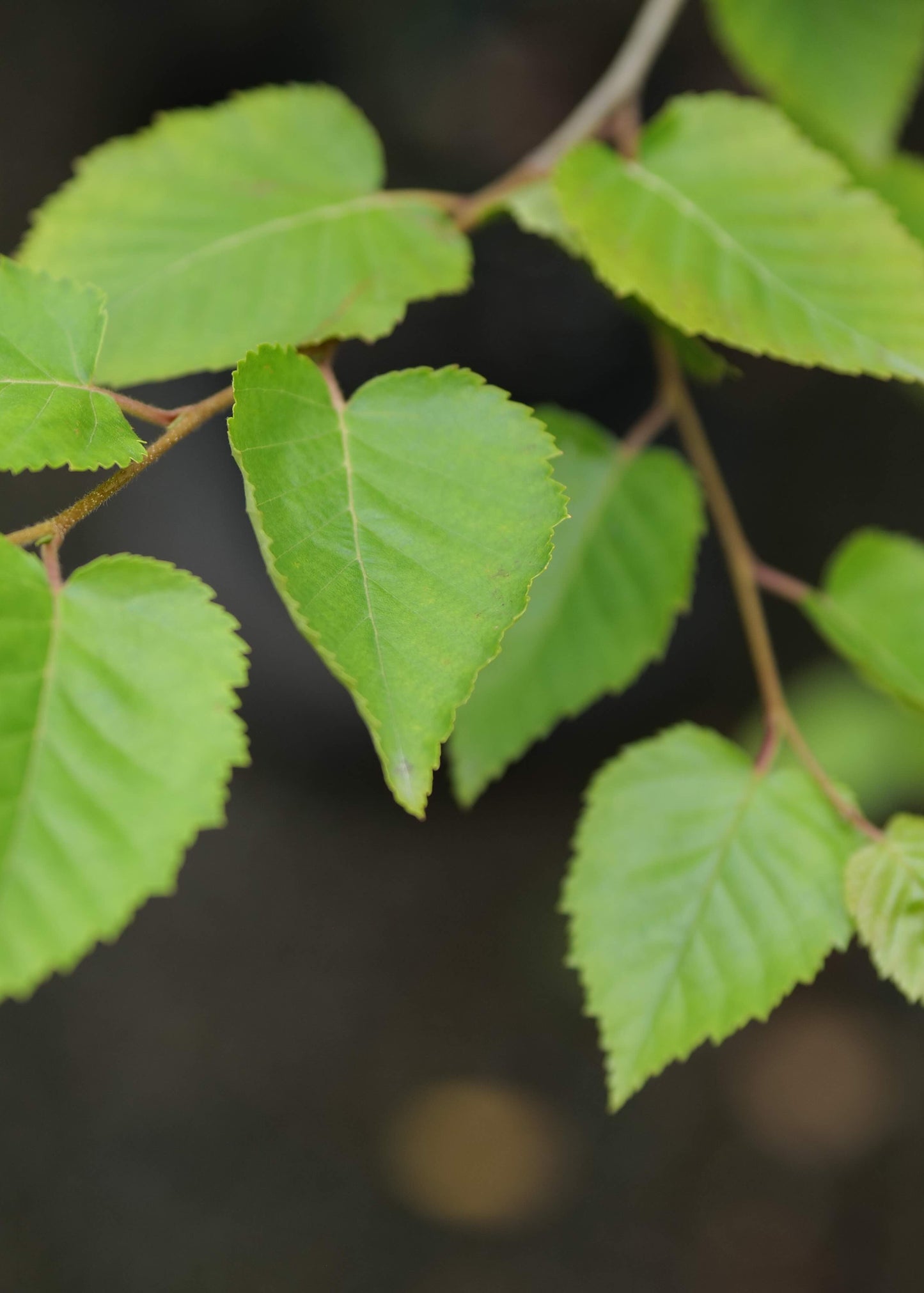
Betula Jacquemontii
Betula Jacquemontii
Himalayan Birch
Betula utilis var. jacquemontii, commonly known as the Himalayan Birch, is one of the best birches for brilliant white bark. Its elegant trunk develops striking clean white, peeling bark, creating a fantastic feature long after its fresh green summer foliage has disappeared.
In spring, new green leaves emerge alongside hanging catkins, creating a light, graceful canopy through summer. Come autumn, the foliage turns golden yellow before falling and handing the job of looking good back to those spectacular white stems.
Hardy, elegant and particularly effective in groups, Himalayan Birch is an excellent choice for feature planting, driveways, larger gardens and lifestyle blocks. If you're looking for a deciduous tree that doesn't become completely irrelevant in winter, this one's rather good at earning its space.
Why You'll Love Betula jacquemontii
- Brilliant white bark provides exceptional winter interest
- Attractive peeling bark becomes more impressive with age
- Fresh green spring and summer foliage
- Golden-yellow autumn colour
- Elegant upright form
- Provides light, dappled summer shade
- Highly frost hardy
- Stunning planted individually or in groups
- Deciduous, allowing winter sunlight back into the garden
- Expected 5 Year Height 4.0 M Width 3.0 M
Is Betula Jacquemontii suitable for my garden?
Is Betula Jacquemontii suitable for my garden?
Betula Jacquemontii is best suited in a position that gets
- Partial shade
- Full sun
Betula Jacquemontii is
- Wind Tolerant
- Frost Tolerant
- Cold hardy
- Fast-growing
- Deciduous
Betula Jacquemontii will thrive in soil that is
- Clay
- Sandy
- Stoney
- Free draining
How to establish your Betula Jacquemontii?
How to establish your Betula Jacquemontii?
Plant Betula jacquemontii in full sun to part shade.
A sunny position helps showcase the white bark and encourages a strong, balanced canopy.
When selecting your planting position:
Allow plenty of room for the mature tree.
Keep clear of overhead services.
Consider where the canopy will eventually cast shade.
Avoid extremely hot, dry positions if irrigation isn't available.
Allow enough room around the trunk for the bark to remain visible.
How to maintain your Betula Jacquemontii once established?
How to maintain your Betula Jacquemontii once established?
Water deeply and regularly during the first couple of growing seasons while the root system establishes.
Pay particular attention during hot, dry Canterbury summers.
A deep soak is much more useful than repeatedly wetting only the surface of the soil.
Once established, Himalayan Birch becomes more tolerant of short dry periods but will perform best with additional water during prolonged drought.
Maintaining moisture also helps keep the foliage looking fresh through summer.
Apply organic mulch around the root zone annually.
Mulching helps:
Retain soil moisture
Keep the root zone cooler
Reduce competition from grass and weeds
Improve soil structure over time
Keep mulch away from direct contact with the trunk.
Apply a balanced slow-release fertiliser in spring if required.
Trees growing in good fertile soil generally require very little supplementary feeding. Adding compost around the root zone annually can often provide everything an established tree needs.
Himalayan Birch requires very little regular pruning.
Allow the tree to develop its natural elegant shape and prune only to:
Remove dead or damaged branches
Remove crossing or rubbing growth
Establish a strong framework while young
Lift lower branches if clearance is required
Avoid unnecessary pruning during late winter and early spring, when birches can bleed considerable amounts of sap.
Looking After the White Bark
One of the biggest reasons to plant jacquemontii is obviously that spectacular bark, so don't hide it.
As the tree matures:
Keep dense shrubs slightly away from the trunk.
Avoid damaging the bark with mowers or line trimmers.
Allow the bark to peel naturally.
Don't scrub or artificially clean the trunk.
The white colouring becomes increasingly prominent as the tree ages.
Betula utilis var. jacquemontii is exceptionally frost hardy, making it a fantastic choice for colder New Zealand gardens.
Established trees need very little special winter care.
In fact, winter is arguably when this tree looks its best. Once the leaves have dropped, the clean white trunks and branches become a strong feature in an otherwise fairly subdued winter landscape.
Creating a Birch Grove
For larger gardens and lifestyle blocks, consider planting several Himalayan Birch together.
A loose grouping of three or five trees creates a natural woodland effect while highlighting the contrasting white trunks.
Rather than spacing them perfectly like soldiers, slightly irregular positioning generally creates a softer, more natural result.
Underplanting can include:
Ornamental grasses
Hellebores
Spring bulbs
Ferns
Hostas
Low-growing groundcovers
Just avoid completely covering the trunks – they're the whole point.
Couldn't load pickup availability
Share