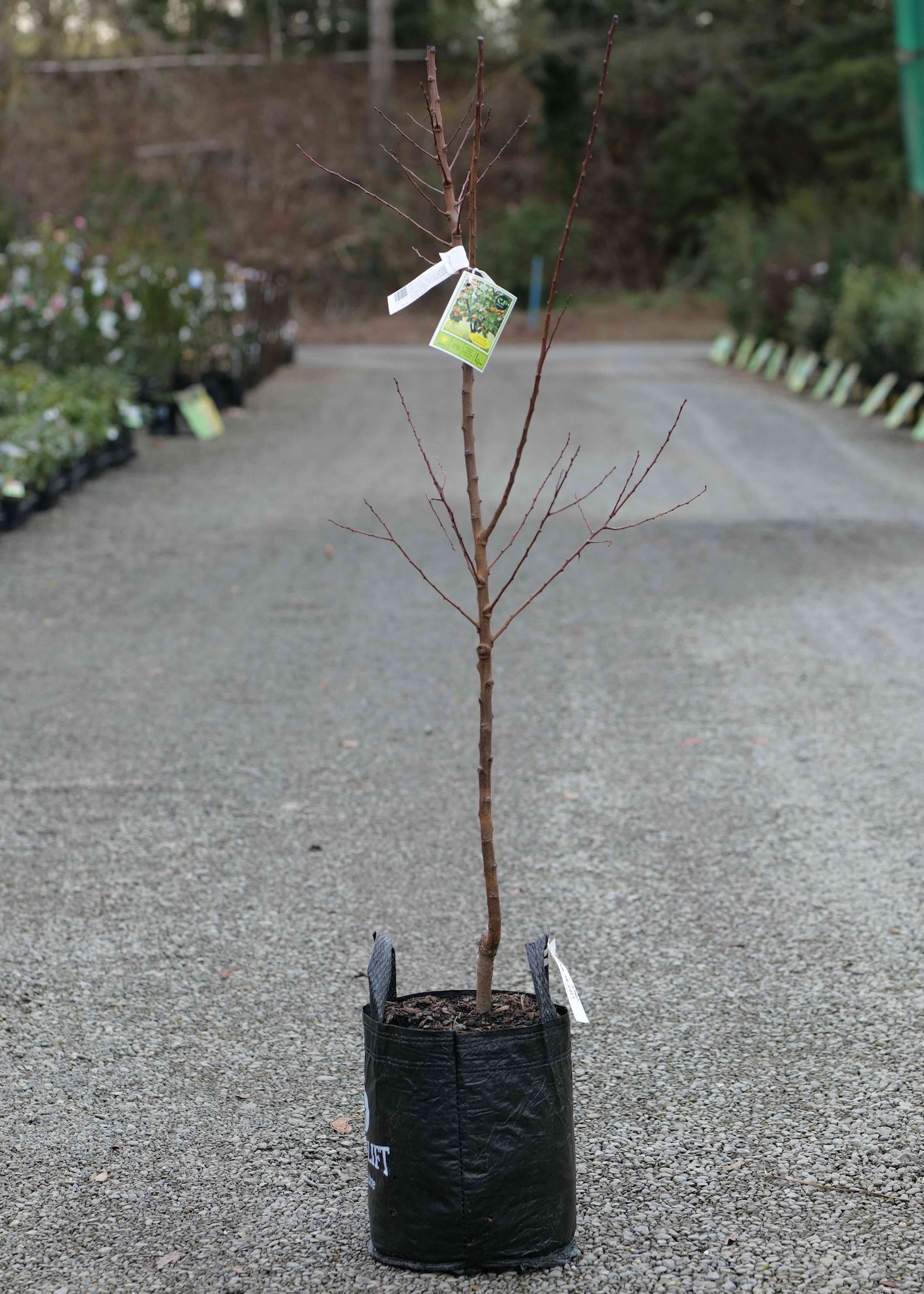
Apricot Trevatt
Apricot Trevatt
Prunus armeniaca 'Trevatt'
Apricot 'Trevatt' is a well-loved heritage variety that has earned its reputation as one of New Zealand's most reliable apricots. It produces generous crops of medium to large golden-orange fruit with sweet, juicy flesh that is perfect for eating fresh, bottling, baking, drying and preserving.
Flowering in early spring with masses of delicate white to pale pink blossoms, 'Trevatt' also makes a beautiful ornamental tree before rewarding you with delicious fruit in mid to late summer. Hardy, productive and easy to grow in suitable climates, it is an excellent choice for home orchards and backyard gardeners.
Why You'll Love Apricot 'Trevatt'
- Heavy crops of sweet, juicy apricots
- Excellent heritage New Zealand variety
- Ideal for fresh eating, preserving and baking
- Beautiful white spring blossom
- Reliable producer in suitable climates
- Attractive deciduous tree with golden autumn foliage
- Easy to grow and maintain
- Perfect for home orchards and edible gardens
- Expected 5 Year Height 4.0 M Width 3.0 M
Is Apricot Trevatt suitable for my garden?
Is Apricot Trevatt suitable for my garden?
Apricot Trevatt is best suited in a position that gets
- Full sun
Apricot Trevatt is
- Edible
- Deciduous
- Self-fertile
Apricot Trevatt will thrive in soil that is
- Normal
- Free draining
- Nutrient rich
How to establish your Apricot Trevatt?
How to establish your Apricot Trevatt?
Plant Apricot 'Trevatt' in full sun.
For the best crops:
Choose a warm, sheltered position.
Protect from strong prevailing winds.
Plant where the tree receives at least six to eight hours of direct sunlight daily.
In colder districts, a north-facing position helps improve fruit ripening and protects early blossom.
How to maintain your Apricot Trevatt once established?
How to maintain your Apricot Trevatt once established?
Water deeply once or twice a week during the first growing season, particularly through dry weather.
Once established, water deeply during:
Extended dry periods.
Flowering and fruit development.
Very hot summer weather.
Consistent watering produces larger, juicier fruit.
Feed annually in late winter or early spring with:
Compost or well-rotted organic matter.
A balanced fruit tree fertiliser.
Avoid excessive nitrogen, which encourages leafy growth at the expense of fruit production.
Apricot 'Trevatt' is self-fertile, meaning it does not require another apricot tree to produce fruit.
However, planting another apricot variety nearby can often improve pollination and increase crop size in favourable conditions.
Prune immediately after harvest or during dry summer weather.
For best results:
Remove dead, damaged or diseased branches.
Thin crowded growth to improve airflow and light penetration.
Maintain an open-centred canopy for easier harvesting.
Avoid heavy winter pruning, as apricots are more susceptible to disease when pruned during cold, wet conditions.
Fruit is generally ready to harvest from January through early February.
Harvest when:
The fruit develops a rich golden-orange colour.
It yields slightly when gently squeezed.
It separates easily from the stem.
Apricots are best enjoyed fresh but are also excellent for bottling, jams, chutneys, drying and freezing.
'Trevatt' is well suited to cooler regions of New Zealand and requires winter chilling to produce reliable crops.
While the tree itself is highly frost hardy, the early spring blossom can be damaged by late frosts, which may reduce fruit set. Planting in a sheltered position away from frost pockets can improve cropping.
Apply mulch each winter to help conserve soil moisture and suppress weeds, keeping it clear of the trunk.
Healthy trees are generally easy to maintain.
Monitor for:
Aphids on new growth.
Leaf curl.
Scale insects.
Brown rot on fruit in wet seasons.
Regular pruning to improve airflow, good orchard hygiene and prompt removal of fallen fruit will help minimise disease problems.
Couldn't load pickup availability
Share