Albizia Julibrissin Rosea
Albizia Julibrissin Rosea
Silk Tree, Persian Silk Tree, Pink Silk Tree
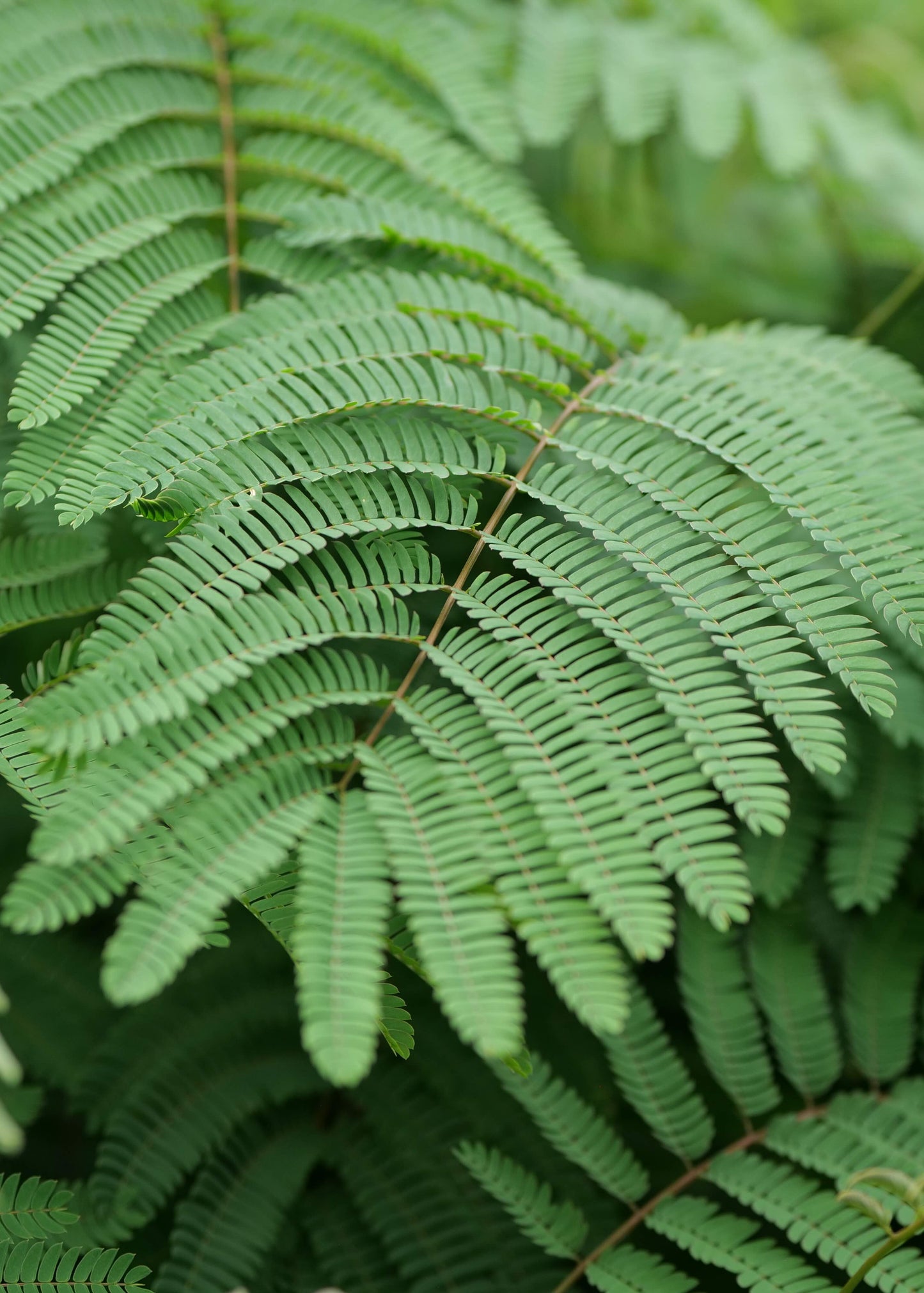
Albizia julibrissin 'Rosea', commonly known as the Pink Silk Tree or Persian Silk Tree, is a beautiful deciduous feature tree grown for its fern-like foliage and unusual fluffy pink flowers. Flowering through summer, when many ornamental trees have finished their main display, the silky blooms sit above the foliage and give the tree its wonderfully tropical appearance.
Despite looking like it belongs somewhere considerably warmer, Albizia 'Rosea' is surprisingly hardy once established. Its broad, spreading canopy provides light, dappled summer shade, while the fine foliage keeps the tree looking soft rather than heavy in the landscape.
It's an excellent choice for a sunny, sheltered position where you want a feature tree that's a little different from the usual flowering cherries and maples.
Why You'll Love Albizia 'Rosea'
- Unusual fluffy pink summer flowers
- Fine, fern-like green foliage
- Broad, elegant spreading canopy
- Provides light, dappled summer shade
- Flowers when many spring trees have finished
- Exotic appearance without needing a tropical climate
- Deciduous, allowing winter light into the garden
- Excellent specimen tree for warm, sunny positions
- Expected 5 Year Height 6.0 M Width 4.0 M
Is Albizia Julibrissin Rosea suitable for my garden?
Is Albizia Julibrissin Rosea suitable for my garden?
Albizia Julibrissin Rosea is best suited in a position that gets
- Partial shade
- Full sun
Albizia Julibrissin Rosea is
- Wind Tolerant
- Frost Tolerant
- Coastal Friendly
- Drought resistant
- Flowering
- Attracts pollinators
- Fast-growing
- Cold hardy
Albizia Julibrissin Rosea will thrive in soil that is
- Clay
- Free draining
- Sandy
How to establish your Albizia Julibrissin Rosea?
How to establish your Albizia Julibrissin Rosea?
Plant Albizia 'Rosea' in full sun.
A warm, sheltered position will give you the best results, particularly in cooler areas of New Zealand.
Choose a spot:
Receiving plenty of direct sunlight
Protected from strong prevailing winds
Away from severe frost pockets where possible
With enough room for the canopy to spread
For Canterbury gardens, finding a warm microclimate can make a considerable difference, particularly while the tree is young.
How to maintain your Albizia Julibrissin Rosea once established?
How to maintain your Albizia Julibrissin Rosea once established?
Water deeply and regularly during the first couple of growing seasons.
Consistent moisture while establishing will encourage a strong root system and healthy growth.
Once established, Albizia develops good drought tolerance and generally only requires additional watering during prolonged dry periods.
Avoid keeping the soil constantly wet.
Apply a balanced slow-release fertiliser in spring if required.
Adding compost or well-rotted organic matter around the root zone will also help maintain soil health.
Avoid excessive feeding with nitrogen, which can encourage lots of soft foliage growth.
Apply organic mulch around the root zone to:
Retain moisture
Reduce weed competition
Improve the soil
Protect young roots from temperature extremes
Keep mulch clear of the trunk.
Albizia naturally develops an attractive spreading canopy and doesn't require regular hard pruning.
Prune young trees to:
Develop a strong framework
Remove damaged branches
Remove crossing or poorly positioned growth
Maintain a clear trunk if required
Once established, keep pruning relatively light. The aim is to preserve that graceful, spreading shape rather than repeatedly clipping it.
Albizia 'Rosea' is deciduous and reasonably frost hardy once established, but young trees are more vulnerable to severe cold.
During the first few winters:
Mulch around the root zone.
Choose a sheltered planting position.
Protect young plants from particularly severe frosts if necessary.
Once mature and well established, plants become considerably tougher.
Albizia's spreading branches and delicate foliage perform best away from very exposed positions.
Shelter from strong Canterbury nor'westers and cold prevailing winds will help the tree establish a better shape and reduce damage to young growth.
Couldn't load pickup availability
Share