Acer Shindeshojo
Acer Shindeshojo
Maple
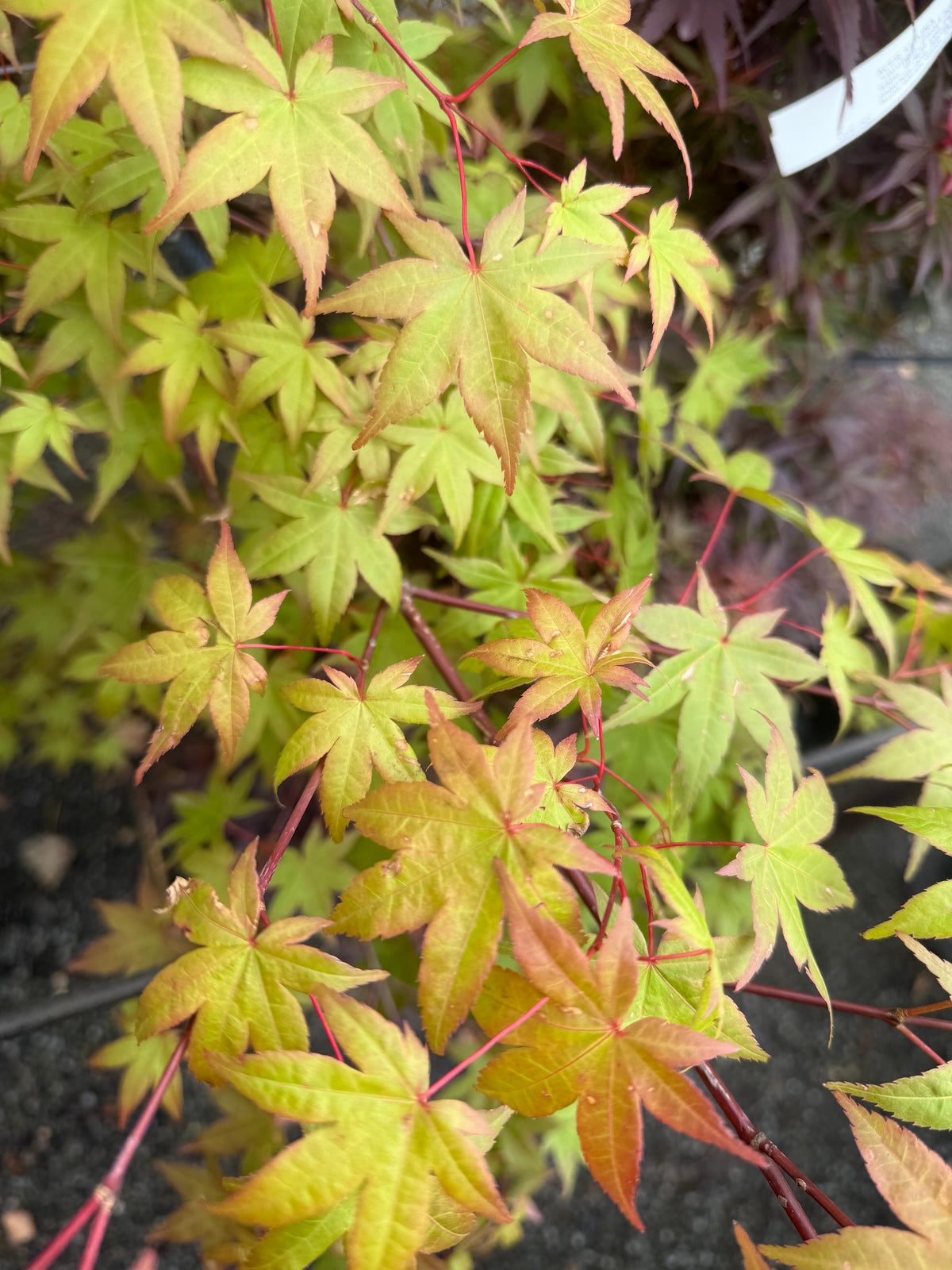
Acer palmatum 'Shindeshojo' is a beautiful Japanese Maple best known for its extraordinary bright crimson-red spring foliage. While many maples save their biggest display for autumn, 'Shindeshojo' starts showing off almost as soon as its new leaves emerge.
Fresh spring growth opens an intense scarlet to crimson red, creating a brilliant splash of colour in the early-season garden. As the leaves mature, they gradually soften through reddish and bronze tones before becoming green through summer. Autumn brings another transformation, with foliage developing attractive shades of orange, red and scarlet before falling.
With its graceful branching habit and relatively compact size, 'Shindeshojo' makes an excellent feature tree for smaller gardens, courtyards, Japanese-inspired landscapes and mixed borders.
Why You'll Love Acer 'Shindeshojo'
- Exceptional bright crimson-red spring foliage
- Attractive changing foliage throughout the seasons
- Orange-red to scarlet autumn colour
- Elegant, compact branching habit
- Excellent feature tree for smaller gardens
- Beautiful contrast against evergreen foliage
- Frost hardy once established
- Suitable for large containers
- Provides interest from early spring through autumn
- Expected 5 Year Height 2.0 M Width 1.5 M
Is Acer Shindeshojo suitable for my garden?
Is Acer Shindeshojo suitable for my garden?
Acer Shindeshojo is best suited in a position that gets
- Partial shade
- Full sun
Acer Shindeshojo is
- Frost Tolerant
- Cold hardy
Acer Shindeshojo will thrive in soil that is
- Clay
- Acidic
- Chalky
- Sandy
- Free draining
- Nutrient rich
How to establish your Acer Shindeshojo?
How to establish your Acer Shindeshojo?
Plant Acer 'Shindeshojo' in morning sun to part shade.
Some sunlight helps develop the brilliant spring foliage colour, but protection from intense afternoon heat and drying winds will keep the delicate leaves looking better through summer.
For Canterbury gardens, an ideal position offers:
Morning sun
Afternoon protection
Shelter from hot nor'west winds
Consistent soil moisture
Good drainage
A sheltered courtyard or position amongst other garden planting can provide an excellent microclimate.
How to maintain your Acer Shindeshojo once established?
How to maintain your Acer Shindeshojo once established?
Water deeply and regularly during the first couple of growing seasons while the root system establishes.
Pay particular attention during hot or windy weather.
A good deep soak encourages roots to establish further into the surrounding soil rather than remaining concentrated near the surface.
Continue watering during prolonged dry periods.
Japanese Maples don't appreciate being allowed to dry out completely, particularly when combined with hot Canterbury winds.
Consistent moisture will help prevent stress and keep the foliage looking its best.
Apply organic mulch around the root zone each year.
Mulching helps:
Retain soil moisture
Keep roots cooler during summer
Reduce competition from weeds
Improve soil structure
Protect the relatively shallow root system
Keep mulch slightly away from the trunk.
Apply a balanced slow-release fertiliser in spring as new growth begins.
Avoid excessive nitrogen feeding, which can encourage overly vigorous, soft growth.
An annual application of compost around the root zone can also help maintain healthy soil without pushing excessive growth.
Very little pruning is required.
The naturally graceful branching structure is part of Shindeshojo's appeal, so there's no need to regularly clip it into shape.
Prune selectively to:
Remove dead or damaged branches
Remove crossing or rubbing growth
Improve the framework while young
Remove inward-growing branches if congested
Remove unwanted shoots below the graft
Light structural pruning is preferable to hard pruning.
Growing Shindeshojo in a Container
Its relatively compact growth habit means Acer 'Shindeshojo' can also be grown in a large container.
Choose:
A substantial pot with good drainage
Quality container potting mix
A sheltered position
A container large enough for future root development
Container-grown Japanese Maples need more regular watering, particularly during summer and windy conditions.
Don't assume rain has watered the pot properly – check the potting mix.
Japanese Maple foliage can develop dry, brown or crispy margins when plants become stressed.
Common causes include:
Hot drying winds
Strong afternoon sun
Insufficient water
Containers drying out
Very exposed positions
In Canterbury, the combination of hot nor'west winds and dry soil is particularly hard on delicate maple foliage.
Shelter and consistent moisture are your best defence.
Acer 'Shindeshojo' is highly frost hardy once established.
The tree loses its foliage in autumn and remains dormant through winter.
The main frost concern is actually late spring frost, as newly emerged foliage can be damaged if temperatures suddenly drop after growth has begun.
A sheltered planting position can reduce the risk in particularly frost-prone gardens.
Couldn't load pickup availability
Share