Rhubarb Victoria
Rhubarb Victoria
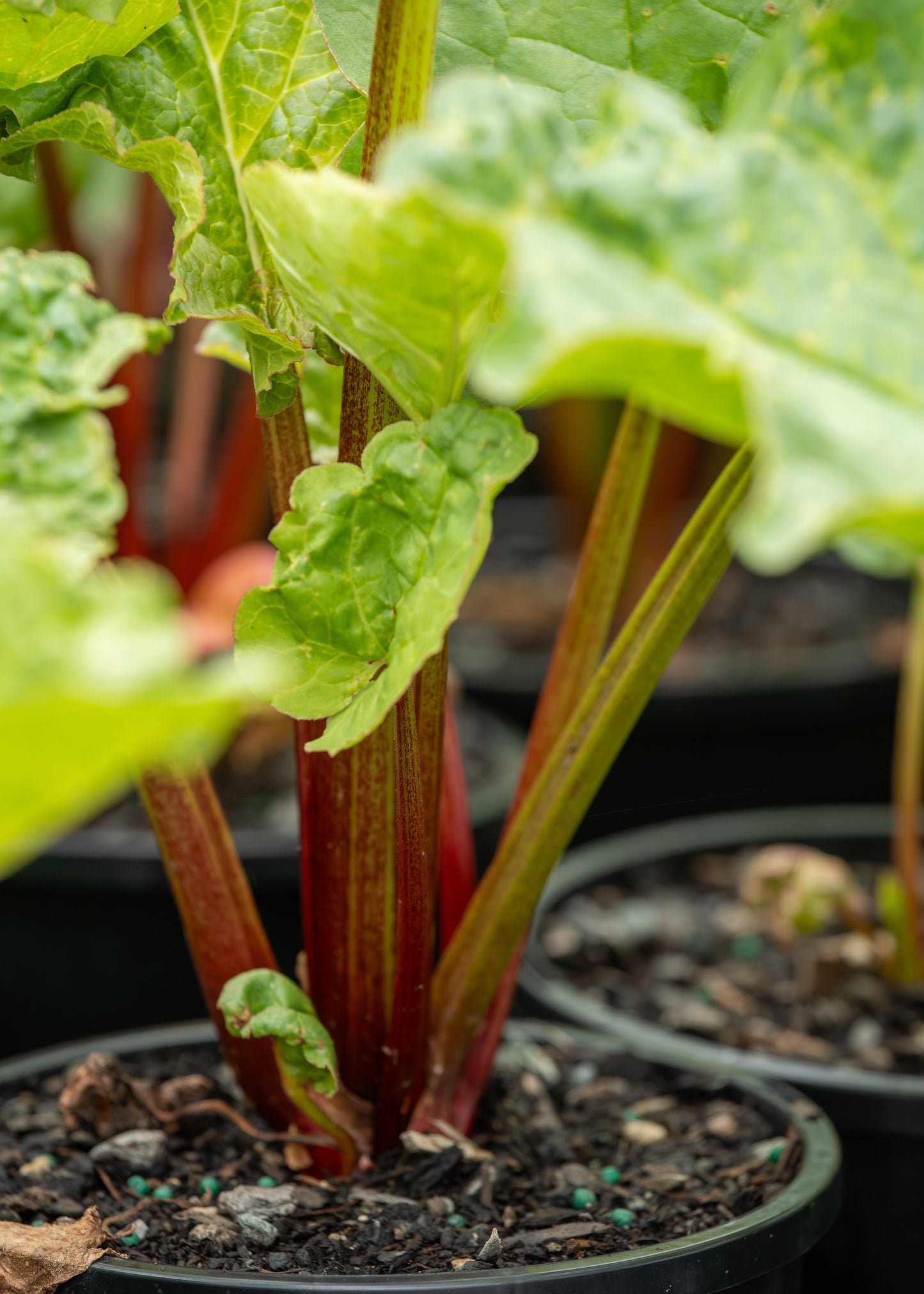
Rhubarb 'Victoria' is a reliable, traditional rhubarb variety grown for its generous crops of long, thick stalks with an excellent balance of sweetness and tartness. An old favourite for good reason, it's a hardy perennial that can produce for years once properly established.
The large green leaves sit above substantial stalks that develop green to red and pink tones, depending on growing conditions and maturity. Once harvested, they're perfect for crumbles, pies, stewed rhubarb, preserves and all the other recipes that somehow justify adding quite a lot of sugar to something you've grown yourself.
Rhubarb loves fertile soil, plenty of organic matter and consistent moisture, making 'Victoria' an excellent addition to productive gardens throughout cooler parts of New Zealand.
Why You'll Love Rhubarb 'Victoria'
- Reliable and productive heritage variety
- Long, substantial edible stalks
- Excellent traditional rhubarb flavour
- Hardy perennial that returns year after year
- Particularly well suited to cooler climates
- Easy to grow once established
- Excellent for baking, stewing and preserves
- Attractive large foliage
- Ideal for vegetable gardens and edible landscapes
- Expected 5 Year Height 0.75 M Width 1.0 M
Is Rhubarb Victoria suitable for my garden?
Is Rhubarb Victoria suitable for my garden?
Rhubarb Victoria is best suited in a position that gets
- Full sun
Rhubarb Victoria is
- Edible
- Winter Dormant
- Frost Tolerant
- Fast-growing
Rhubarb Victoria will thrive in soil that is
- Nutrient rich
- Free draining
- Normal
How to establish your Rhubarb Victoria?
How to establish your Rhubarb Victoria?
Plant Rhubarb 'Victoria' in full sun to light shade.
In Canterbury, full sun is generally excellent provided the plant receives enough water during hot, dry summer weather.
Choose a position with:
Deep, fertile soil
Plenty of organic matter
Consistent moisture
Good drainage
Room for the clump to expand
Don't underestimate its eventual size. Those innocent little plants can produce some enormous leaves once they're happy.
How to maintain your Rhubarb Victoria once established?
How to maintain your Rhubarb Victoria once established?
Consistent moisture is important for producing strong, tender stalks.
Newly Planted Rhubarb
Water regularly while the root system establishes.
Don't allow newly planted crowns to dry out completely.
Water deeply during prolonged dry periods, particularly through spring and summer when plants are actively producing stalks.
In Canterbury, keep a particularly close eye on plants during hot nor'west conditions.
Rhubarb responds extremely well to mulching.
Apply a generous layer of compost or other organic mulch around the plant to:
Retain soil moisture
Suppress weeds
Keep the root zone cooler
Add organic matter
Improve soil fertility
Keep heavy mulch from sitting directly over the crown itself.
Rhubarb is a heavy feeder.
Apply compost or well-rotted manure around established plants during winter or early spring, followed by a suitable balanced fertiliser as growth begins if required.
Additional feeding during the growing season can be useful where plants are being harvested regularly.
Healthy soil and plenty of organic matter are the foundations of a productive rhubarb patch.
Harvesting Rhubarb
Allow newly planted rhubarb time to establish before harvesting heavily.
Once established, harvest stalks when they are a useful size by pulling them firmly from the base with a slight twisting action rather than repeatedly cutting through the crown.
Only harvest a portion of the stalks at one time so the remaining foliage can continue feeding the plant.
Regular harvesting encourages continued production, but don't strip the entire plant bare.
Important – Don't Eat the Leaves
Only the rhubarb stalks are eaten. The leaves should not be consumed.
Rhubarb leaves contain high levels of compounds that make them unsafe to eat.
Remove the leaf blade after harvesting and place it in your compost or green waste.
The stalk goes to the kitchen.
The leaf does not.
Established rhubarb plants can occasionally produce tall flowering stems.
Unless you're specifically growing the plant for flowers or seed, remove flower stalks as they appear.
Flowering uses energy that could otherwise go towards producing strong crowns and edible stalks.
Cut the flowering stem close to its base without damaging the crown.
Dividing Rhubarb
Over time, mature rhubarb clumps can become large and congested.
Older plants can be lifted and divided while dormant, creating several healthy crowns and rejuvenating the original plant.
Each division should contain healthy roots and at least one strong growing bud.
Replant divisions into freshly prepared soil with plenty of organic matter.
Rhubarb is extremely well suited to cooler climates.
The foliage naturally dies back as temperatures fall, and the crown remains dormant underground through winter.
Winter cold is beneficial to rhubarb, helping provide the dormancy period it needs before vigorous spring growth begins.
That makes it particularly at home in Canterbury.
Once the foliage has died down, remove old leaves and apply compost or well-rotted organic matter around the plant in preparation for spring.
Rhubarb can be grown in a container, but don't try squeezing it into a tiny pot.
Choose a large, deep container with:
Excellent drainage
Quality vegetable potting mix
Added organic matter
Plenty of room for root development
Regular access to water
Container-grown rhubarb will require more frequent watering and feeding than plants growing in the ground.
If you've got garden space available, rhubarb will generally be happier there long term.
Couldn't load pickup availability
Share