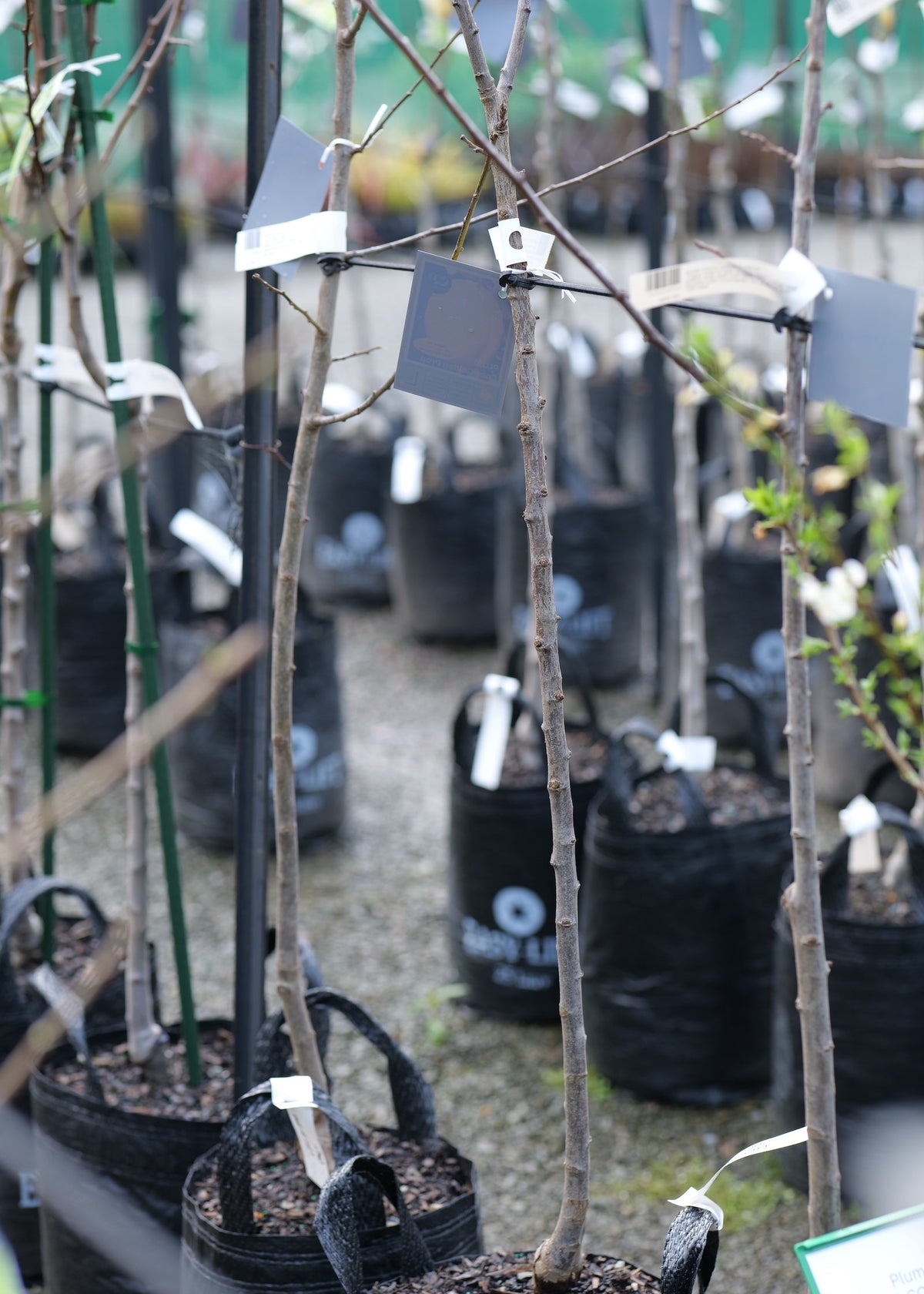
Plum Coe’s Golden Drop
Plum Coe’s Golden Drop
European Plum
Plum 'Coe's Golden Drop' is a treasured English heritage plum, renowned for producing large golden-yellow fruit with incredibly sweet, rich flavour. Considered one of the finest dessert plums ever introduced, this late-season variety is perfect for eating fresh, preserving, bottling and making delicious desserts.
In spring, the tree is covered in masses of delicate white blossom that attracts bees and beneficial pollinators. By late summer, the elegant branches are laden with beautiful golden fruit that develops a soft amber blush in full sun. With its reliable crops and outstanding eating quality, 'Coe's Golden Drop' is a wonderful addition to any New Zealand home orchard.
Why You'll Love Plum 'Coe's Golden Drop'
- Large, golden-yellow heritage plums
- Exceptionally sweet, rich flavour
- One of the finest dessert plum varieties
- Beautiful spring blossom
- Reliable late-season harvest
- Excellent for fresh eating and preserving
- Hardy and easy to grow
- Ideal for home orchards and lifestyle blocks
- Expected 5 Year Height 3.0 M Width 3.0 M
Is Plum Coe’s Golden Drop suitable for my garden?
Is Plum Coe’s Golden Drop suitable for my garden?
Plum Coe’s Golden Drop is best suited in a position that gets
- Full sun
Plum Coe’s Golden Drop is
- Edible
- Wind Tolerant
- Frost Tolerant
- Flowering
- Attracts pollinators
- Cold hardy
Plum Coe’s Golden Drop will thrive in soil that is
How to establish your Plum Coe’s Golden Drop?
How to establish your Plum Coe’s Golden Drop?
Plant Plum 'Coe's Golden Drop' in full sun.
For the best crops:
Choose a position receiving at least six to eight hours of direct sunlight each day.
Plant in a sheltered location protected from strong prevailing winds.
Ensure good airflow around the canopy to reduce disease pressure.
How to maintain your Plum Coe’s Golden Drop once established?
How to maintain your Plum Coe’s Golden Drop once established?
Water deeply once or twice a week during the first growing season.
Water regularly during:
Flowering.
Fruit development.
Extended dry periods.
Consistent moisture helps produce larger, juicier fruit.
Feed annually in late winter or early spring with:
Compost or well-rotted organic matter.
A balanced fruit tree fertiliser.
Avoid excessive nitrogen, which promotes leafy growth rather than fruit production.
Plum 'Coe's Golden Drop' is not reliably self-fertile and performs best when planted with another European plum flowering at the same time.
Excellent pollination partners include:
Plum 'Omega'
Plum 'Greengage'
Plum 'Reine Claude de Bavay'
Cross-pollination will improve fruit set, fruit size and overall yields.
Prune during late summer or immediately after harvest.
For best results:
Remove dead, damaged or diseased branches.
Thin crowded growth to improve airflow and sunlight penetration.
Maintain an open, balanced framework.
Avoid heavy winter pruning, as plums are more susceptible to disease when pruned during cold, wet conditions.
Fruit is generally ready during late February through March.
Harvest when:
The fruit develops a rich golden colour.
It feels slightly soft when gently squeezed.
It lifts easily from the branch.
Enjoy fresh or use in jams, preserves, bottling and baking.
Plum 'Coe's Golden Drop' is highly frost hardy once established.
Although mature trees tolerate winter frosts well, late spring frosts may reduce blossom and fruit set in colder districts.
Apply mulch around the base annually to conserve moisture and improve soil health.
Monitor for common plum pests and diseases including:
Aphids
Scale insects
Codling moth
Brown rot
Leaf curl (occasionally)
Good orchard hygiene, regular pruning and prompt removal of fallen fruit will help minimise problems.
Couldn't load pickup availability
Share