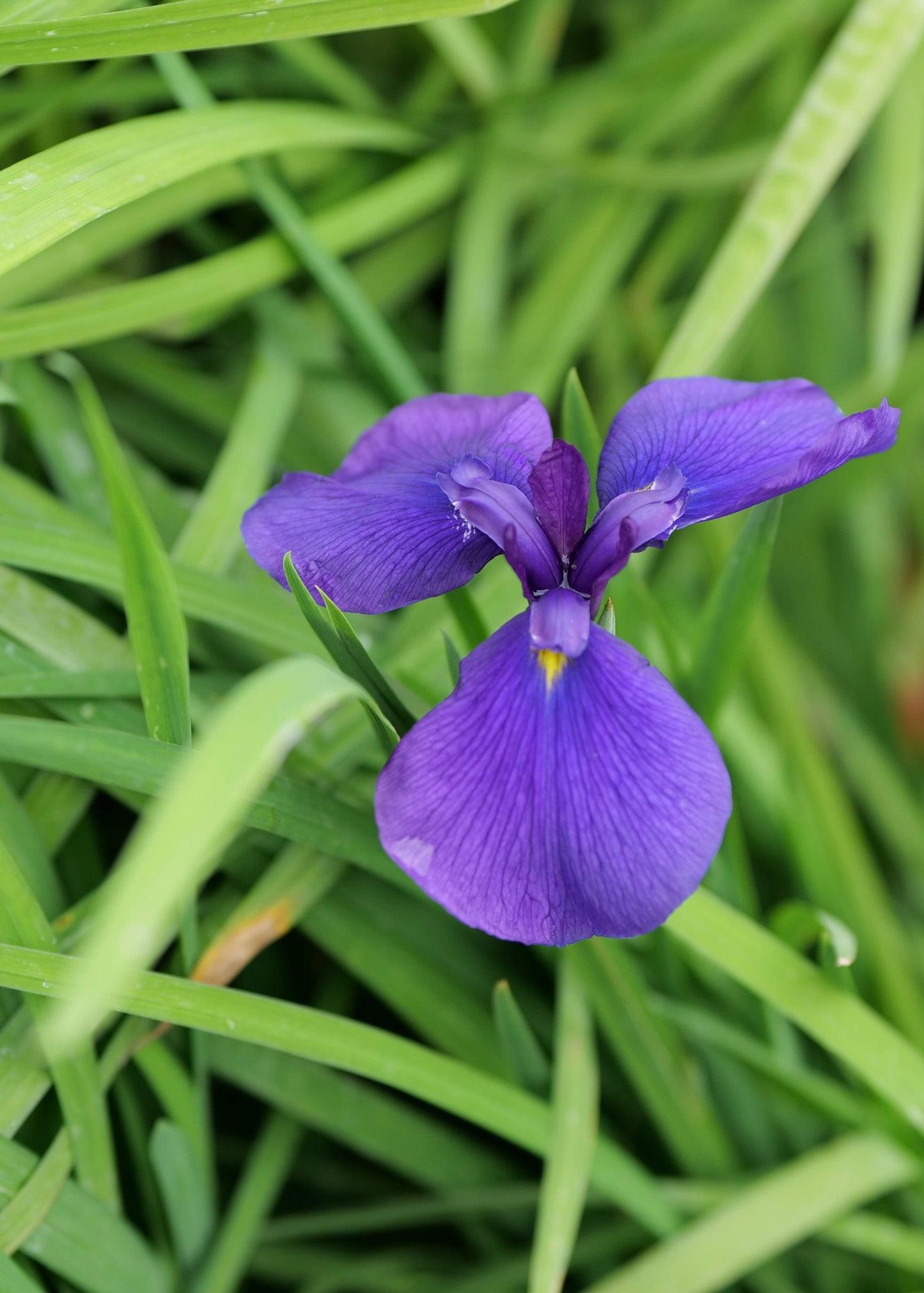
Iris Sibirica
Iris Sibirica
Siberian Iris
Iris sibirica, commonly known as Siberian Iris, is a beautiful clump-forming perennial prized for its elegant flowers and fine, arching foliage. Flowering in late spring and early summer, Siberian Irises produce stunning blooms in shades of blue, purple, white, pink and violet, depending on the variety, creating a sophisticated display in borders, cottage gardens and waterside plantings.
Unlike many bearded irises, Siberian Irises thrive in moisture-retentive soils and are remarkably easy to grow. Their graceful grass-like foliage remains attractive long after flowering, providing structure and texture throughout the growing season.
Why You'll Love Iris sibirica
- Elegant flowers in a range of beautiful colours
- Graceful, upright foliage provides year-round structure
- Excellent for borders and pond-side planting
- Easy to grow and low maintenance
- Highly frost hardy
- Attracts bees and beneficial pollinators
- Long-lived and reliable perennial
- Beautiful architectural form even when not in flower
- Expected 5 Year Height 1.0 M Width 1.0 M
Is Iris Sibirica suitable for my garden?
Is Iris Sibirica suitable for my garden?
Iris Sibirica is best suited in a position that gets
- Partial shade
- Full sun
Iris Sibirica is
- Perennial
- Frost Tolerant
- Flowering
- Cold hardy
- Drought resistant once established
- Fast-growing
- Attracts pollinators
Iris Sibirica will thrive in soil that is
- Normal
- Clay
- Nutrient rich
How to establish your Iris Sibirica?
How to establish your Iris Sibirica?
For best flowering results, plant Iris sibirica in:
Full sun to part shade
Open positions with good air circulation
Moist but well-drained soil
In hotter regions, some afternoon shade can help maintain fresh foliage through summer.
How to maintain your Iris Sibirica once established?
How to maintain your Iris Sibirica once established?
Water regularly during the establishment period.
Established Plants
Maintain consistent moisture during spring and summer, particularly while flowering.
Although more drought tolerant than often assumed, plants perform best when not allowed to dry out completely.
For strong growth and abundant flowers:
Apply compost annually in spring.
Use a balanced slow-release fertiliser.
Mulch with organic matter to improve soil structure.
Avoid excessive nitrogen, which may encourage foliage growth at the expense of flowers.
After flowering:
Remove spent flower stems at the base.
This tidies the plant and directs energy back into root and foliage development.
Minimal pruning is required.
Simply:
Remove old flower stems after blooming.
Cut away damaged or untidy foliage as needed.
Trim old leaves in late winter before new spring growth emerges.
Dividing Plants
Siberian Irises benefit from division every 4–5 years.
Signs division may be needed include:
Reduced flowering
Congested clumps
Dead centres
The best time to divide is in autumn or early spring.
Iris sibirica is extremely frost hardy and performs exceptionally well throughout New Zealand.
Winter care is minimal:
Remove old foliage if desired.
Apply mulch around plants in exposed areas.
New growth will emerge vigorously in spring.
Couldn't load pickup availability
Share