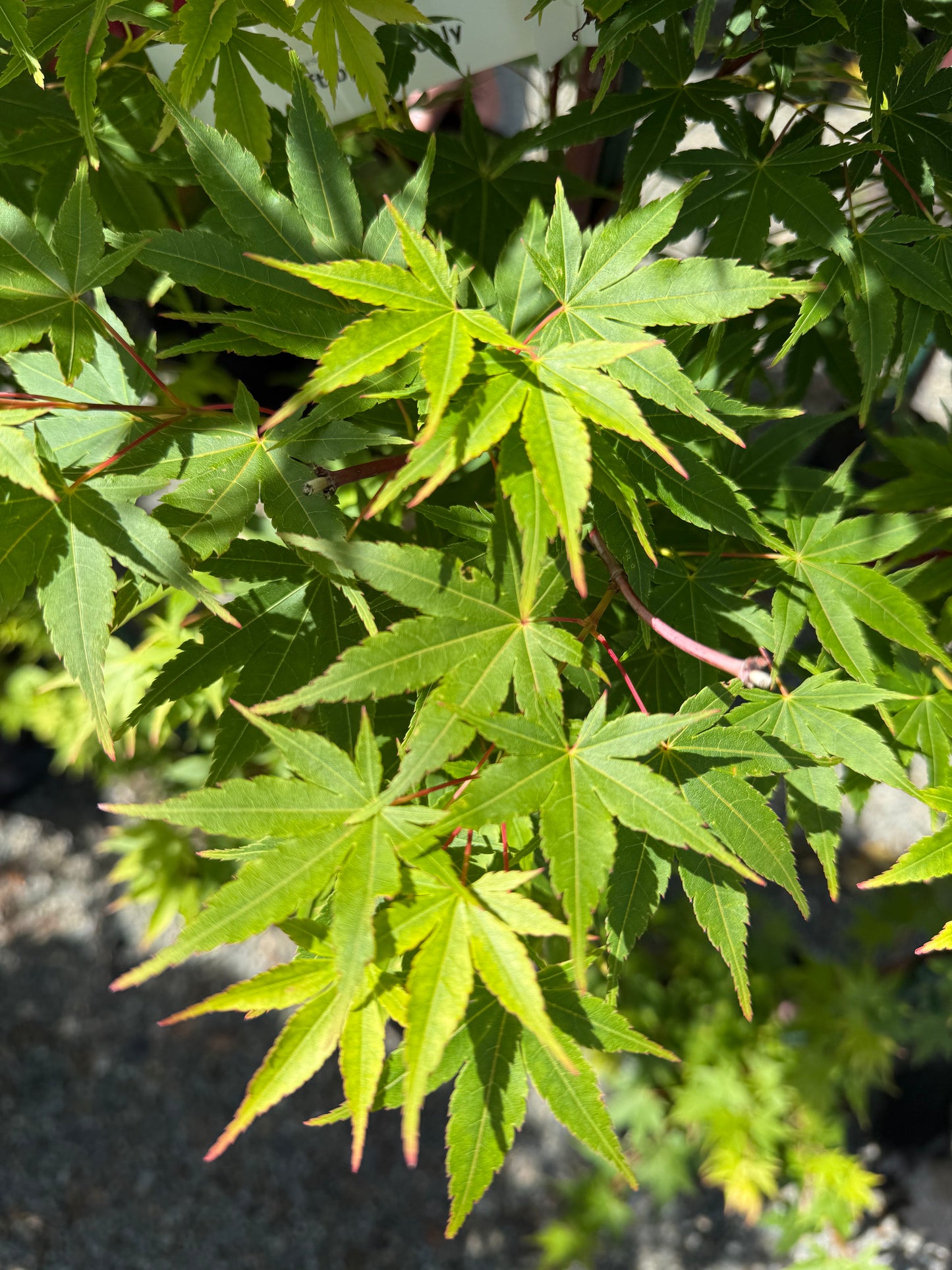
Acer Senkaki
Acer Senkaki
Japanese Maple, Coral Bark Maple
Acer palmatum 'Senkaki', commonly known as the Coral Bark Maple, is a beautiful Japanese Maple offering something interesting in every season. Fresh spring leaves emerge soft green with delicate pink-red margins, mature to fresh green through summer and then transform into brilliant shades of golden yellow, orange and apricot in autumn.
But winter is when 'Senkaki' really shows off. Once the leaves have fallen, the young branches reveal their distinctive coral-red bark, bringing a fantastic splash of colour to the garden during the months when most deciduous trees are looking decidedly naked.
Elegant, manageable and exceptionally versatile, Acer 'Senkaki' is an outstanding feature tree for smaller New Zealand gardens, courtyards, Japanese-inspired landscapes and mixed borders.
Why You'll Love Acer 'Senkaki'
- Striking coral-red young stems in winter
- Fresh green spring and summer foliage
- Brilliant yellow, orange and apricot autumn colour
- Attractive upright, elegant form
- Provides genuine four-season interest
- Excellent feature tree for smaller gardens
- Frost hardy
- Particularly effective in cooler climates where the winter bark can really shine
- Expected 5 Year Height 4.0 M Width 3.0 M
Is Acer Senkaki suitable for my garden?
Is Acer Senkaki suitable for my garden?
Acer Senkaki is best suited in a position that gets
- Full sun
- Partial shade
Acer Senkaki is
- Deciduous
- Cold hardy
Acer Senkaki will thrive in soil that is
- Free draining
- Nutrient rich
How to establish your Acer Senkaki?
How to establish your Acer Senkaki?
In cooler parts of New Zealand it can perform well in a sunny position, while gardens experiencing hotter summers will benefit from some protection from intense afternoon sun.
For best results:
Choose a sheltered position.
Protect from hot, drying winds.
Avoid extremely exposed sites.
Allow enough room for the natural branching structure to develop.
A little shelter goes a long way towards keeping Japanese Maple foliage looking its best through summer.
How to maintain your Acer Senkaki once established?
How to maintain your Acer Senkaki once established?
Water deeply and regularly during the first couple of growing seasons.
The aim is to encourage a strong root system rather than repeatedly wetting only the top few centimetres of soil.
Water during prolonged dry periods, particularly through hot Canterbury summers.
Japanese Maples don't appreciate being allowed to completely dry out, and moisture stress combined with hot winds can cause the edges of the leaves to brown or scorch.
Apply organic mulch around the root zone each year.
Mulching helps:
Retain soil moisture
Keep the roots cooler through summer
Reduce weed competition
Improve the soil over time
Keep mulch slightly away from the trunk rather than piling it against the bark.
Feed lightly in spring as new growth begins.
A balanced slow-release fertiliser is generally sufficient. Avoid excessive nitrogen, as this can encourage lots of soft, vigorous growth.
Japanese Maples don't need to be heavily fed to perform well.
Very little pruning is required.
The naturally elegant branching structure is one of the best features of 'Senkaki', so avoid trying to turn it into something overly manicured.
Prune only to:
Remove dead or damaged wood.
Remove crossing or rubbing branches.
Improve the framework of young trees if required.
Remove any unwanted shoots.
Light structural pruning is preferable to hard pruning.
Keeping the Coral Bark Looking Its Best
The brightest coral colouring occurs on younger growth, while older branches gradually become more muted.
Good general plant health and moderate new growth will help maintain plenty of colourful young stems throughout the canopy.
The red bark is generally most noticeable during the colder months, making 'Senkaki' particularly valuable for winter interest.
Acer 'Senkaki' is highly frost hardy and particularly well suited to cooler New Zealand climates.
As a deciduous tree, it enters dormancy during winter and doesn't require frost protection once established.
In fact, winter is one of its best seasons – the combination of bare branches, coral-red stems and a good Canterbury frost is pretty hard to beat.
Protecting Against Leaf Scorch
If the foliage develops dry or crispy edges during summer, the usual culprits are:
Hot drying winds
Very intense afternoon sun
Insufficient water
An exposed planting position
This doesn't necessarily mean the tree is unhealthy. Improving soil moisture and providing some protection from extreme exposure will generally help.
Couldn't load pickup availability
Share