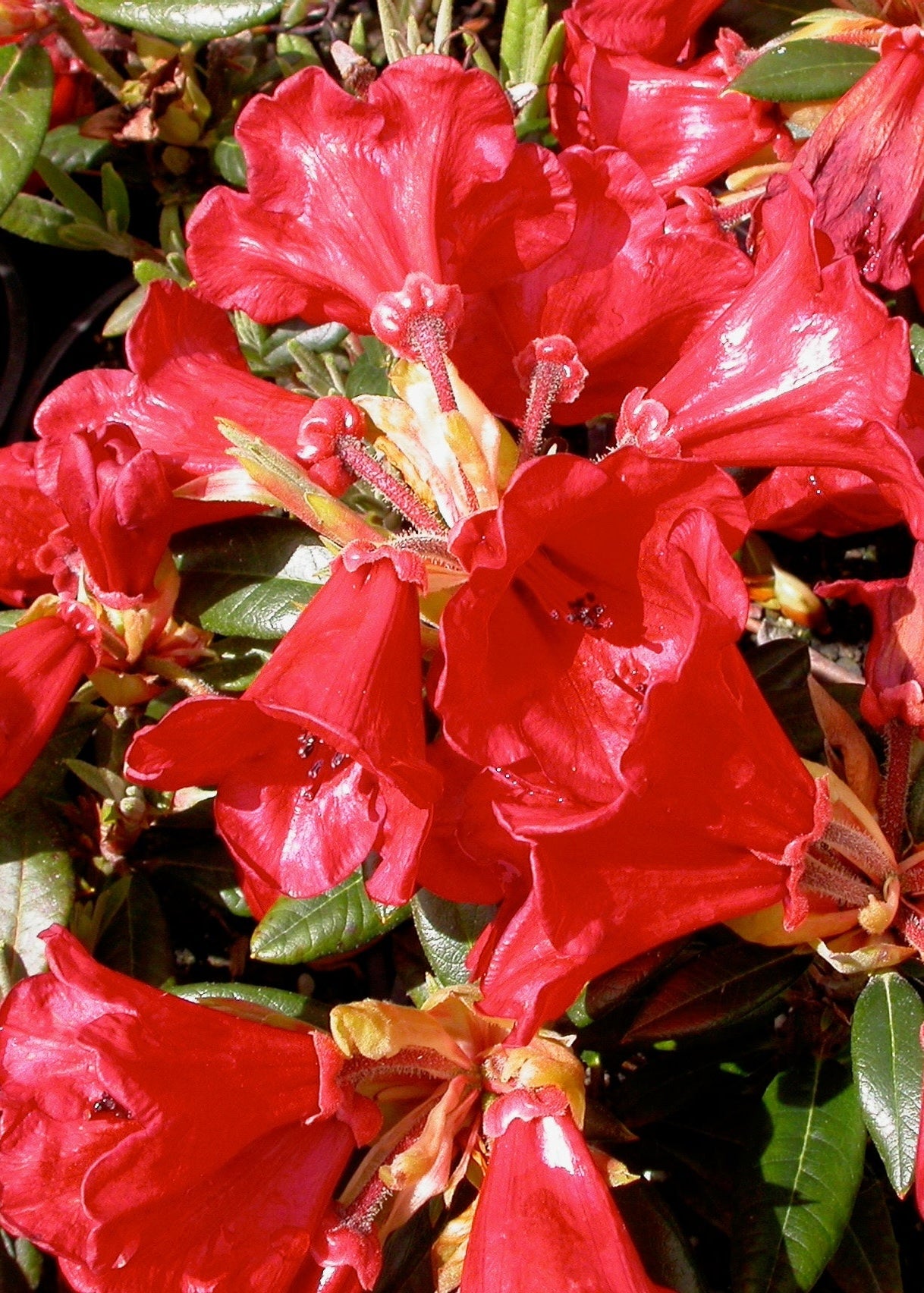
Rhododendron Ruby Hart
Rhododendron Ruby Hart
Rhododendron ‘Ruby Hart’ is a tidy, dwarf evergreen rhododendron that suits smaller gardens, courtyard beds, and feature pots where you want rich colour without a big, rangy shrub. It’s loved for its deep, waxy red flowers that sit neatly over very dark, glossy green foliage—a sharp combo that looks good all year, not just when it’s in bloom. It naturally forms a dense, mounded shape, so it stays looking “designed” with minimal effort.
- Expected 5 Year Height 1.0 M Width M
Is Rhododendron Ruby Hart suitable for my garden?
Is Rhododendron Ruby Hart suitable for my garden?
Rhododendron Ruby Hart is best suited in a position that gets
- Full sun
- Partial shade
Rhododendron Ruby Hart is
- Evergreen
- Flowering
Rhododendron Ruby Hart will thrive in soil that is
How to establish your Rhododendron Ruby Hart?
How to establish your Rhododendron Ruby Hart?
Position: Best in morning sun / dappled shade with shelter from drying winds. ‘Ruby Hart’ can handle more light than some rhodos, but it still performs best if it’s not baking in harsh afternoon sun.
Soil: Plant into free-draining, acidic soil rich in organic matter (composted bark, leaf mould). If you’re on heavy clay, mound the planting area and improve drainage—rhododendrons hate wet feet.
Planting depth: Keep the rootball slightly proud of ground level (they’re shallow-rooted).
Watering (first year): Water deeply during dry spells. Consistent moisture helps it establish fast and sets it up for better flowering next spring.
Mulch: A 5–8cm layer of pine bark is ideal—keeps roots cool, moist, and happy (keep mulch off the stem).
How to maintain your Rhododendron Ruby Hart once established?
How to maintain your Rhododendron Ruby Hart once established?
Deadhead after flowering: Snip off spent trusses once they fade to keep the plant tidy and encourage stronger growth.
Pruning: Usually not needed. If you want to shape or keep it extra compact, prune straight after flowering (so you don’t remove next season’s buds).
Feeding: In early spring, apply a slow-release fertiliser for acid-loving plants (rhododendron/camellia type). Avoid heavy nitrogen feeds (like lawn fertiliser) near rhodos.
Winter note: In colder, windier spots, leaf scorch is more about wind + winter sun + dry soil than the frost itself. Mulch and shelter make a big difference.
Couldn't load pickup availability
Share