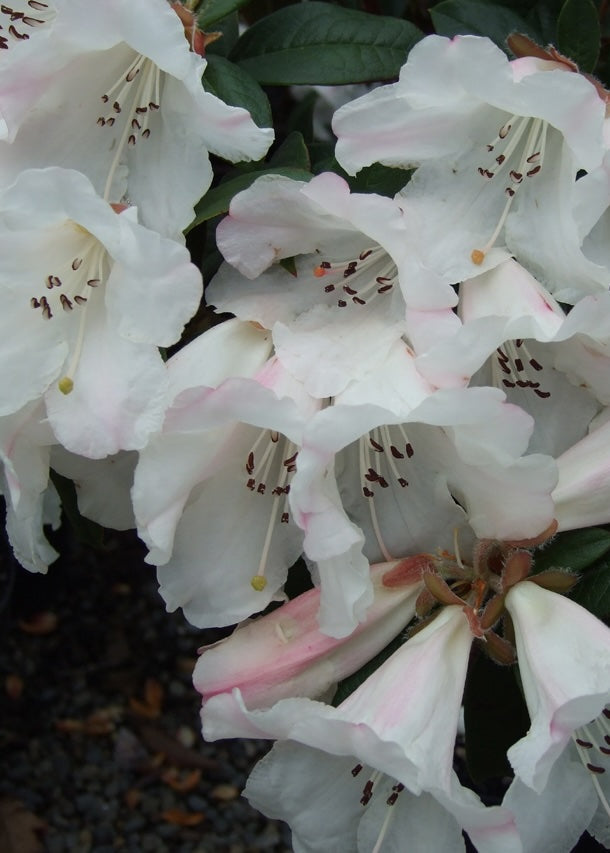
Rhododendron Princess Alice
Rhododendron Princess Alice
Rhododendron ‘Princess Alice’ is a compact evergreen rhododendron grown for its beautifully scented spring flowers. It buds up pink, then opens to fragrant white blooms with a soft pink flush — a classic cottage-garden look without being fussy. It naturally holds a neat, well-shaped habit and is often noted as being less prone to mildew than some other fragrant rhodos, which is a real bonus in home gardens.
In South Island gardens, it’s a great pick for sheltered borders, woodland-style planting, or near a path/entrance where you’ll actually notice the perfume. Most sources rate it as a smaller rhododendron (around 1–1.5m over time, depending on conditions).
Spring flowering - mid.
- Expected 5 Year Height 1.5 M Width 1.5 M
Is Rhododendron Princess Alice suitable for my garden?
Is Rhododendron Princess Alice suitable for my garden?
Rhododendron Princess Alice is best suited in a position that gets
- Partial shade
Rhododendron Princess Alice is
- Evergreen
- Flowering
- Fragrant
- Disease resistant
- Frost Tolerant
Rhododendron Princess Alice will thrive in soil that is
- Acidic
- Normal
- Free draining
- Nutrient rich
- Sandy
- Clay
How to establish your Rhododendron Princess Alice?
How to establish your Rhododendron Princess Alice?
Best position: Part shade / morning sun is ideal — bright light without harsh afternoon heat. It will also cope in sun if soil stays cool and evenly moist.
Shelter matters: Choose a spot protected from cold, drying winds and hard frosts, especially when young.
Soil: Like most rhododendrons, it prefers acidic, humus-rich, free-draining soil. If you’re on heavy clay, plant into a raised mound and improve with composted bark/pine bark to keep roots happy.
Watering (first year): Keep moisture consistent through the first summer—think “damp sponge”, not boggy. Mulch helps a lot.
How to maintain your Rhododendron Princess Alice once established?
How to maintain your Rhododendron Princess Alice once established?
Deadhead after flowering: Gently twist off spent flower heads to push energy back into growth and next year’s buds.
Pruning: Keep pruning light and done straight after flowering (late spring). Heavy pruning later can remove next season’s buds.
Mulch yearly: Top up mulch to keep roots cool and protect shallow feeder roots (avoid digging around the base).
Feed lightly: Use an acid-loving fertiliser in spring if needed (don’t overdo it—steady, not forced growth).
Couldn't load pickup availability
Share