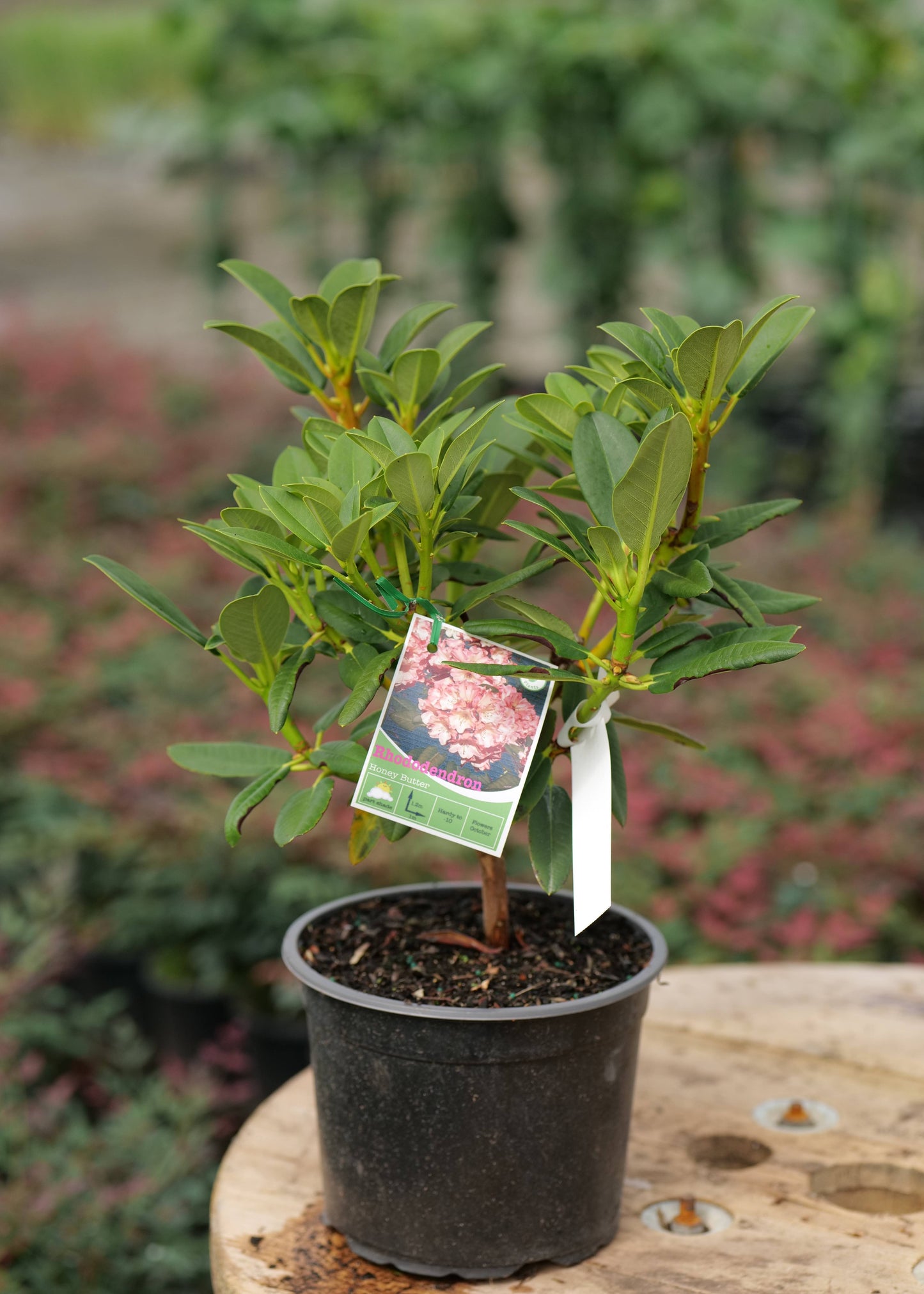
Rhododendron Honey Butter
Rhododendron Honey Butter
Rhododendron ‘Honey Butter’ is a compact, evergreen rhododendron that’s all about warm, soft colour in spring. It starts with strong peach buds, then opens to peach-edged flowers that fade into a creamy, honey-yellow centre — a really handy shade for lifting darker corners without looking loud. The plant naturally forms a neat, rounded shrub, making Rhododendron ‘Honey Butter’ a smart pick for feature planting near paths, courtyard beds, woodland-style borders, or even a large pot where you’ll see the flowers up close.
With parentage from Nancy Evans cross China Group, and Lem’s Cameo
- Expected 5 Year Height 1.2 M Width 1.2 M
Is Rhododendron Honey Butter suitable for my garden?
Is Rhododendron Honey Butter suitable for my garden?
Rhododendron Honey Butter is best suited in a position that gets
- Partial shade
Rhododendron Honey Butter is
Rhododendron Honey Butter will thrive in soil that is
- Normal
- Acidic
- Free draining
- Nutrient rich
How to establish your Rhododendron Honey Butter?
How to establish your Rhododendron Honey Butter?
Position: Plant Rhododendron ‘Honey Butter’ in dappled shade or morning sun with afternoon shade. In the South Island, shelter from drying winds is a big win (wind can crisp leaves and knock buds around).
Soil: Aim for acidic, organic, free-draining soil. If you’re on clay, mound up the planting area and work in bark/compost to improve drainage (rhododendrons hate “wet feet”).
Planting depth: Keep the rootball slightly proud of the surrounding soil—rhododendrons are shallow-rooted and don’t like being buried.
Watering (first season): Water deeply and regularly through dry spells. Even moisture helps Rhododendron ‘Honey Butter’ settle faster and set buds well for next year.
Mulch: Mulch with pine bark or leaf mould (5–8cm). It keeps roots cool, holds moisture, and gently supports the acidic conditions rhodos prefer.
How to maintain your Rhododendron Honey Butter once established?
How to maintain your Rhododendron Honey Butter once established?
Deadhead after flowering: Once the trusses fade, gently snap or snip them off to keep Rhododendron ‘Honey Butter’ tidy and encourage strong growth (avoid damaging new buds forming underneath).
Pruning: If shaping is needed, prune straight after flowering. This variety stays naturally compact, so it’s usually just a light tidy.
Feeding: In early spring, use a slow-release fertiliser for acid-loving plants (camellia/azalea/rhododendron type). Don’t overdo nitrogen—lush soft growth is more prone to stress.
Mulch refresh: Top up mulch once a year to protect those surface roots and keep moisture steady.
Cold snaps: It’s rated to about −18°C, but in real gardens the combo of frost + wind + winter sun can cause leaf scorch. A sheltered spot and mulch make a noticeable difference.
Couldn't load pickup availability
Share