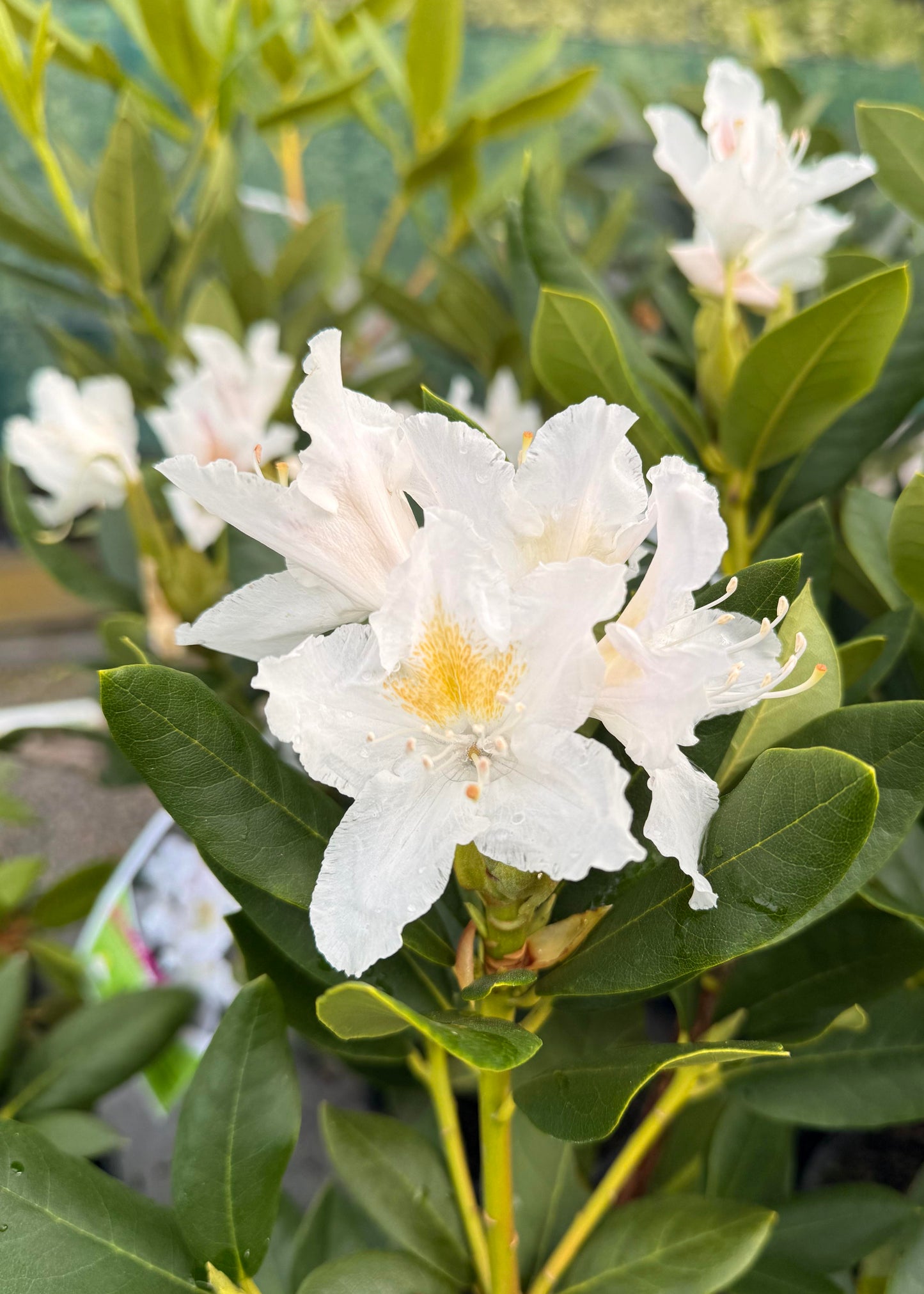
Rhododendron Cunninghams White
Rhododendron Cunninghams White
Rhododendron ‘Cunningham’s White’ is a classic, no-fuss evergreen rhododendron that looks clean and fresh in almost any garden style. It carries blush-pink buds that open to masses of white, trumpet-shaped flowers with a soft pale-yellow eye — bright enough to lift shady areas, but still calm and easy to pair with other colours. It’s also a popular choice for low, informal hedging thanks to its dense foliage and reliable performance.
- Expected 5 Year Height 2.0 M Width 1.5 M
Is Rhododendron Cunninghams White suitable for my garden?
Is Rhododendron Cunninghams White suitable for my garden?
Rhododendron Cunninghams White is best suited in a position that gets
- Partial shade
- Full sun
Rhododendron Cunninghams White is
Rhododendron Cunninghams White will thrive in soil that is
- Acidic
- Normal
- Free draining
- Nutrient rich
How to establish your Rhododendron Cunninghams White?
How to establish your Rhododendron Cunninghams White?
Position: Best in dappled shade or morning sun, but Rhododendron ‘Cunningham’s White’ is known for coping in sunny and “tougher” spots better than many rhodos—just don’t let it dry right out in summer.
Soil: Plant into acidic, humus-rich, free-draining soil (think compost + bark fines/leaf mould). Avoid heavy, wet ground in winter.
Planting depth: Keep the rootball slightly proud of ground level (rhododendrons are shallow-rooted).
Watering (first 12 months): Deep water during dry spells—consistent moisture = faster establishment and better bud set for next spring.
Mulch: A 5–8cm bark mulch helps keep roots cool, moist, and happy— keep mulch off the stem.
How to maintain your Rhododendron Cunninghams White once established?
How to maintain your Rhododendron Cunninghams White once established?
Deadhead after flowering: Remove spent trusses to keep Rhododendron ‘Cunningham’s White’ tidy and encourage stronger growth for next season.
Pruning: Minimal pruning needed. If shaping (especially for hedging), do it straight after flowering so you don’t cut off next year’s buds.
Feeding: In early spring, use a slow-release fertiliser for acid lovers (rhododendron/camellia type).
Problem signals: Yellowing leaves can hint the soil is too alkaline or roots are staying too wet—improve drainage and avoid lime near the root zone.
Couldn't load pickup availability
Share