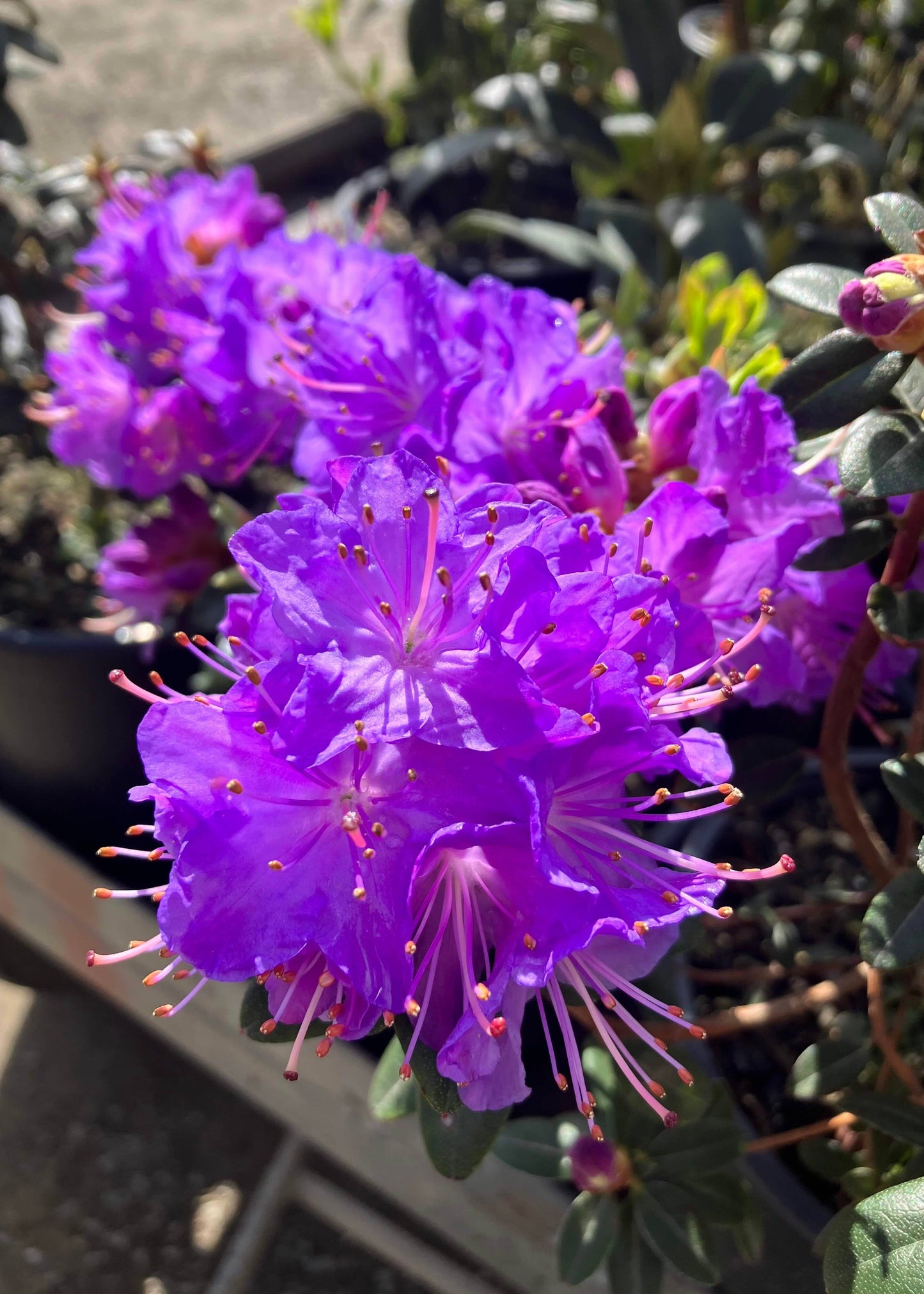
Rhododendron Bob’s Blue
Rhododendron Bob’s Blue
Rhododendron 'Bob's Blue' is a stunning evergreen rhododendron prized for its soft lilac-blue flowers that brighten the garden from early spring. One of the earlier flowering rhododendrons, it produces generous rounded trusses of cool-toned blooms that stand out beautifully against its glossy dark green foliage.
Its compact, dense habit makes 'Bob's Blue' an excellent choice for smaller gardens, woodland borders and feature plantings. Hardy, reliable and easy to grow, this New Zealand favourite provides year-round structure and a welcome burst of colour just as the garden begins to wake from winter.
Why You'll Love Rhododendron 'Bob's Blue'
- Beautiful soft lilac-blue flowers
- One of the earliest flowering rhododendrons
- Evergreen foliage provides year-round structure
- Compact, tidy growth habit
- Excellent frost hardiness
- Low maintenance and easy to grow
- Attracts bees and beneficial pollinators
- Ideal for woodland, cottage and Japanese-style gardens
- Expected 5 Year Height 1.2 M Width 1.0 M
Is Rhododendron Bob’s Blue suitable for my garden?
Is Rhododendron Bob’s Blue suitable for my garden?
Rhododendron Bob’s Blue is best suited in a position that gets
- Partial shade
- Full sun
Rhododendron Bob’s Blue is
- Flowering
- Cold hardy
- Evergreen
Rhododendron Bob’s Blue will thrive in soil that is
How to establish your Rhododendron Bob’s Blue?
How to establish your Rhododendron Bob’s Blue?
Rhododendron Bob’s Blue wants acidic to neutral, lime-free soil that’s free-draining but moisture-holding.
If you’ve got heavier clay, plant into a raised mound/bed and add plenty of pine bark, leaf mould, and composted organic matter (avoid adding lime).
Do not bury the root ball: rhododendrons hate being planted deep. Set the top of the root ball level with (or slightly above) finished soil, then mulch.
How to maintain your Rhododendron Bob’s Blue once established?
How to maintain your Rhododendron Bob’s Blue once established?
Feeding
Feed in spring after flowering (or early spring) with a rhododendron/camellia/azalea fertiliser.
Avoid heavy feeding late summer/autumn (soft growth + frost risk).
Mulching (worth doing every year)
Top up mulch annually with pine bark, leaf mould, or composted bark to keep roots cool and moist.
Keep mulch a few cm back from the main stem to prevent collar rot.
Pruning
Minimal pruning needed.
Deadhead (snap off spent flower trusses) after flowering to tidy the plant and encourage bud set for next year.
If shaping is needed, do a light trim straight after flowering, not in late summer (you’ll remove next season’s buds).
Frost and winter
This cultivar is commonly described as frost resistant, which suits many South Island gardens.
In exposed frost pockets, mulch well and keep the plant hydrated going into winter (dry roots + cold wind is the usual culprit for winter burn).
Common issues to watch for in NZ gardens
Yellowing leaves can be a sign of soil too alkaline (often from lime, concrete wash, or hard fill). Fix with organic mulch, avoid lime, and consider a soil acidifier if needed.
Watch for typical rhododendron pests/disease (varies by region): lace bug, root weevil, and root rots in poorly drained soil. Good drainage + mulch does most of the prevention.
Couldn't load pickup availability
Share