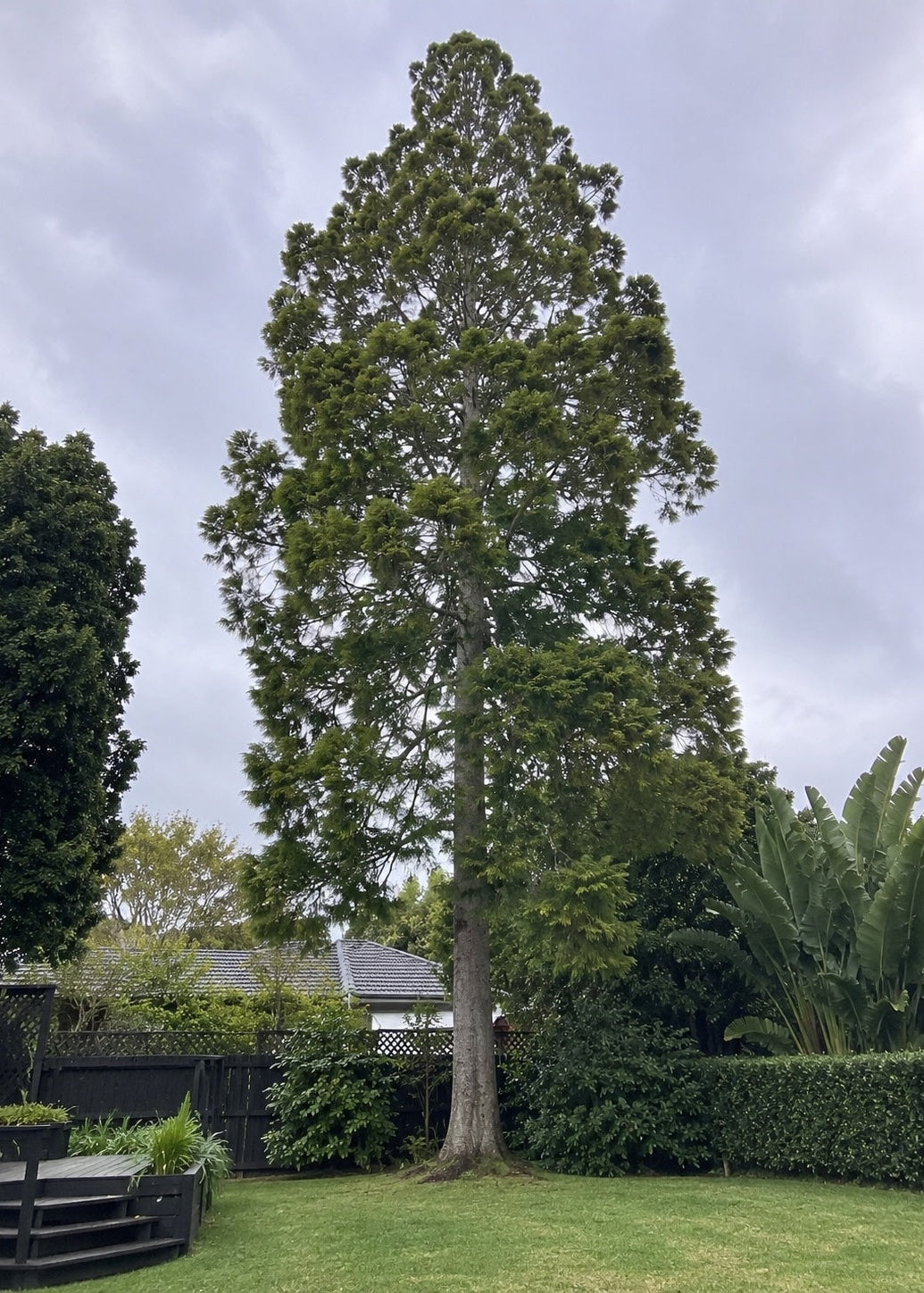
Dacrycarpus Dacrydioides
Dacrycarpus Dacrydioides
Kahikatea, White Pine
Dacrycarpus dacrydioides, commonly known as Kahikatea or White Pine, is New Zealand’s tallest native tree and one of the country’s most iconic forest species. Revered for its elegant upright growth and soft feathery foliage, Kahikatea creates a graceful long-lived feature in native gardens, shelter plantings and restoration projects.
Young plants display delicate fine-textured foliage before maturing into stately trees with layered branches and distinctive bark. In natural conditions, Kahikatea can grow into an impressive forest giant and is often associated with wetlands and fertile lowland environments throughout New Zealand.
As a native conifer, Dacrycarpus dacrydioides provides excellent habitat and food for native birds. Mature female trees produce small fleshy fruit that attract kererū and other wildlife, making this an outstanding choice for biodiversity-focused planting. Elegant, hardy and steeped in New Zealand heritage, Kahikatea is ideal for creating long-term structure and native character in the landscape.
- Expected 5 Year Height 5.0 M Width 1.5 M
Is Dacrycarpus Dacrydioides suitable for my garden?
Is Dacrycarpus Dacrydioides suitable for my garden?
Dacrycarpus Dacrydioides is best suited in a position that gets
- Full sun
- Partial shade
Dacrycarpus Dacrydioides is
- Attracts pollinators
- NZ Native
- Frost Tolerant
- Evergreen
- Wind Tolerant
Dacrycarpus Dacrydioides will thrive in soil that is
- Normal
- Clay
- Nutrient rich
- Free draining
- Swampy
How to establish your Dacrycarpus Dacrydioides?
How to establish your Dacrycarpus Dacrydioides?
Position
Plant in full sun to partial shade. Best growth occurs in open positions with room to develop.
Soil
Prefers fertile moist soils and naturally tolerates wetter areas better than many other native trees, although it will establish in most garden soils with reasonable moisture.
Watering
Water regularly while establishing, especially during dry periods. Once established, Kahikatea becomes resilient and relatively low maintenance.
Feeding
Generally requires minimal feeding. A light application of compost or balanced fertiliser in spring can encourage establishment and healthy growth.
Spacing
Allow approximately 3–5m between plants for shelter planting or significantly more space if growing as long-term specimen trees.
How to maintain your Dacrycarpus Dacrydioides once established?
How to maintain your Dacrycarpus Dacrydioides once established?
Very low maintenance once established. Remove any damaged or crossing branches as needed while plants are young to encourage strong structure.
Mulching around the base helps retain soil moisture and suppress weeds during establishment. Avoid repeated heavy pruning as Kahikatea naturally develops its best form over time.
Couldn't load pickup availability
Share