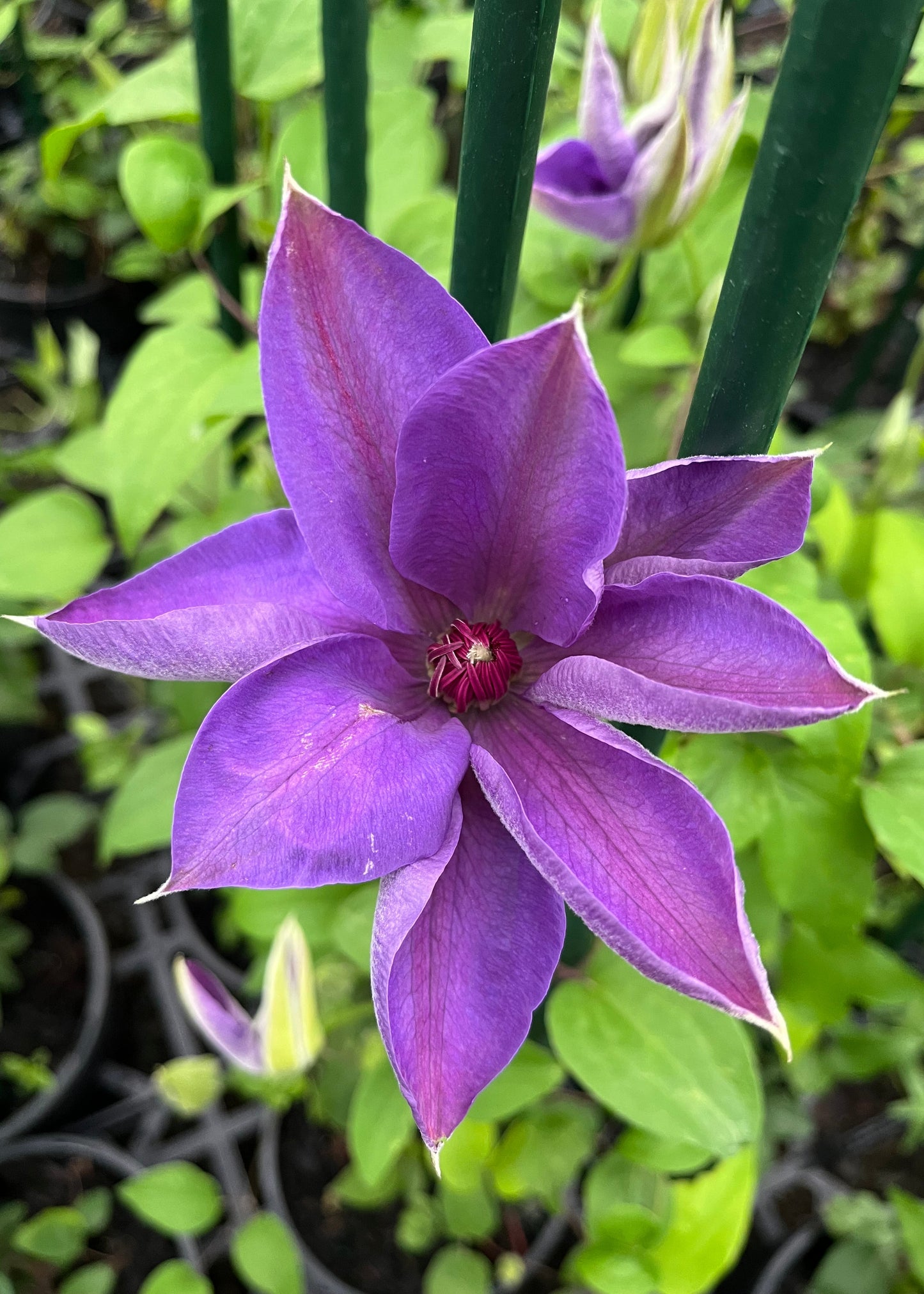
Clematis Elsa Spath
Clematis Elsa Spath
Clematis ‘Elsa Späth
If you love that classic clematis look — big blooms, strong colour, and an easy climb up a trellis — Clematis ‘Elsa Späth’ is a solid go-to. It’s an early large-flowered clematis with large violet-blue to blue-purple flowers and standout reddish anthers, so it reads well from a distance on fences, arches and pergolas. It’s a great choice for South Island gardens because it gives you a strong spring/early summer display, then often pops up with extra flowers later if it’s kept happy and pruned right.
Garden uses: trellis against a fence, pergola posts, archways, or weaving through an open shrub/rose to add flower up high without taking extra ground space.
Expect flowering from spring into summer, with many plants giving another showing later depending on conditions and pruning. In South Island terms, think Nov–Jan as the main run, with possible extras into late summer/early autumn.
- Expected 5 Year Height 2.5 M Width 1.5 M
Is Clematis Elsa Spath suitable for my garden?
Is Clematis Elsa Spath suitable for my garden?
Clematis Elsa Spath is best suited in a position that gets
- Full sun
Clematis Elsa Spath is
- Flowering
- Fast-growing
- Climber
- Attracts pollinators
- Winter Dormant
- Frost Tolerant
Clematis Elsa Spath will thrive in soil that is
- Normal
- Free draining
- Nutrient rich
How to establish your Clematis Elsa Spath?
How to establish your Clematis Elsa Spath?
Position
Plant in full sun to partial shade with support from a trellis, pergola or fence. Clematis prefer sunny tops with cool shaded roots.
Soil
Prefers fertile, well-drained soil enriched with compost or organic matter. Avoid poorly drained conditions.
Watering
Water regularly during establishment and throughout dry periods, particularly while flowering.
Feeding
Feed in spring with a balanced fertiliser to encourage vigorous growth and abundant flowering. Additional feeding during summer may help prolong flowering.
Spacing
Allow approximately 1–1.5m between plants depending on the support structure and desired coverage.
How to maintain your Clematis Elsa Spath once established?
How to maintain your Clematis Elsa Spath once established?
Clematis ‘Elsa Späth’ is Pruning Group 2 (light prune) — it flowers mainly on stems made the previous season, with potential later flowers on new growth.
When to prune (NZ timing)
1) Late winter / early spring (Aug–Sep) — the main prune
Remove dead or weak stems.
Shorten remaining stems back to strong, healthy buds to keep a tidy framework (don’t cut it to the ground).
2) After the first main flowering (Dec–Jan) — tidy + encourage more flowers
Lightly trim spent blooms back to a strong set of buds/shoots.
This encourages fresh growth and can help with a later flush.
If it’s become a tangled mess: renovate gradually (remove a few older stems right down each year) rather than hard-cutting everything at once — Group 2 clematis flower best with some older framework left in place.
Couldn't load pickup availability
Share